Guides
Water damage: who's responsible, renter or landlord?
Water damage in a rental can be confusing fast. Here is the plain version: who is usually responsible, what renters insurance may cover, and what to do next so the problem does not spread.
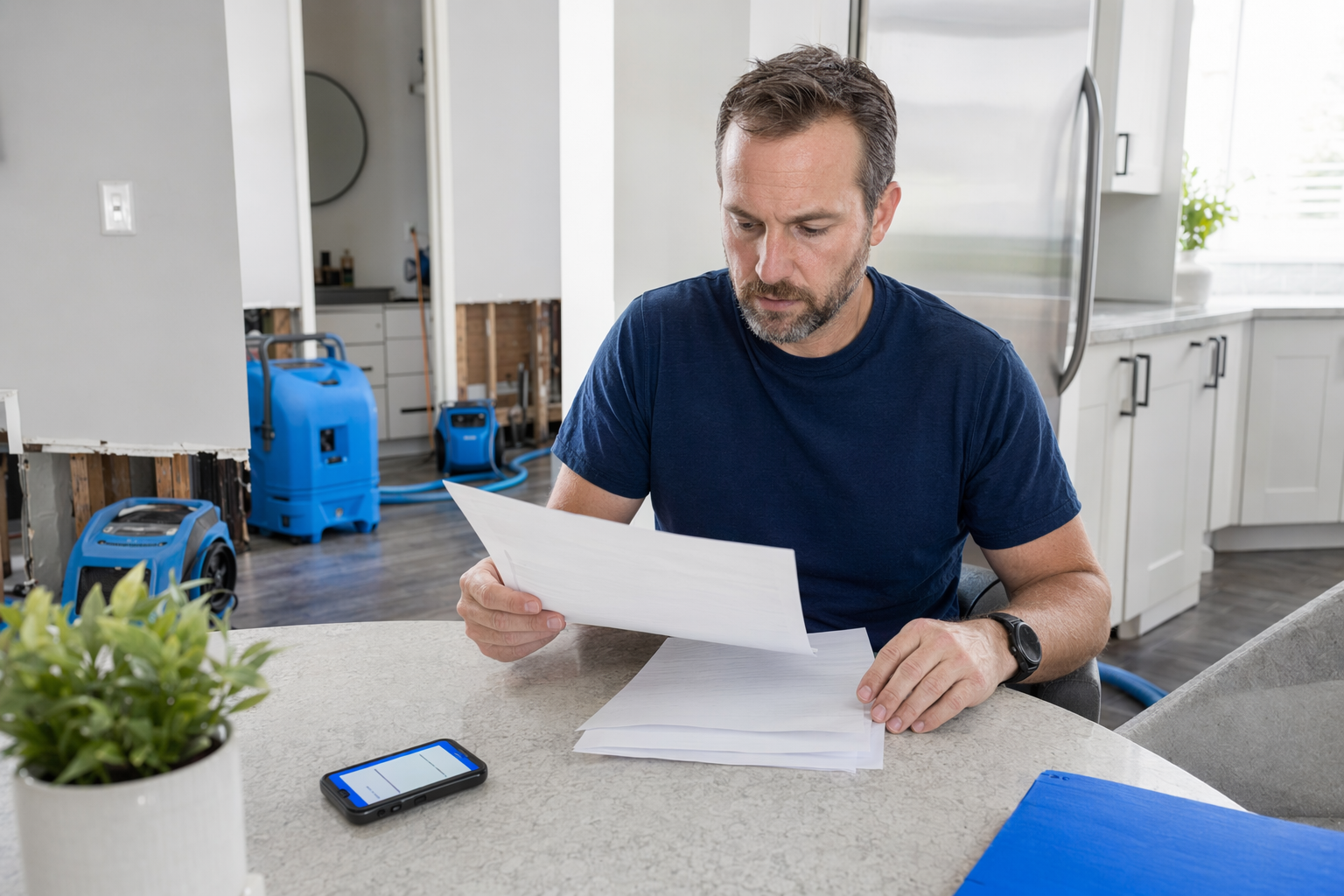
Start with safety and stop the water if you can
If water is still coming in, focus on safety first. Do not enter standing water near outlets, appliances, or a breaker panel. If there is any risk of electricity, sewage, gas, or a ceiling that looks ready to fall, leave the area and call your local emergency number or your utility company first.
If it is safe, take these steps right away:
1. Shut off the water source if you know how and can reach it safely.
2. Move dry belongings out of the wet area.
3. Take photos and short videos of the damage before cleanup.
4. Tell the landlord or property manager as soon as possible in writing if you can.
5. Contact your insurance company to ask what your policy may cover.
DrySpan is a free matching service, not a restoration contractor. If you need help finding a local water-damage restoration pro, you can use get matched or browse services.
- Treat flood water or sewage backup as contaminated.
- If the ceiling is sagging, do not stand under it.
Who is usually responsible in a rental
Responsibility depends on what caused the water damage and what state you live in. In general, the landlord is often responsible for problems tied to the building itself, like a leaking roof, broken pipe in the wall, bad plumbing, or a maintenance issue they knew about and did not fix.
A renter is often responsible for damage caused by their own actions, like leaving a tub running, damaging a fixture, or failing to report a leak for a long time. Sometimes both sides have some responsibility, and the lease language matters. State laws also vary, so this is general information, not legal advice.
If you are unsure, save your lease, take photos, and keep every text or email about the leak. That record can help show what happened and when. A simple timeline is useful: when you first saw the water, who you told, and how the damage changed.
- Building problems are often the landlord's side.
- Damage from a renter's actions may be the renter's side.
- Lease terms and state law can change the answer.
What renters insurance may cover
Renters insurance often covers your personal belongings, and sometimes extra living costs if your home becomes unlivable after a covered event. It may help with items like clothes, furniture, and electronics if the policy covers the cause of the loss.
It usually does not pay for the building itself, because that is typically the landlord’s insurance. It also may not cover every cause of water damage. For example, slow leaks, neglected maintenance, or flood from outside water often have different rules. Coverage varies by policy and by state, so read the policy or ask the insurer to explain it in plain words.
If you are filing a claim, ask what they need, what is covered, and whether they want photos, receipts, or a damage list. Keep copies of everything you send. You do not need to give medical history, immigration records, or government ID numbers to use DrySpan.
- Renters insurance often covers belongings, not the building.
- Flood coverage may be different from a regular water-damage claim.
- Ask your insurer to explain the policy in plain language.
How restoration usually works and what it may cost
Water-damage restoration usually starts with water extraction, which means pumping and vacuuming standing water out fast. After that, a pro may do structural drying, which means using air movers and dehumidifiers to pull moisture out of walls, floors, and hidden spaces.
Typical U.S. planning ranges, vary a lot, get it in writing: emergency water extraction is often about $400-$2,000; structural drying for a room or two is often about $1,500-$5,000; whole-home water-damage restoration is often about $3,000-$25,000+; mold remediation is often about $1,500-$6,000. The real price depends on how much water there was, what it touched, the property type, and the city or state.
If you need a pro, ask for a written estimate that separates extraction, drying, repairs, and any mold work. That makes it easier to compare options and talk with insurance.
- Ask for the estimate in writing.
- Prices vary a lot by damage size and location.
- DrySpan matching is free for property owners.
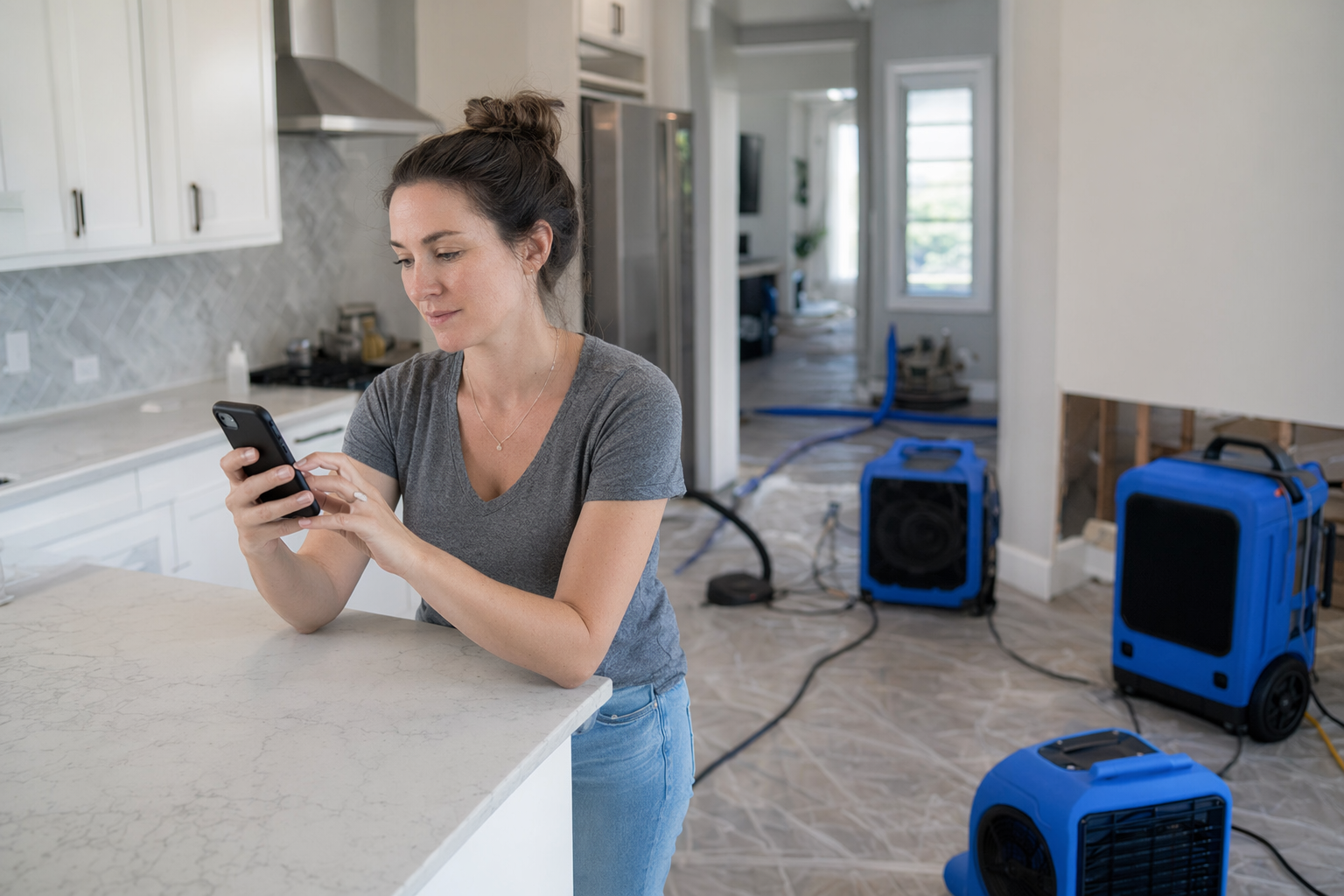
A short real-world example
A renter noticed water dripping from a ceiling after a storm. They moved away from the wet area, took photos, and told the landlord the same day. The landlord sent a plumber, then a water-damage restoration pro to remove standing water and dry the ceiling and bedroom carpet.
The renter used DrySpan to find a local pro who could explain the process in Spanish, which helped them understand the next steps and what to ask the insurance adjuster. Because they saved photos, messages, and the timeline, it was easier to sort out what belonged to the landlord, what might fall under renters insurance, and what repairs were needed first.
- The key steps were safety, documentation, and fast notice.
- Language support can make a stressful situation easier to manage.
What to ask the landlord, insurer, or restoration pro
Keep questions short and practical. Ask who is handling the repair, when someone can inspect, and whether anything should stay out of the wet area. If a contractor is coming, ask what drying equipment they plan to use and how long they expect it to run. No one can honestly promise a final cost or timeline without seeing the damage.
Good questions include:
1. Is this likely a building issue, a contents issue, or both?
2. Should I file a renters insurance claim now?
3. What can I move, and what should stay in place for inspection?
4. Can you give me a written estimate and scope of work?
5. Do you have someone who can explain this in my preferred language?
If you want help finding someone local, learn how matching works or use get matched. DrySpan is free, and coverage and rules vary by state and by policy.
- Ask for clear, written answers.
- A simple scope of work helps prevent confusion later.
In a rental, the landlord often handles building problems, renters insurance may help with your belongings, and the safest next step is to document the damage, report it, and get a written estimate.
FAQ
Common questions
If my landlord caused the leak, do I still need to call my insurance?
Often yes. Your renters insurance may cover your belongings or temporary living costs if your policy applies, even if the landlord is responsible for the building repair. Coverage depends on the policy and the cause of the damage.
What if I did not report the leak right away?
Tell the landlord as soon as you can and keep the message. A delay can make damage worse, so it is best to document when you first noticed it and why you could not report sooner.
Can DrySpan tell me who is legally responsible?
No. DrySpan is a free matching and information service, not a legal adviser. We can help you understand general next steps and connect you with local restoration pros.
Can I get help in another language?
Often yes. When you use DrySpan, you can share your preferred language so we can try to match you with a pro who can communicate clearly.