Guides
The first hour after water damage: a step-by-step plan
Here is a calm plan for the first hour after water damage. Start with safety, stop the water if you can, then document what happened and get help fast.
1) Check safety first
If water is near outlets, cords, appliances, or the electrical panel, do not step into it. If you smell gas, see a ceiling sagging badly, or think the structure may be unsafe, leave and call your local emergency number first.
Treat flood water, sewage backup, and dark standing water as contaminated. Keep children and pets away. If the water came from a broken pipe or clean supply line, it still can damage walls, floors, and insulation quickly.
If it is safe to stay, put on shoes with hard soles and use a flashlight instead of walking into a dark wet area.
2) Stop the water if you can
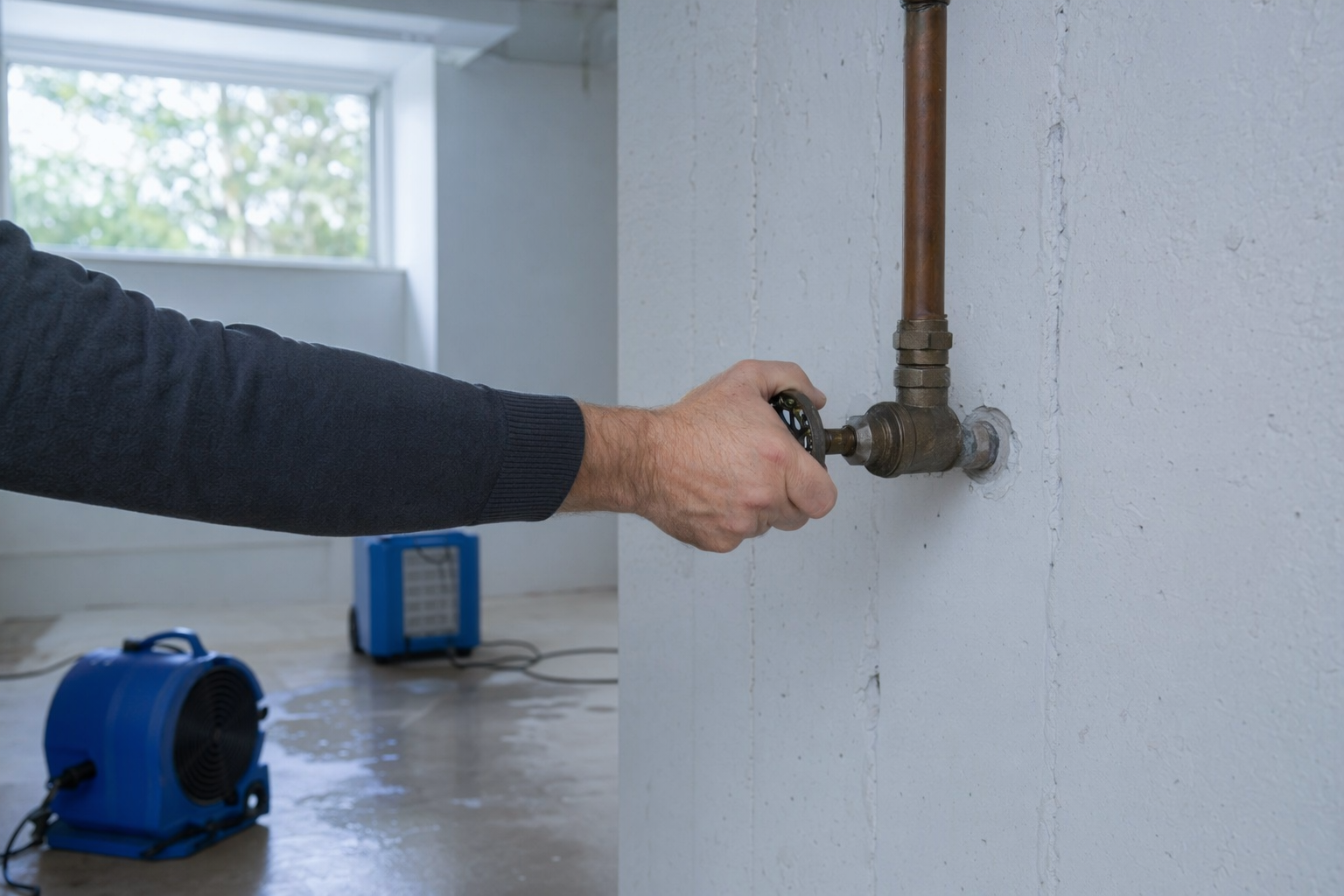
If the source is a burst pipe, sink, toilet supply line, or appliance hose, try to shut off the nearest water valve. If you cannot find it, use the main water shut-off for the property only if you know where it is and it is safe to reach.
For a leak from a ceiling or wall, you may not be able to stop it right away. In that case, move people and belongings away from the wet area and focus on damage control.
If the leak is from a major line, a roof issue during a storm, or sewage backup, it is often better to call a plumber, utility, or restoration pro as soon as possible after safety is addressed.
3) Protect people and the property
Move dry items out of the wet area first. Lift rugs, papers, and boxes off the floor. If you can do so safely, place aluminum foil or wood blocks under furniture legs to reduce staining.
Do not use a household vacuum on standing water. Water extraction means pumping and vacuuming standing water out fast with the right equipment. A restoration pro may also do structural drying, which means using air movers and dehumidifiers to pull moisture out of walls, floors, and air.
If the water is dirty, avoid touching fabrics, insulation, or soaked drywall more than needed. DrySpan is a free matching service, not a restoration contractor, so we do not do the work ourselves.
4) Take clear photos and notes
Before anything is moved, take photos and short videos of the damage from several angles. Capture the source of the water if you can, the water line on walls, damaged floors, furniture, and any personal items affected.
Write down the date, the time you noticed the water, what you saw first, and whether the source was clean water, storm water, or sewage backup. Keep any receipts for emergency supplies, buckets, fans, or hotel costs if you end up needing them.
This record can help you explain the loss to your insurance company and to a restoration company. Coverage and rules vary by state and by your policy, so get any key details in writing.
5) Call the right help
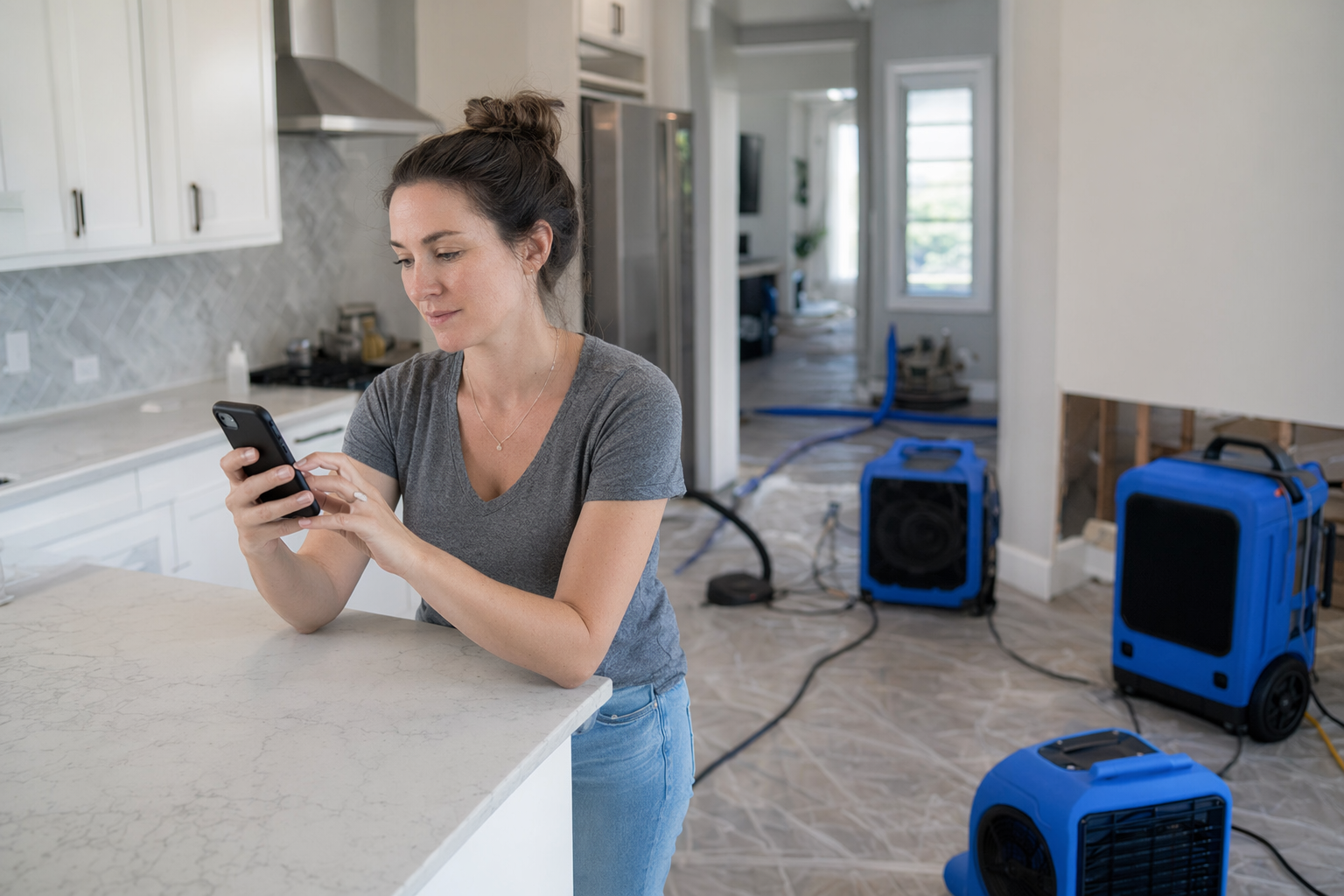
If the water is still coming in, call the source of the problem first when appropriate, such as a plumber, utility, building maintenance, or your landlord. If the water has spread into walls, flooring, or multiple rooms, a water-damage restoration pro can help with extraction, drying, cleanup, and repairs.
DrySpan is a free matching service that helps you find local water-damage restoration pros, often in your own language. If you want, you can get matched and share only basic contact and job details, such as your city or ZIP, what happened, and how to reach you.
For general background, see our services page or browse guides.
What this may cost
Costs are planning estimates only, not quotes. The real price depends on how much water there is, what it touched, the size and type of property, and your city or state.
Typical US ranges vary a lot: emergency water extraction is often about $400-$2,000; structural drying for a room or two is often about $1,500-$5,000; whole-home water-damage restoration is often about $3,000-$25,000+; mold remediation is often about $1,500-$6,000. Always get it in writing.
A pro may need to inspect before giving a written estimate. If someone gives a very low price without looking at the damage, be careful and ask what is included.
First, stay safe and stop the water if you can; then take photos, move dry items, and use DrySpan to find a local restoration pro for help.
FAQ
Common questions
Should I wait to see if the floor dries on its own?
Usually no. Water can move into walls, under flooring, and into insulation within hours. If it is safe, stop the source, document the damage, and get help early.
Do I need a restoration company if the leak was small?
Maybe not for every small spill, but if water reached drywall, subflooring, cabinets, or more than one room, a pro may be needed to dry hidden moisture and reduce future damage.
Will my insurance pay for this?
Sometimes, but it depends on your policy, the cause of the water, and your state. A restoration pro can often help document the damage, but DrySpan does not give legal or insurance advice.
Can DrySpan help in my language?
Often yes. We focus on matching people with local pros and support options that may be easier to use in another language, depending on availability.