Services
Structural drying — pulling moisture out of walls and floors
Structural drying means pulling hidden moisture out of walls, floors, and other building materials after water damage. DrySpan is a free matching service, not a restoration contractor, and we can help you find a local pro who explains the plan clearly.
What structural drying means
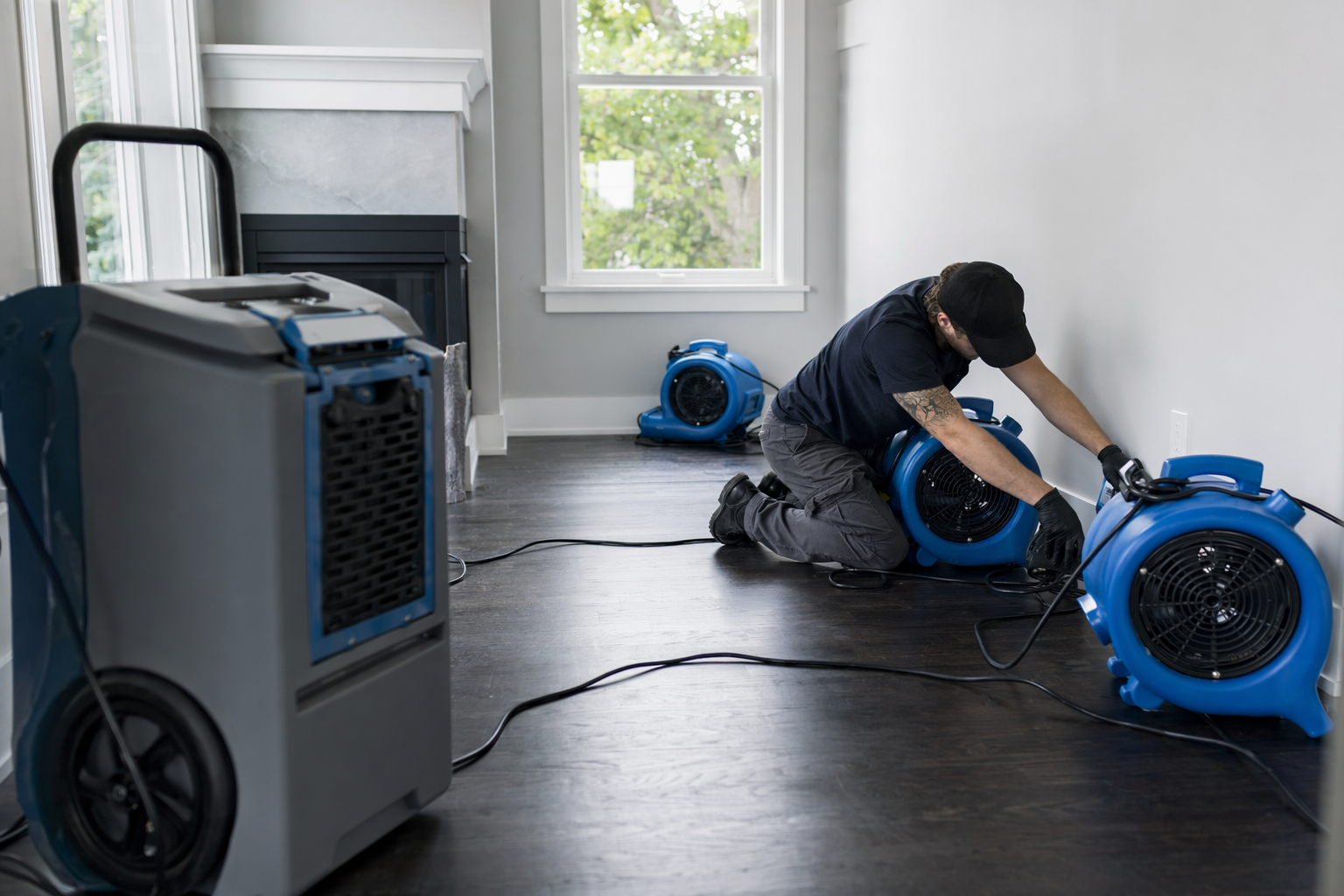
Structural drying is the stage after standing water is removed. It uses air movers and dehumidifiers to dry materials like drywall, wood framing, subfloors, and trim before they weaken, swell, or grow mold.
In plain words: water extraction is pumping and vacuuming out standing water fast. Structural drying is the longer process of pulling moisture out of the materials that soaked it up.
This work matters because water can spread into walls and under floors within hours. The right approach depends on what got wet, how long it sat, and whether the water was clean, storm water, or sewage backup.
What to do first
If the area is still wet, focus on safety and stop the damage from getting worse.
1. If there is any chance of live electricity, do not step into standing water. Leave the area and call your local emergency number if there is a life-safety risk.
2. If water is coming from a burst pipe or leak, shut off the water only if you can do it safely.
3. Take photos or video for your own records if it is safe to do so.
4. Move dry items away from the wet area.
5. If the water may be sewage or flood water, treat it as contaminated and avoid direct contact.
6. Then look for help. You can use Get matched or read what to do in the first hour.
DrySpan can help you find a restoration pro who speaks your language when available. Matching is free.
How the drying process usually works
A good water-damage pro usually starts by checking where the moisture went. They may use moisture meters, thermal cameras, and a visual inspection to see what is wet behind the surface.
Then they set up air movers, which are high-speed fans that help water leave wet materials, and dehumidifiers, which pull moisture out of the air so the room can dry faster. They may also open certain walls or remove damaged materials if needed.
The team should check progress every day or so and adjust the equipment until the materials are dry enough. Ask them to explain what they are drying, what they are removing, and what they expect to happen next in plain words.

How long it takes and what it may cost
Drying time depends on how much water got in, what it touched, the size of the space, the weather, and the type of building. A small area may dry in a few days. Bigger or more complex damage can take longer.
Typical US planning ranges, varies a lot, get it in writing:
- Emergency water extraction: roughly $400-$2,000
- Structural drying of a room or two: roughly $1,500-$5,000
- Whole-home water-damage restoration: roughly $3,000-$25,000+
- Mold remediation, if needed: roughly $1,500-$6,000
These are only general ranges, not quotes. The real price depends on the amount of water, what got wet, the property type, and the city or state. Insurance coverage also varies by policy and by situation.
How to choose a pro you can trust
Look for a company that explains the plan before starting, gives a written estimate, and says what is included and what could change. Ask who will check the drying progress, whether they document moisture readings, and whether they can explain the work in a language you understand.
A careful company should be willing to answer simple questions, not rush you into a decision, and not promise a fixed outcome before seeing the damage. If you want help finding options, services and costs can help you compare what is normal.
DrySpan is a free matching service, not a restoration contractor. We help connect property owners and renters with local pros after water damage, and we do not perform the work ourselves.
Structural drying is the process of removing hidden moisture from walls and floors after water damage, and DrySpan can help you find a free local match for that work.
FAQ
Common questions
Do I need structural drying if the floor already looks dry?
Maybe. Water can stay hidden in drywall, insulation, subfloors, and wall cavities even when the surface looks dry. A pro can measure moisture and tell you whether drying is still needed.
Will insurance pay for structural drying?
Sometimes, but it depends on your policy, the cause of the water, and any limits or exclusions. DrySpan cannot give insurance advice, so it helps to ask your insurer what documents they want and get the restoration estimate in writing.
Can I dry it myself with fans?
For very small spills, maybe. But after a leak, flood, or sewage backup, fans alone often are not enough because hidden moisture can remain inside the structure. A pro can check the wet areas and decide what needs professional drying.
How soon should drying start?
Sooner is better because water can move into walls and floors within hours. That does not mean you need to panic; it just means it helps to contact help promptly after you make the area safe.