Services
Water extraction — fast standing-water removal
Water extraction means removing standing water from floors, carpets, and other surfaces as quickly as possible. DrySpan is a free matching service, not a restoration contractor, and here is the plan.
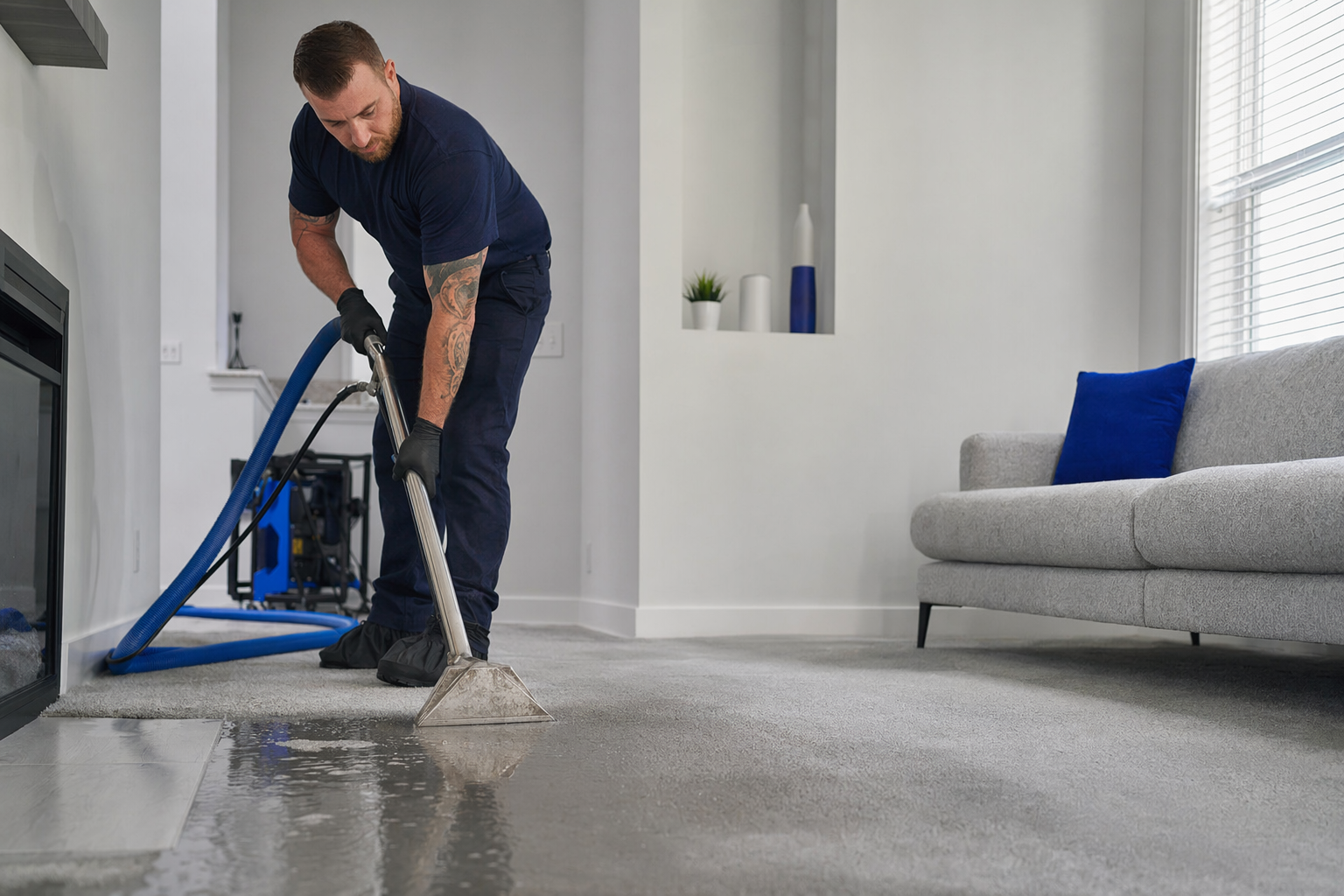
What water extraction means
Water extraction is the fast removal of standing water after a burst pipe, leak, flood, storm, or sewage backup. In plain words, it is pumping and vacuuming the water out before it spreads deeper into walls, floors, and cabinets.
This step is often the first part of water-damage cleanup. After extraction, a pro may do structural drying, which means using air movers and dehumidifiers to pull moisture out of the building materials.
If the water came from sewage, storm runoff, or floodwater, treat it as contaminated. If there is any chance of electrical danger, do not step into standing water and call your local emergency number if anyone is at risk.
- Standing water can move into drywall, baseboards, and subfloors within hours.
- The sooner the water is removed, the less likely there is to be long-term damage.
What to do in the first hour
If it is safe, focus on the basics first. Do not go into standing water near outlets, appliances, or exposed wiring. If the water is rising, dirty, or a ceiling is sagging, leave the area and get help right away.
1. Turn off the water source if you can reach it safely.
2. Shut off power to the wet area only if you can do it without stepping into water.
3. Move people, pets, and small valuables out of the wet space.
4. Take quick photos from a safe place for your records.
5. Start finding a local water-damage pro who can extract the water and dry the area.
For a fuller checklist, see what to do in the first hour.
- Safety comes first: water and electricity do not mix.
- If the source is sewage or floodwater, avoid skin contact when possible.
How pros remove the water
A water-damage crew usually starts with inspection and then uses pumps, wet vacuums, and truck-mounted extraction gear to remove the standing water. In homes, they may also lift carpet, remove pad, and open up wet areas so they can dry the structure.
After that, they may place air movers and dehumidifiers. Air movers push air across wet surfaces. Dehumidifiers pull moisture out of the air so walls, floors, and framing can dry more evenly.
The right plan depends on how much water there is, what got wet, and whether the water is clean, gray, or contaminated. That is why a local inspection matters.
- Water extraction = removing standing water fast.
- Structural drying = drying the building materials after the water is out.

What it may cost
Costs vary a lot by city, water amount, materials, and how long the water sat. These are typical U.S. planning ranges, not quotes or guarantees:
- Emergency water extraction: roughly $400-$2,000
- Structural drying for a room or two: roughly $1,500-$5,000
- Whole-home water-damage restoration: roughly $3,000-$25,000+
- Mold remediation, if needed later: roughly $1,500-$6,000
Get the price in writing before work starts if you can. Insurance coverage and claim rules vary by policy and by state, so it helps to ask your insurer what they may cover and what documents they want. See more in water-damage costs.
- Real price depends on the amount of water, what it touched, and local labor rates.
- DrySpan does not give quotes; we help you find local pros.
How DrySpan helps
DrySpan is a free matching service, not a restoration contractor. We help connect you with local water-damage restoration professionals who can handle extraction and drying after a leak, flood, burst pipe, or similar emergency.
You tell us the basics: your ZIP or city, what happened, how to reach you, and what language you prefer. We do not ask for medical history, immigration documents, government ID numbers, or other sensitive records.
If it is helpful, we can often match you with a pro who speaks your language. Matching is always free for property owners and renters asking for help.
- Use [get matched](/get-matched/) to start the free matching process.
- See all DrySpan help on the [services page](/services/).
Water extraction is the fast removal of standing water, and the best next step is to stay safe, limit damage, and get a free match with a local restoration pro.
FAQ
Common questions
How fast should water extraction happen?
As soon as it is safe to do so. Water can spread into walls, floors, and cabinets within hours, so it helps to act soon and get a local pro to remove the standing water.
Can I just use fans and a shop vacuum myself?
Small spills may be manageable, but standing water from a leak, flood, or sewage backup often needs professional extraction and drying gear. If the water is deep, contaminated, or near electricity, it is safer to stay out and call for help.
Will insurance pay for water extraction?
Sometimes, but coverage depends on your policy, the source of the water, and state rules. DrySpan is not an insurer, so it is best to contact your insurance company and ask what they need before or right after the work starts.
How do I know if I need mold remediation too?
If materials stayed wet for a long time, or you see or smell mold later, a separate mold evaluation may be needed. A water-damage pro can often explain whether drying was enough or whether more help may be needed.