Guides
Filing a water-damage insurance claim, step by step
If water damaged your home or rental, here is a calm, step-by-step way to handle the claim. DrySpan is a free matching service, not a restoration contractor, and this page gives general information—not insurance advice.

1) Make the area safe first
Before you file anything, deal with safety. If water is near outlets, breakers, or appliances, do not step into it. If there is any sign of sewage, floodwater, gas, or a ceiling about to fall, leave the area and call your local emergency number or utility first.
If it is safe to stay, stop the source of water if you can do that without risk. Close the valve under a sink, turn off a toilet supply line, or shut off the main water if a pipe burst. Then move people, pets, and anything you can lift out of the wet area.
Take a few clear photos and short videos before cleanup starts, if you can do that safely. That record often helps later when you explain what happened to your insurer.
2) Contact your insurance company and start the claim
Call your insurer or use its app or website as soon as you can. Tell them the date, what happened, what rooms were affected, and whether the water is still coming in. Ask for a claim number and the name or contact info of the adjuster or claims representative.
If you are a renter, contact both your renters insurance company and your landlord or property manager. If you are a homeowner, contact your homeowners insurance company. Coverage rules vary by policy and by state, so ask the insurer what documentation they want.
If you need a local restoration pro, DrySpan can help you get matched for free. Many people also read our guides to understand the cleanup process and common insurance terms.
3) Document everything clearly
Good documentation can make the claim smoother. Keep one folder, paper or digital, with photos, videos, receipts, and every email or text about the damage.
1. Photograph each damaged room from wide angles, then close-ups.
2. Save pictures of wet floors, walls, ceilings, baseboards, furniture, and belongings.
3. Make a simple list of damaged items, with approximate age and purchase price if you know it.
4. Keep receipts for emergency work, fans, tarps, hotel stays, food, or other extra costs if your policy may cover them.
5. Do not throw away major damaged items until the insurer says it is okay, unless they create a safety or health problem.
If water got into walls or under flooring, a restoration pro may recommend water extraction, which means pumping and vacuuming standing water out fast, and structural drying, which means using air movers and dehumidifiers to pull moisture out of walls and floors.
4) Understand what claims usually cover
In general, homeowners and renters policies often cover sudden and accidental water damage, like a burst pipe or an overflowing appliance. They often do not cover long-term leaks, wear and tear, poor maintenance, or some kinds of flooding from outside the home. Sewer backup coverage may be separate.
This is why the cause matters. A broken supply line may be treated differently from slow moisture that was building for months. Your insurer will look at the source, the damage, and whether the loss was sudden.
Do not guess about coverage. Ask your insurer to explain, in writing if possible, what they need and what parts of the loss are being reviewed. Policy language varies, so the safest approach is to document well and ask direct questions.
5) Know the usual claim steps and timeline
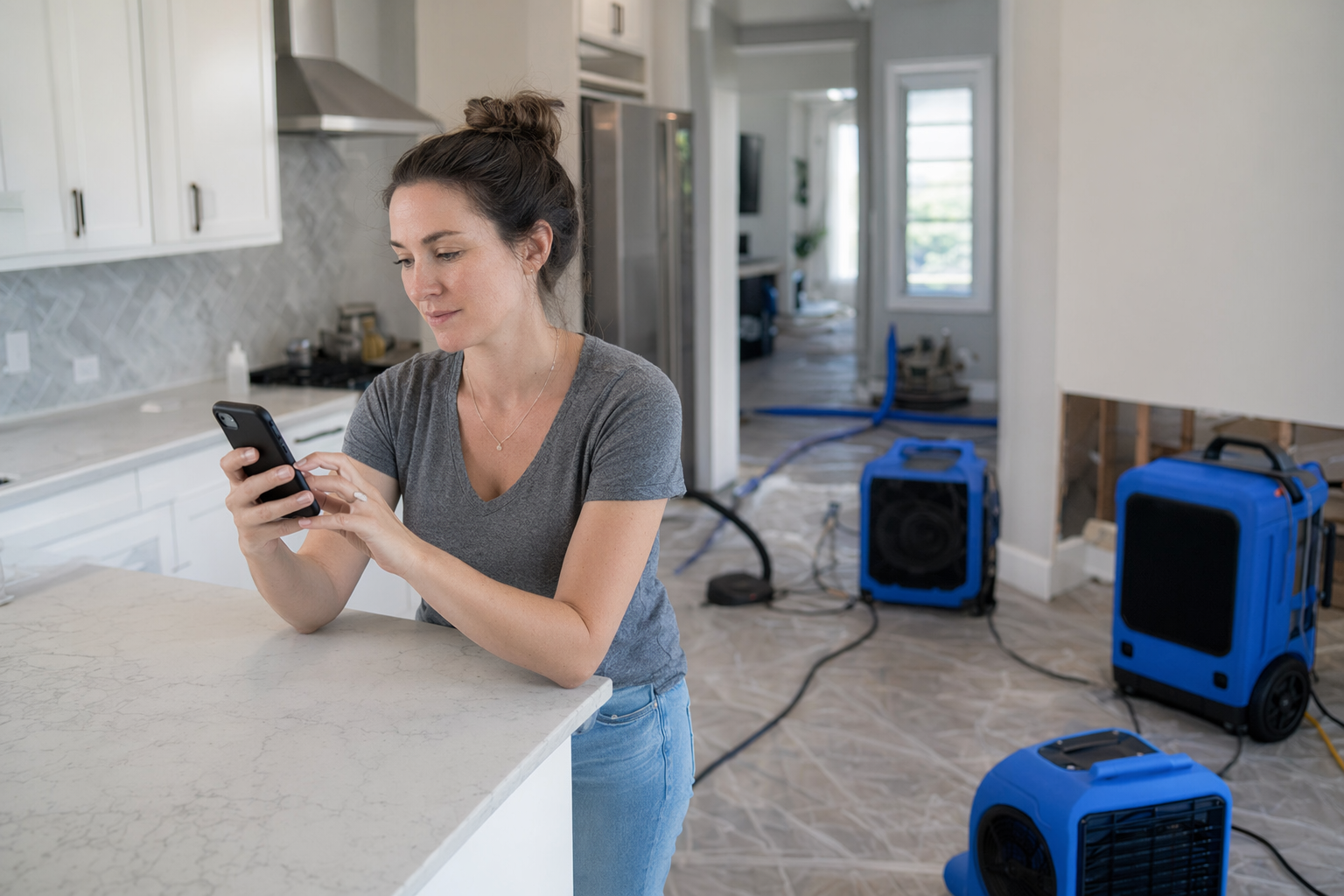
After you report the loss, the insurer may ask for photos, a recorded statement, or a list of damaged items. They may send an adjuster to inspect the property, or they may ask you to get estimates from local pros.
A typical path looks like this:
1. You report the claim.
2. The insurer opens the file and gives you a claim number.
3. An adjuster or claims rep reviews the damage.
4. You share photos, receipts, and repair estimates.
5. The insurer explains what is approved, what is still under review, and how payment will work.
Timing varies a lot by insurer, city, and how serious the damage is. If drying and cleanup are needed, it is often smart to start mitigation right away so the damage does not spread. You can usually get estimates from restoration companies before deciding who to hire, and prices should be given in writing.
6) Mistakes that can hurt a claim
A few common mistakes can make a claim harder than it needs to be. Try to avoid these:
- Waiting too long to report the loss.
- Throwing away damaged items before documenting them.
- Starting major repairs before the insurer has seen the damage, unless emergency work is needed to prevent more damage.
- Failing to save receipts for temporary repairs or housing costs.
- Assuming the first estimate is final. Water damage can spread inside walls and under floors, so the real scope may be bigger after inspection.
If you need a pro quickly, remember that DrySpan is a free matching service, not a restoration contractor. Participating pros pay a flat fee to join the network, and you can often be matched with help in your own language.
A real-world example of acting early
A tenant came home to water dripping from the ceiling after a pipe leak in the apartment above. They turned off the electric risk area, took photos, contacted the landlord and insurance company, and asked DrySpan for help finding a local water-damage restoration pro who could explain the next steps in their preferred language.
The pro inspected the room, explained the difference between water extraction and structural drying, and gave a written estimate. The tenant used that paperwork to support the claim and kept all receipts for the temporary cleanup. The important part was not speed alone—it was documenting the damage, asking clear questions, and keeping the insurer updated.
Report the damage, document everything, ask your insurer what they need, and get written estimates from a local pro if drying or cleanup is needed.
FAQ
Common questions
Should I call my insurance company before or after I hire a restoration company?
Usually, call your insurer as soon as you can, then get emergency mitigation if needed to stop more damage. You can ask the insurer what documentation they want, and you can still get local estimates before choosing a company.
Will my insurance cover a burst pipe?
Many policies often cover sudden pipe damage, but every policy is different. Coverage can depend on what broke, how fast you reported it, and whether the insurer thinks the loss was sudden or from long-term neglect.
Do I need to keep every damaged item?
Keep major items until the insurer tells you it is okay to throw them away, unless they are unsafe or unsanitary. Photos, videos, and receipts can help if the item cannot be kept.
How much does water-damage cleanup cost?
Typical US planning ranges vary a lot: emergency water extraction is often about $400-$2,000, structural drying for a room or two about $1,500-$5,000, whole-home restoration about $3,000-$25,000+, and mold remediation about $1,500-$6,000. The real price depends on how much water there is, what it touched, the property, and your city or state, so get it in writing.