Help
Your Basement Flooded — First Steps
If your basement flooded, start with safety and stop the water if you can. Then remove people from the area, document what you see, and get help fast before moisture spreads into walls and floors.
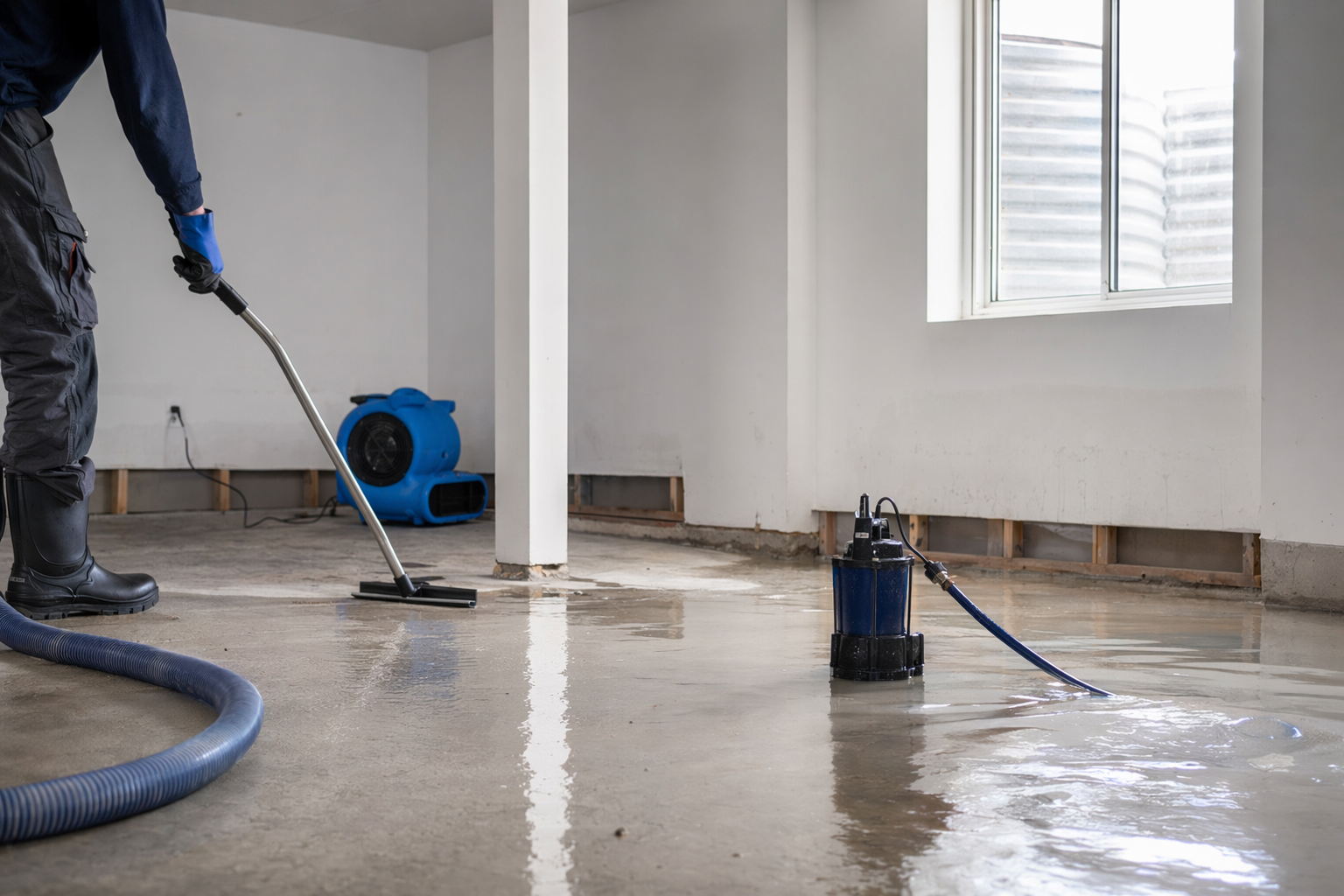
1) Check safety first
Do not go into standing water if there is any chance of live electricity. If water is near outlets, appliances, or the breaker panel, stay out and call your local emergency number or utility company if there is an immediate danger.
Treat sewage water, storm water, and flood water as contaminated. Keep kids and pets away. Wear boots and gloves if you must enter a dry part of the basement to shut off water or move a few items.
If the flooding is tied to a burst pipe, leak, or a storm, here is the plan: safety first, then reduce the damage, then contact a water-damage pro.
- Do not touch electrical equipment in wet areas.
- If the floor is soft, sagging, or the ceiling below is wet, stay out.
2) Stop the water if you can
If it is safe, shut off the main water supply for a burst pipe or indoor leak. If the issue is from outside, you may not be able to stop it yourself, but you can still limit the damage.
Move boxes, rugs, and loose items to a dry area. If water is shallow and there is no electrical risk, you can begin basic cleanup. If you smell gas, hear hissing, or see major structural damage, leave and call emergency help.
DrySpan is a free matching service, not a restoration contractor. We do not do the work ourselves, but we can help you find a local water-damage restoration pro who serves your area.
- Shut off the main water valve if the source is inside the home.
- Save anything easy to move, but do not delay safety for property.
3) Document what happened
Take photos and short videos before major cleanup, if it is safe. Show the water line, damaged walls, floors, furniture, and the source of the water if you can see it.
Write down the date and time the flooding started, what caused it, and which rooms were affected. This can help when you speak with your insurer or a restoration company. Coverage and rules vary by state and by your insurance policy.
Keep receipts for emergency items, pump rentals, tarps, fans, or temporary lodging if you need them. Do not throw away damaged items right away unless they are a health risk or your insurer tells you to.
- Photos from several angles help later.
- A simple written note is better than relying on memory.
4) Call a water-damage restoration pro soon
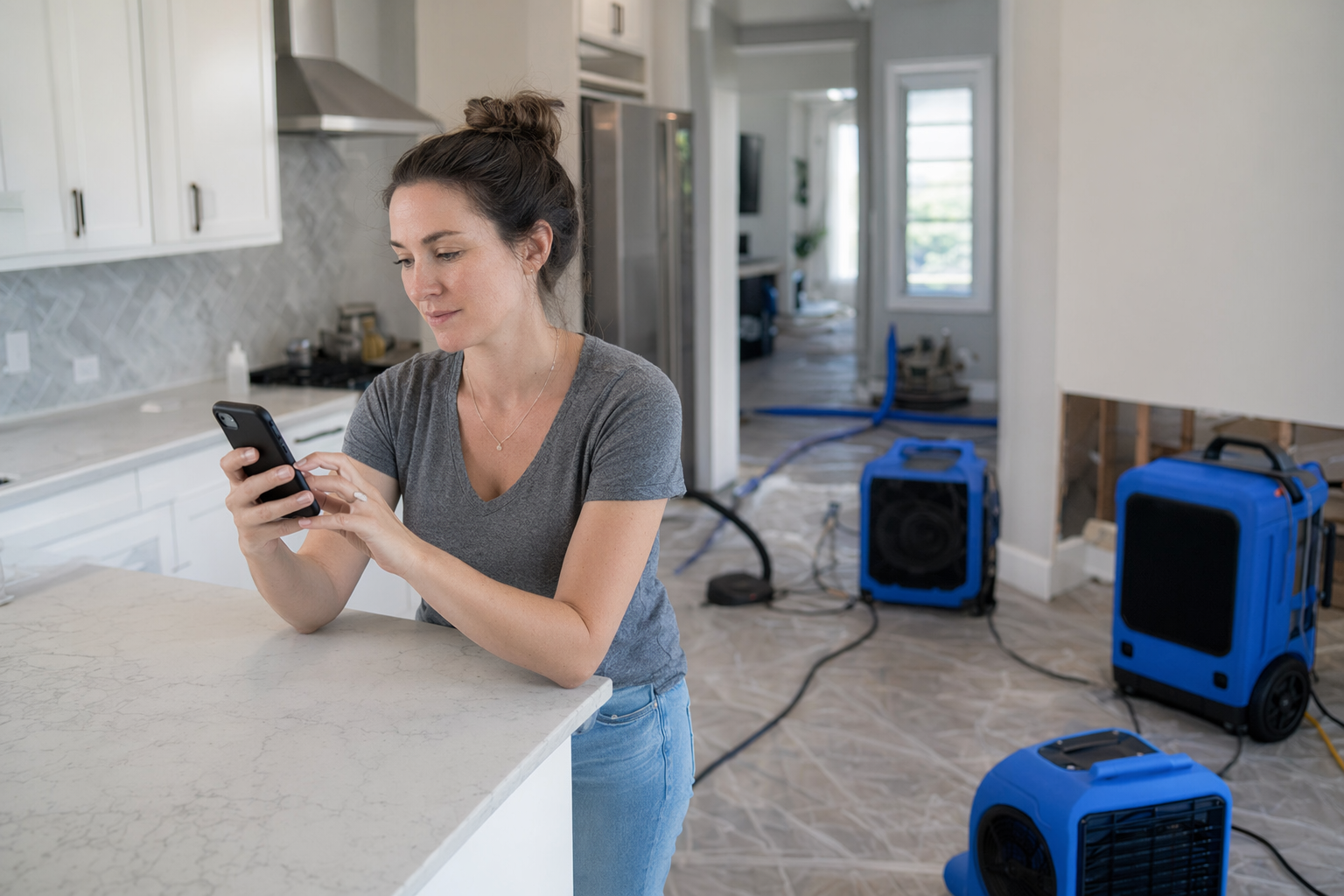
The goal is to remove standing water and start drying before moisture moves deeper into materials. Water extraction means pumping and vacuuming standing water out fast. Structural drying means pulling moisture out of walls and floors with air movers and dehumidifiers.
A local pro can check how far the water spread, whether drywall or insulation needs removal, and whether mold prevention steps are needed. If you want help in another language, ask for that when you reach out. Matching is free, and help can often be found in your preferred language.
You can start here: get matched or learn more about our services. For a simple overview of what happens in the first hour, see first-hour steps.
- Ask for an inspection and a written estimate.
- Ask what drying equipment they plan to use and how long monitoring usually takes.
5) Know the usual cost ranges
Costs vary a lot based on how much water there is, what it touched, the size of the basement, how long it sat, and your city and state. These are planning estimates only, not quotes or guarantees.
Typical US ranges are: emergency water extraction roughly $400-$2,000; structural drying of a room or two roughly $1,500-$5,000; whole-home water-damage restoration roughly $3,000-$25,000+; and mold remediation roughly $1,500-$6,000. Get the price in writing before work begins.
If a company gives only a vague number, ask what is included, what is extra, and whether they charge for monitoring, equipment, or demolition.
- Real price depends on damage, materials, and local labor costs.
- Insurance may help in some cases, but policy details matter.
A short example of how this can go
A renter found several inches of basement water after a heavy storm. They stayed out of the wet area near the outlet, moved a few stored items from a dry stair landing, took photos, and used DrySpan to find a local pro who could speak their preferred language. The pro inspected the basement, started extraction and drying, and explained what could be saved and what needed removal in clear, simple words.
That kind of step-by-step help can make the process easier to manage when everything feels overwhelming.
- The main goal was to act safely and quickly.
- The renter did not need to figure out the whole process alone.
First, make the basement safe, then document the damage, then get a local water-damage pro to start extraction and drying as soon as you can.
FAQ
Common questions
Should I go into my basement right away?
Only if it is clearly safe. Do not enter standing water near electricity, and stay out if you see structural damage, smell gas, or suspect sewage contamination.
How fast do I need to act?
Soon is better, because water can spread into walls and floors within hours. You do not need to panic, but it helps to start safety checks, documentation, and professional help the same day.
Will insurance pay for basement flooding?
Sometimes, but it depends on your policy and what caused the flood. A burst pipe may be treated differently from storm or groundwater damage, so check your policy and speak with your insurer.
Is DrySpan a contractor?
No. DrySpan is a free matching service, not a restoration contractor. We help you find local water-damage pros and share general information.