Help
What to Do When a Pipe Bursts
If a pipe bursts, start with safety, then stop the water, then limit the spread. Here is a calm, step-by-step plan, plus a free way to find a local water-damage pro who may be able to help in your language.
1) Make sure it is safe first
If water is near outlets, appliances, or the breaker box, do not step into standing water. If you smell gas, see sparks, or there is any chance of collapse or live electrical danger, call your local emergency number first.
If the burst water is from a sewer backup or has come through floodwater, treat it as contaminated. Avoid skin contact when you can, keep kids and pets away, and wear boots and gloves if you must go near it.
If the pipe burst caused a ceiling to sag or bulge, stay out from under it. Water can make ceilings heavier and weaker very quickly.
2) Stop the water and reduce damage
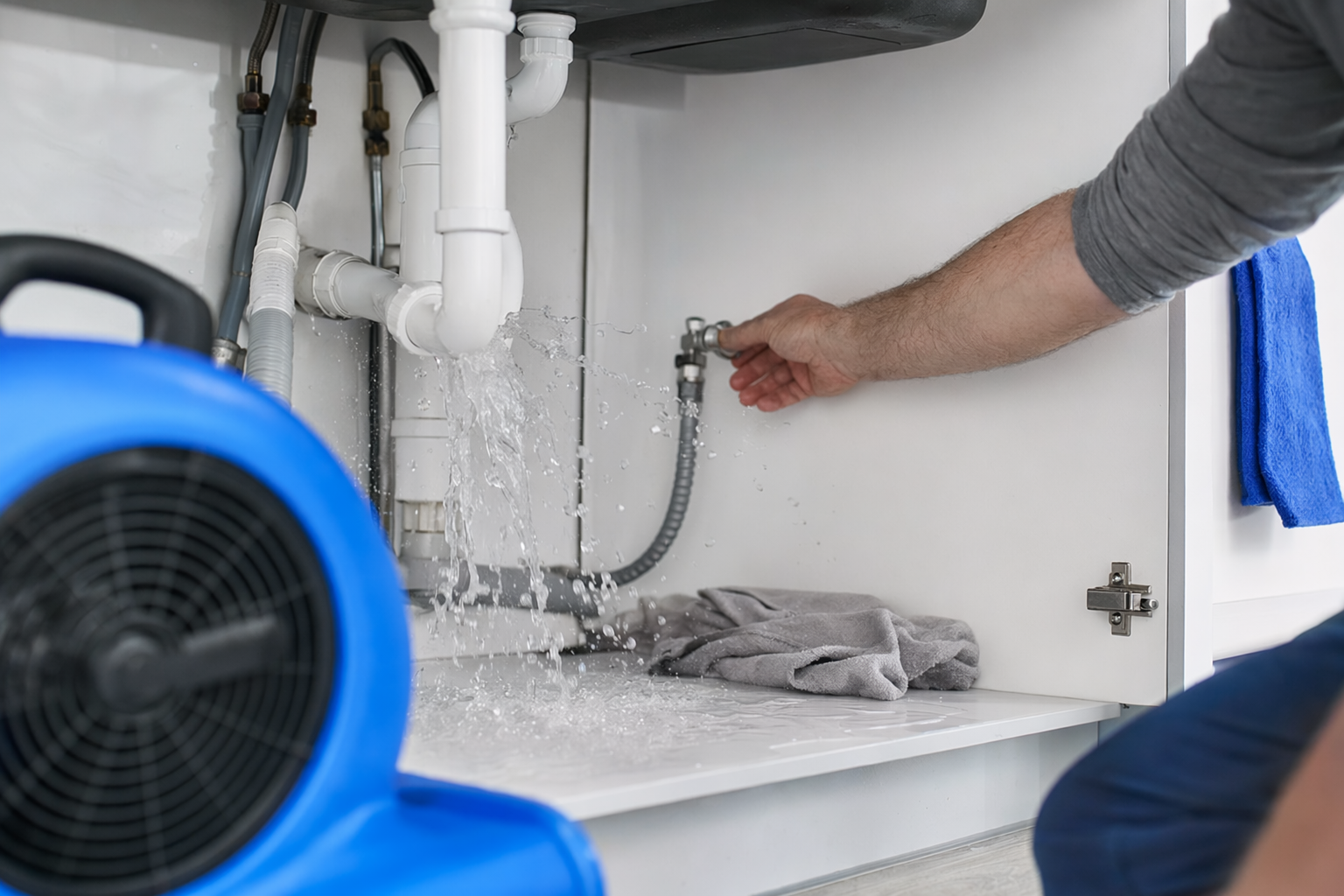
1. Turn off the water at the nearest shutoff valve if you can reach it safely. If not, use the main water shutoff for the home.
2. Open faucets to relieve pressure once the water is off.
3. Move furniture, rugs, and electronics out of the wet area if you can do it safely.
4. Put aluminum foil, wood blocks, or plastic under furniture legs to reduce staining.
5. If it is safe, mop or blot standing water with towels.
DrySpan is a free matching service, not a restoration contractor. We help people find local water-damage restoration pros who handle water extraction, which means pumping and vacuuming standing water out fast, and structural drying, which means using air movers and dehumidifiers to pull moisture out of walls and floors.
3) Document what happened and contact the right help
Take photos and short videos of the water, the broken pipe, and damaged items before you throw anything away. Keep a simple list of what was damaged and when you noticed it.
If you rent, tell your landlord or property manager right away. If you own the home, contact your insurance company as soon as you reasonably can. Coverage and rules vary by state and by policy, so ask what they need from you and what steps you should take next.
If you want help finding a pro, get matched. DrySpan is free for property owners and renters, and the matching form only asks for general contact and job details like ZIP code, what happened, and your preferred language.
What a restoration pro may do next
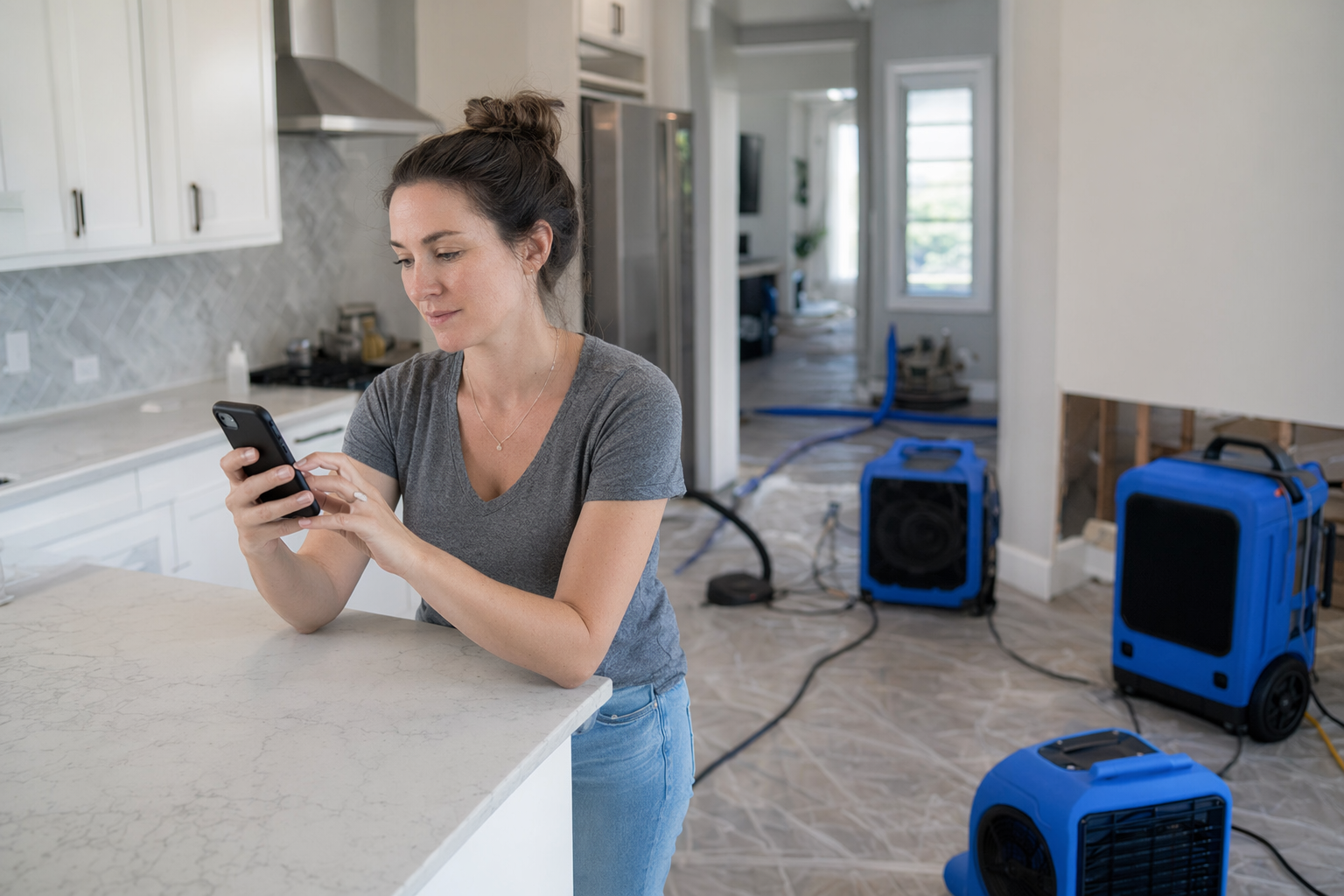
A good water-damage restoration company usually starts with an inspection, then water extraction, then structural drying. They may also check for hidden moisture inside walls, under floors, or in insulation.
If the water sat for a while, they may talk about mold remediation, which means removing mold damage and cleaning affected areas. Typical U.S. planning ranges are about $400-$2,000 for emergency water extraction, $1,500-$5,000 for structural drying of a room or two, $3,000-$25,000+ for whole-home water-damage restoration, and $1,500-$6,000 for mold remediation. These are typical ranges, vary a lot, and the real price depends on how much water there was, what it touched, the property, and your city or state. Get it in writing.
A real-life example of acting fast
One renter noticed water dripping from a bathroom ceiling after a pipe above the unit burst. They shut off the water, moved a couch and a box of papers out of the room, took photos, and called the building manager.
They then used DrySpan to find a local water-damage company that could come quickly and communicate in a language they were more comfortable using. The pro handled extraction and drying, explained each step in plain words, and helped the renter understand what to send to the insurer. That did not guarantee coverage or a specific result, but it did help them move faster and make clearer choices.
Shut off the water safely, keep clear of electrical danger, document the damage, and use DrySpan’s free matching service to find a local water-damage pro.
FAQ
Common questions
What should I do in the first 10 minutes after a pipe bursts?
Stay safe first, then shut off the water, then move anything valuable out of the wet area if you can do it safely. Take photos, and call for help if there is electrical danger or a ceiling looks unstable.
Can I clean up a small burst pipe myself?
Small cleanups may be manageable if the water was clean and the area is small, but hidden moisture can stay in walls and floors. If the water reached drywall, flooring, insulation, or a large area, it is often worth getting a water-damage pro to check it.
Will insurance pay for a burst pipe?
Sometimes, but it depends on your policy, the cause, and how quickly you acted. DrySpan cannot advise on coverage, so ask your insurer what they need and keep your photos and notes.
How fast does water damage get worse?
Water can spread into walls, floors, and cabinets within hours, and odors or mold risk can grow if materials stay wet. That is why it helps to start drying and get a pro involved soon when the damage is more than a small spill.