Help
Ceiling Leak From the Apartment Above: What to Do
A ceiling leak from the apartment above can damage floors, walls, and wiring fast. Here’s what to do right now for safety, insurance-ready documentation, and how DrySpan can help you find a local water-damage pro—free to use.
First: protect people and prevent more water damage
It’s stressful when water starts coming through the ceiling. Still, the goal is simple: stop the source if you can, reduce exposure, and keep electrical systems safe.
1. If water is near outlets, light fixtures, or cords, do not touch it. Turn off power to the affected area if you can do so safely.
2. If you see sewage backup (wastewater) or you’re unsure, treat it as contaminated. Avoid stepping into the water, and ventilate if it’s safe to do so.
3. Try to notify the neighbor above and the building manager or landlord right away. If the source is active (a running pipe, open valve), stopping the water is the biggest “first step.”
4. Move your valuables (documents, electronics, important items) away from the wet area if you can do it without entering standing water.
5. Place clean buckets or containers under the leak only if it doesn’t put you near electricity. If water is heavy or spreading quickly, focus on keeping people out of the area and waiting for a pro to arrive.
- If anyone is at risk (electrical danger, heavy flooding, chemical smell), call your local emergency number first.
Do these “first-hour” actions (they help later)
Water spreads into materials within hours, so early actions can reduce how much has to be restored later. These steps also create a clearer record for your landlord and insurance.
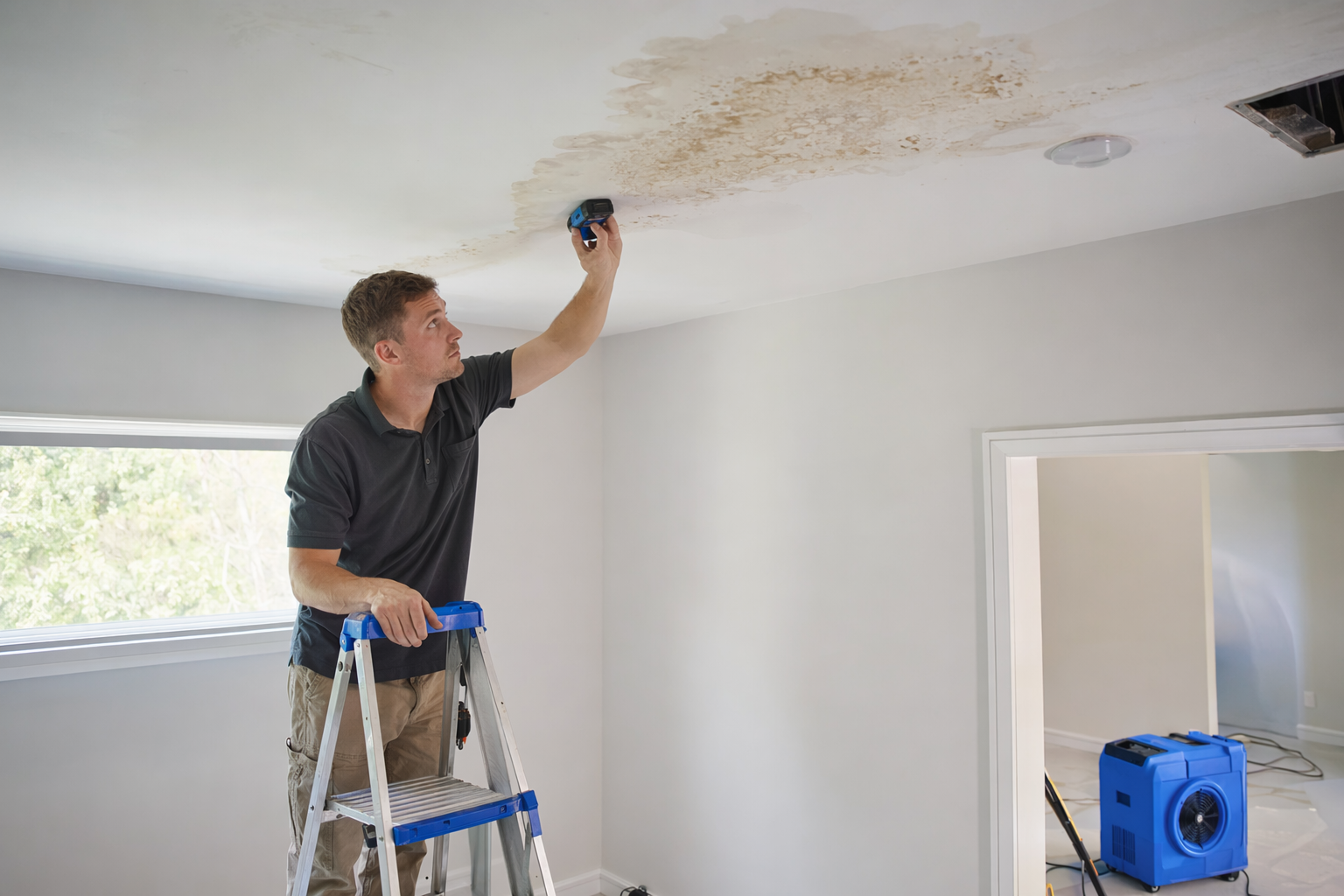
1. Take photos and short videos of: the ceiling stain or dripping spot, nearby walls, floors, and any visible water lines.
2. Write down the time and what you observed: when it started, where the water entered, whether it stopped, and any conversations with the upstairs neighbor or building staff.
3. If safe, blot small puddles with towels and bag the wet towels. Avoid aggressive scraping if it’s soaked—soaked drywall and insulation often need professional assessment.
4. Do not paint over stains or cover wet materials. Sealing wet materials can trap moisture and worsen odor or hidden damage.
5. Check for obvious hazards: bubbling paint, sagging ceiling, popping sounds, or electrical flickering. If the ceiling looks like it may fail, keep people away and contact the building for immediate help.
If you want a short checklist for the earliest steps, see First Hour: What to Do.
- Keep people out of the wet area. Hidden damage can be behind the ceiling and inside the walls.
Understand the common restoration terms (in plain language)
When you talk to a water-damage pro, you may hear a few terms. Knowing what they mean helps you ask better questions.
• Water extraction: pumping out or vacuuming the standing water out fast, especially from floors, carpet, and other porous materials.
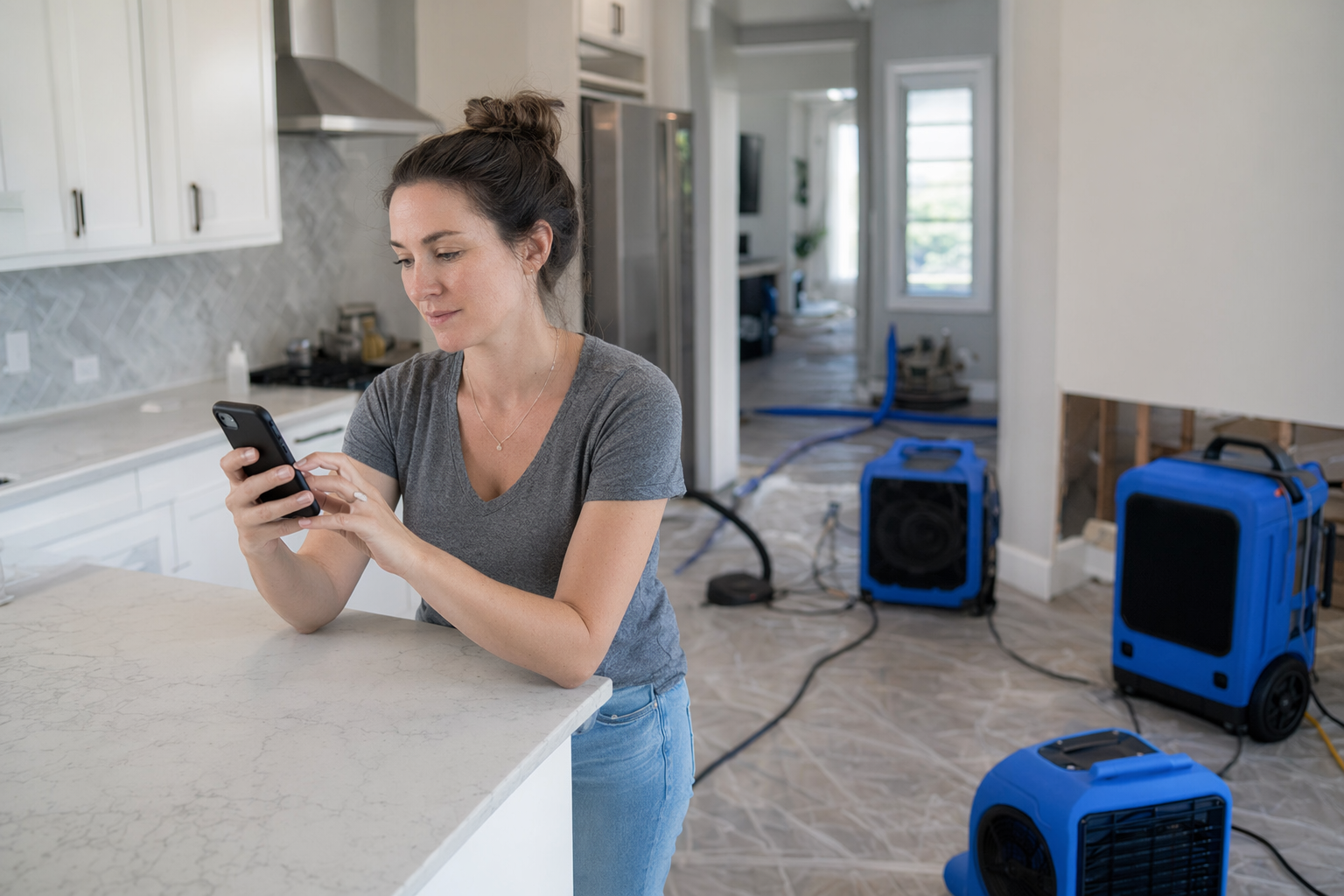
• Structural drying: removing moisture from building materials using air movers (fans) and dehumidifiers. This targets moisture inside walls, under floors, and inside affected cavities—not just the surface.
• Moisture mapping / monitoring: checking moisture levels over time and tracking when materials are drying. This can include readings in different spots, not one single number.
• Dehumidification and ventilation: controlling humidity in the room to speed safe drying.
• Mold remediation: cleanup if mold is found or if contamination requires specific steps. Mold work usually depends on the materials affected and how far moisture spread.
A ceiling leak can affect areas you can’t see. A good pro should focus on drying the right spaces and documenting the process.
- “Restoration” usually includes drying, repairs coordination, and returning materials to a safer, usable condition—what happens depends on what was damaged.
How much will it cost? (Typical ranges—varies a lot)
Costs can be hard to predict from a few pictures because the real drivers are how much water got in, what materials were affected (drywall, insulation, carpet), how long it sat, and your building layout.
Typical cost ranges in the US (planning estimates, not quotes):
• Emergency water extraction: roughly $400–$2,000
• Structural drying for a room or two: roughly $1,500–$5,000
• Whole-home or extensive water-damage restoration: roughly $3,000–$25,000+
• Mold remediation (when needed): roughly $1,500–$6,000
These are only typical ranges. Your actual price depends on your specific situation, your city/state, and the scope of affected materials. For anything with insurance involvement, ask for a written estimate and clear itemized scope.
If you’re ready to request help, you can start by finding local options through DrySpan services and getting matched. DrySpan is a free matching + information service for property owners—it’s not a contractor and it doesn’t do the repair work.
- Get estimates in writing, and make sure the scope matches the actual damage you observed.
Insurance and landlord questions: what to ask (no legal advice)
Coverage rules vary by state and by your insurance policy. Many renters and homeowners have different coverage, and building policies can be different from personal property policies.
What you can do now:
1. Notify your landlord/building management promptly (if you rent) and provide the photos/videos and the timeline you wrote down.
2. If you have renters or homeowners insurance, contact your insurer or agent to ask what documentation they need for a water-loss claim.
3. Ask about timing: whether you must use certain types of contractors, whether drying must be started quickly, and what approval steps apply.
4. If mold is suspected, ask the pro how they would assess and document moisture levels first. Mold decisions generally depend on what’s found and how materials dried.
Because DrySpan is a free matching service (not an insurer and not a legal adviser), we can’t tell you what your policy will pay or how to interpret contract language. But we can help you find a local water-damage pro who can assess the situation and provide a clear, professional plan for drying.
For general guidance on next steps, you can also browse services to see what types of help are usually involved.
- Avoid doing permanent repairs (drywall replacement, painting) until materials are fully dried and assessed.
How DrySpan helps you find the right local water-damage pro (free)
DrySpan is a free matching + information service. We connect you with local water-damage restoration professionals who can assess and advise on the next steps. DrySpan is not a restoration contractor, not a plumber, and not a government agency.
To get matched, you’ll share basic details like your ZIP/city, what happened (ceiling leak from above), and how to reach you. You can also note the language you prefer so the matching process is easier.
Next, you’ll have local options to contact and compare. When you speak with a pro, you can ask about:
• How they determine where the water went (not just the visible stain)
• What drying steps they recommend and how they monitor drying
• How they document the damage for insurance/landlord needs
• Whether they have experience with apartment ceiling leaks and multi-unit buildings
Start here with get matched.
- Matching is free for property owners. Participating pros pay a flat fee to join the network—no extra costs come from using DrySpan.
Act fast to stop the water and keep it safe, document the damage, then use DrySpan (free) to find a local water-damage pro to assess and dry the affected areas.
FAQ
Common questions
Is a ceiling leak an emergency?
It can become an emergency quickly because water can soak into drywall, insulation, and floors within hours. If you see active dripping, spreading water, or any electrical risk, act promptly and keep people out of the area.
Should I turn off the power to the wet area?
If water is near outlets, switches, or lighting, treat it as an electrical hazard. If you can do so safely, turn off power to that area and avoid touching anything wet.
Will mold happen immediately?
Mold requires moisture and time. If materials stay wet, mold can develop. That’s why fast drying and moisture checks are important.
What information should I give a water-damage pro?
Share when it started, whether the water source is stopped, what you’ve seen (drips, stains, ceiling sag), and any photos/videos. A pro can then assess likely affected areas and recommend drying steps.
Does insurance always cover ceiling leaks from upstairs?
Coverage depends on your policy, your state, and whether the issue is considered sudden accidental damage versus long-term maintenance. Contact your insurer for specific guidance and keep your documentation.