Help
Dehumidifier or Fan? What Actually Dries a Room
When water damage happens, drying tools matter—but placement and the right equipment matter more. Learn what actually dries a room (and when to call a local pro).
Start with safety: what not to do
If water is near outlets, cords, or appliances, do not enter. Keep people away from standing water and shut off power only if you can do it safely.
If the water is sewage or flood water, treat it as contaminated. Do not try to clean porous materials (like carpet padding or some drywall) yourself—water-damage pros handle this with proper protection and procedures.
If the leak is still happening, your first goal is to stop the water source. Then drying can actually work. Drying without stopping the source is slow and often doesn’t remove moisture from behind surfaces.
- Rule of thumb: stop the water first, then dry fast.
Dehumidifiers and fans: what each one does
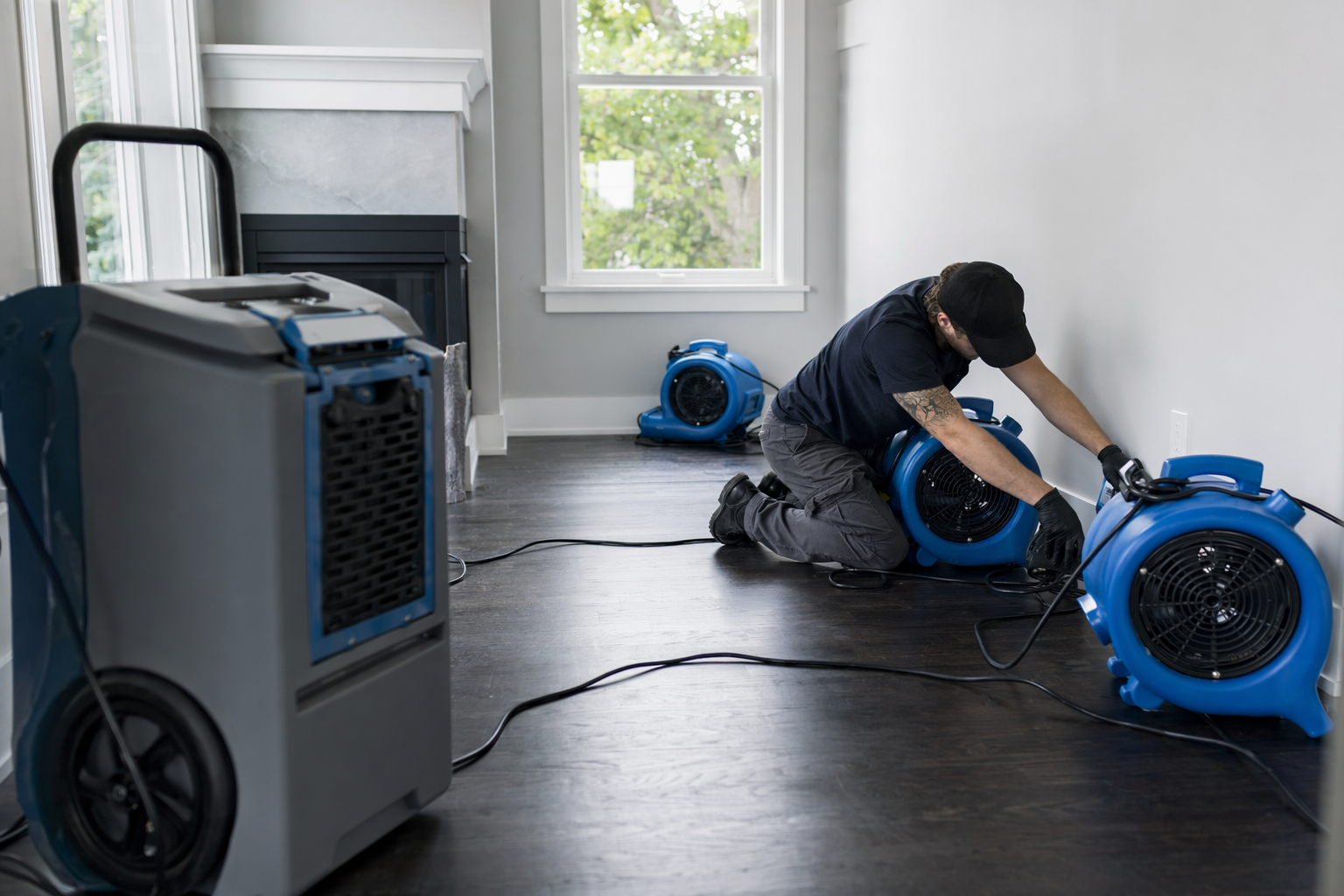
A fan moves air. It can help air circulate across wet surfaces, which supports evaporation and helps drying work faster.
A dehumidifier removes water vapor from the air. Even if you run fans, the room air can stay “wet,” slowing drying. Dehumidifiers pull that moisture out so moisture in walls, floors, and furnishings can keep moving out of the material.
In most water-damage drying, the winning combination is air movement + dehumidification + time. Fans alone often dry the surface but leave moisture deeper in materials and behind walls.
- Fans move air. Dehumidifiers remove moisture from the air.
What actually dries a room (the real process)
1) Water extraction (if there’s standing water): this is pumping and vacuuming standing water out fast. The sooner you remove it, the less water soaks into materials.
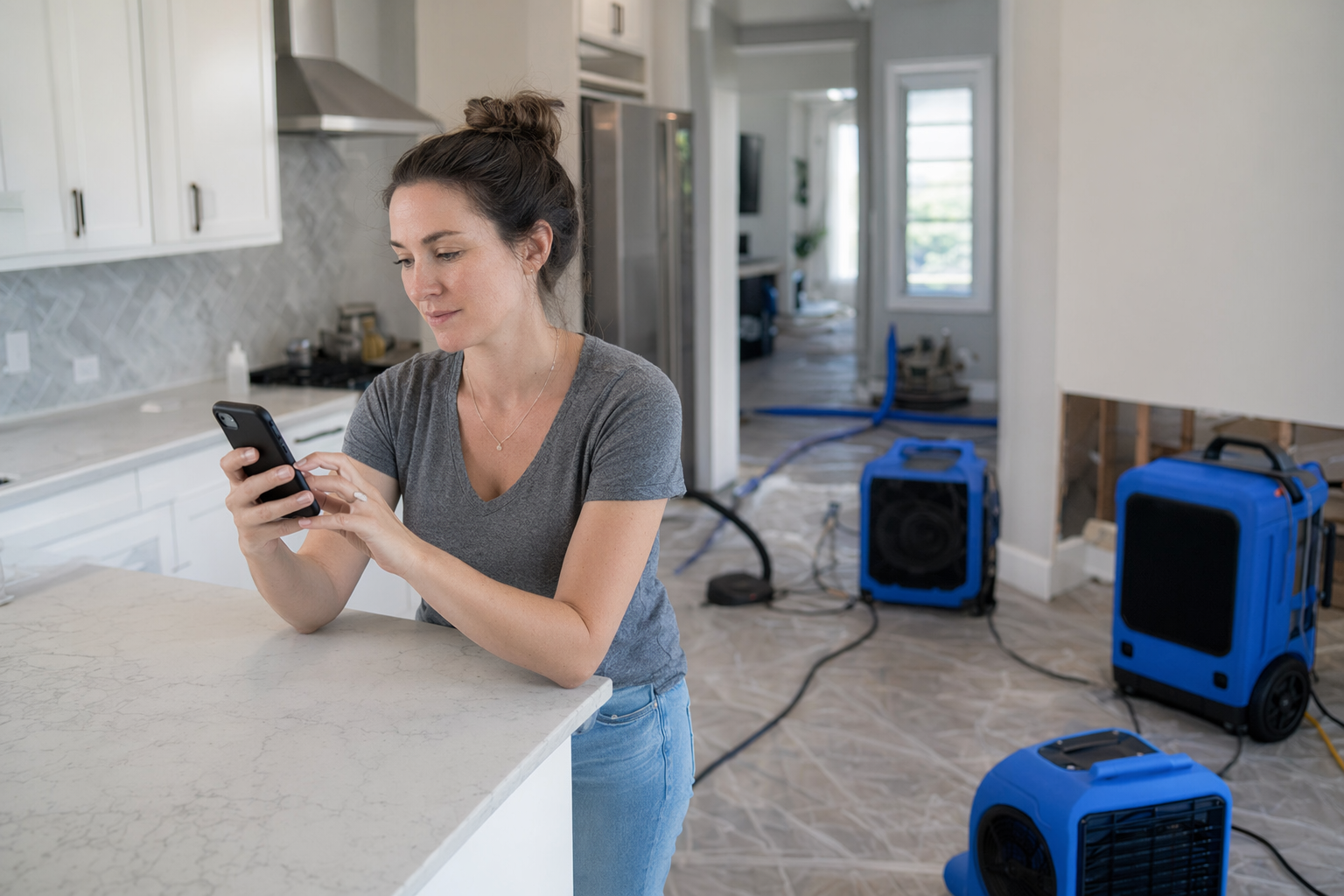
2) Structural drying: pulling moisture out of walls and floors with equipment like air movers (high-powered fans), dehumidifiers, and controlled airflow. This step is usually measured with moisture readings, not just by “it feels dry.”
3) Monitoring and verification: a good drying plan includes checking moisture levels over time. Drying is not the same as “no water on the floor.” Materials can stay damp inside even when surfaces look okay.
If you’re dealing with a burst pipe, leak behind drywall, or a wet basement, the “where the water went” part matters as much as the tools you turn on.
- Surface dry ≠ dry inside walls or under flooring.
When a fan is helpful—and when it’s not enough
Fans can be useful when the area is already mostly free of standing water and the water damage is limited. They can also help freshen air and support drying while you wait for a professional.
But fans alone often fail when:
- water soaked into carpet padding, drywall, or subfloor
- moisture is inside walls or under flooring
- the room stays humid (especially basements)
- the affected area is larger than a small spot
If you notice ongoing dampness, musty odors, warped baseboards, or bubbling paint, it may be deeper than surface wetness. In those cases, professional drying equipment and moisture monitoring are usually the difference between “seems dry” and “is dry.”
- Fans help airflow, but deeper moisture needs extraction + dehumidification + monitoring.
How to choose the right local help (and how costs are estimated)
DrySpan is a FREE matching service, not a restoration contractor. We help you find a local water-damage restoration professional in your area and can connect you to help in many languages.
A trusted pro will talk about what happened, what materials got wet, and what needs to be dried (and checked). Ask whether they use moisture readings to verify drying, and whether they include a written plan for extraction and structural drying.
Typical cost ranges in the US vary a lot by how much water there is, what it touched, building materials, and your city/state. You may see things like:
- Emergency water extraction (pumping/vacuuming standing water): about $400–$2,000
- Structural drying of a room or two: about $1,500–$5,000
- Whole-home water-damage restoration: about $3,000–$25,000+
- Mold remediation (only if needed after drying): about $1,500–$6,000
These are planning estimates, not guarantees or quotes. Always get the final price in writing after they assess the situation.
- Get estimates in writing after an on-site assessment.
A calm, practical plan for the next hours
Water spreads into building materials within hours, so it helps to act soon—but you don’t need to panic.
1. Follow the safety steps above. If there’s a life-safety threat, call your local emergency number first.
2. Stop the water source (turn off the main supply or address the leak if it’s safe).
3. Remove standing water only if you can do so safely and the water is not sewage/flood-contaminated. Otherwise, wait for a pro.
4. If you’re only dealing with a small, non-contaminated area and you’re already out of the danger zone, run air movers/fans plus dehumidifiers as appropriate—then still plan for moisture checks.
5. Use first-hour guide for a simple checklist of what to do early.
6. When you’re ready, use get matched to connect with local water-damage drying pros. DrySpan is free, and matching is available in many languages.
If you want background on what restoration companies do, see services.
- Action-first plan: stop water → remove/assess → dry with the right tools → verify with moisture checks.
Fans and dehumidifiers both help, but water extraction plus structural drying and moisture checks are what actually dry a room—DrySpan can help you find a local pro for free.
FAQ
Common questions
Will running a dehumidifier alone dry the room faster than using a fan?
A dehumidifier removes moisture from the air, but it may not dry wet materials quickly if air isn’t moving across surfaces. In many cases, the best results come from both air movement (fans/air movers) and dehumidification, plus extraction and moisture verification.
How can I tell if the room is truly dry after water damage?
Surface dryness isn’t enough. Professionals typically use moisture readings to verify that materials in walls, floors, and under flooring have dried to safe levels. If you only rely on “no wet spots,” moisture can remain inside and cause recurring odors or damage.
Do I need professional help for a small leak or damp spot?
It depends on what materials got wet and for how long. Even small leaks can soak into drywall, subfloor, or carpet padding. If the area is more than minor, keeps feeling damp, or involves walls/under floors, a local pro can assess and dry using the right equipment.
What should I ask a water-damage pro before they start?
Ask what steps they’ll do first (extraction), how they’ll dry affected materials (structural drying methods), and how they’ll verify drying (moisture monitoring). Also ask for a written plan and written cost estimate after assessment.