Help
Dishwasher Overflow: Cleaning Up Safely
A dishwasher overflow can damage cabinets, floors, and nearby walls quickly. Here’s a calm, step-by-step way to clean up safely—and a free way to connect with a local water-damage pro if you need help.
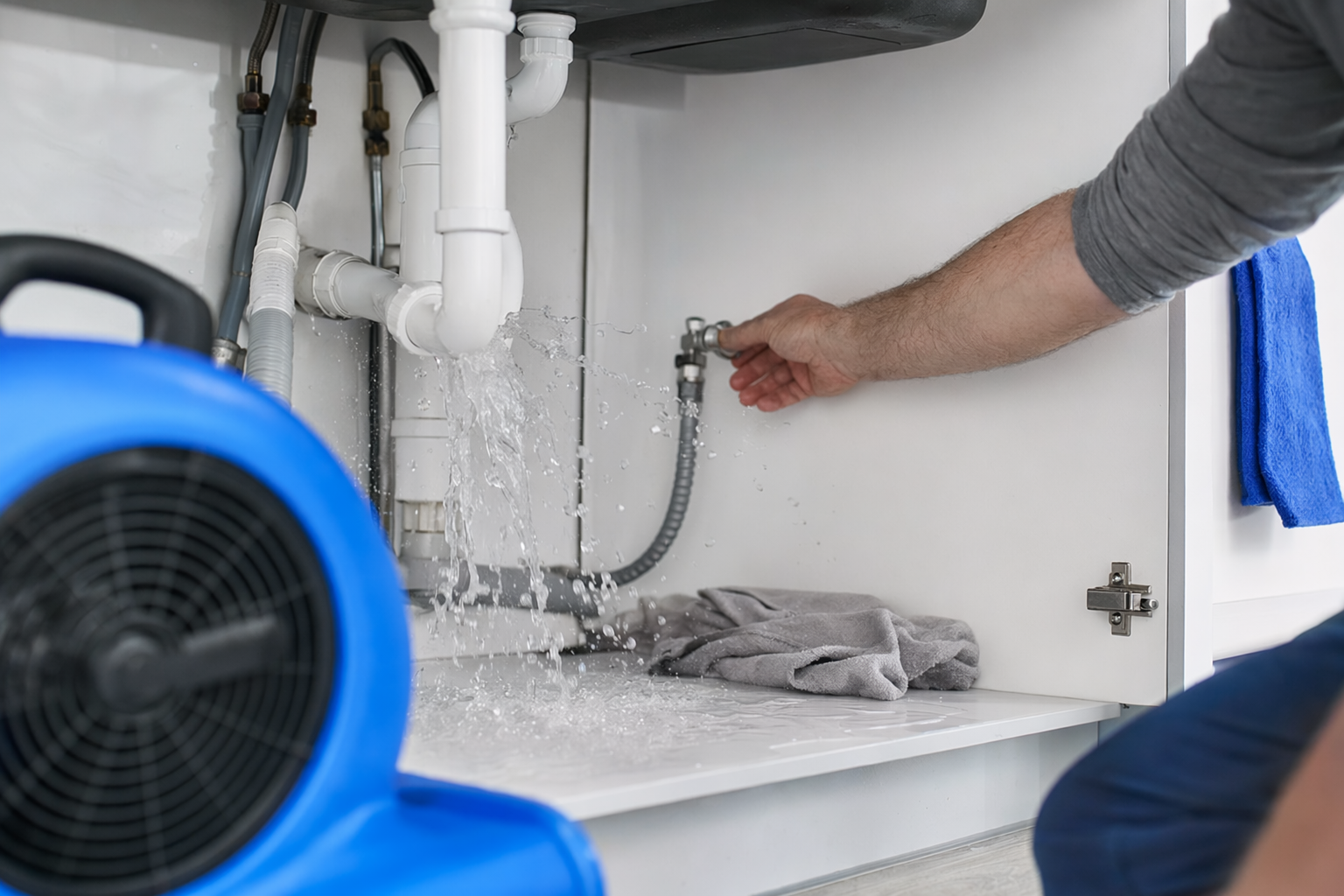
First: make it safe (and decide if water is contaminated)
Dishwasher overflows often involve dirty dishwater. Treat it as potentially contaminated, especially if it touched the drain line or anything in the sink/food area.
If there’s any life-safety risk—sparks, exposed wiring, a strong burning smell, or water near electrical panels—stop and call your local emergency number first.
Then follow these steps:
1. Turn off power to the dishwasher at the breaker (or switch it off at the wall if that’s the safest option).
2. If water is actively coming in, shut off the dishwasher’s water supply valve if you can do so safely.
3. Do not step into standing water if you suspect it’s near outlets, cords, or wiring.
4. If the overflow looks like it involved sewage (backup from drains) or has a dirty, foul smell, treat it as contaminated and plan for professional help.
If you’re unsure whether it’s contaminated, it’s safer to assume it is and avoid spreading water into other rooms.
Do the quick cleanup you can (before moisture spreads)
Water damage gets more expensive when it soaks into floors, under cabinets, and drywall. Even with a small overflow, acting soon helps.
For a typical dishwasher overflow, you can often reduce damage with fast, careful cleanup:
1. Remove standing water using towels and a wet/dry vacuum if you have one rated for wet cleanup. (Do not use household vacuums if the water is contaminated.)
2. Remove wet items: rugs, mats, trash, and anything soaking in the area.
3. Wipe down accessible surfaces. But avoid soaking porous materials (like particleboard, unsealed wood, or cardboard).
4. Dry as much as possible immediately.
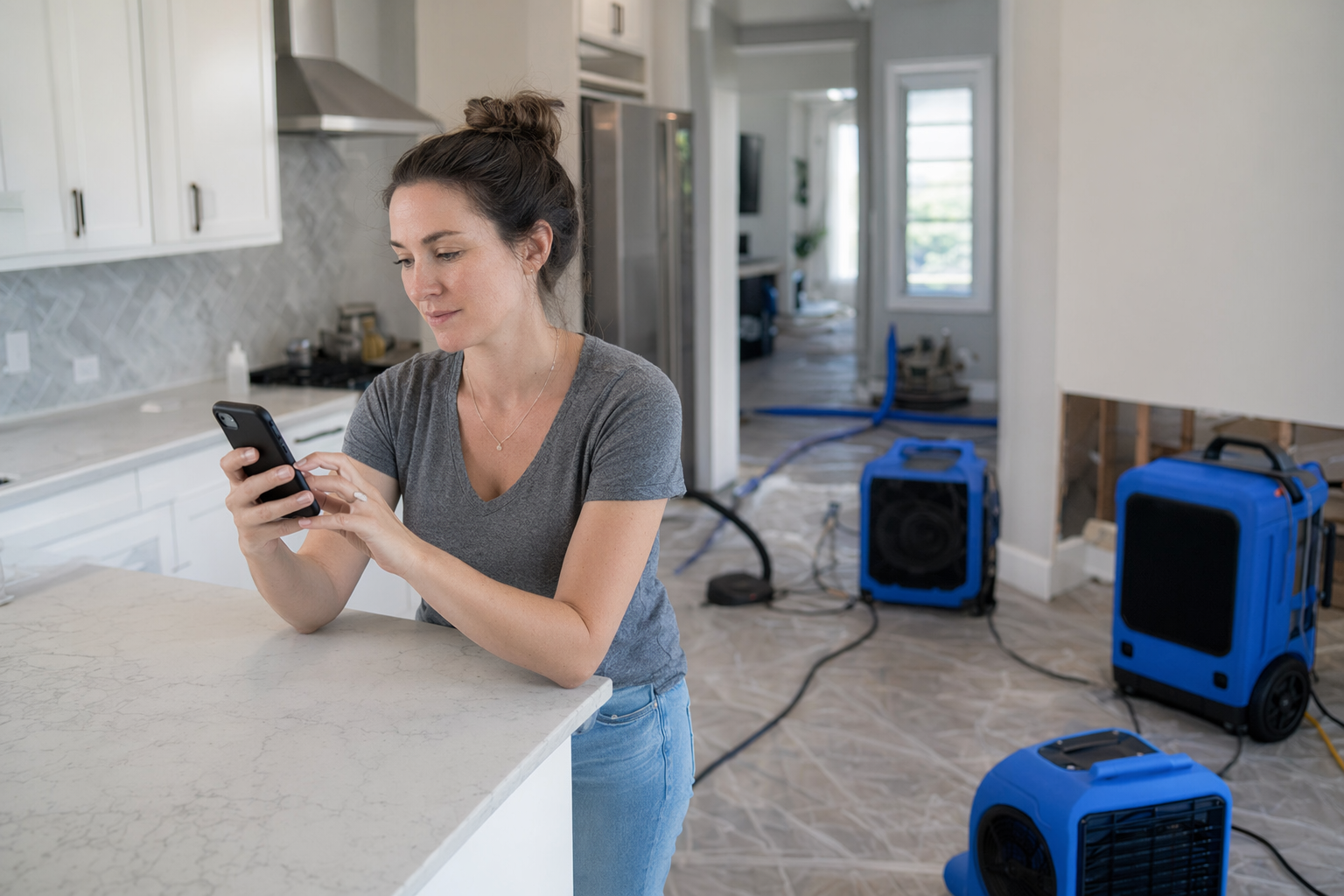
After the visible water is cleaned up, keep drying. Structural drying (pulling moisture out of walls and floors using air movers and dehumidifiers) may be needed even after the floor looks dry.
Look for signs you need a water-damage pro
Some damage is hidden. Water can run behind cabinets or under flooring where you can’t see it.
Consider calling a local water-damage restoration pro if any of these apply:
- Water reached areas beyond the immediate kitchen floor (for example, cabinets, baseboards, walls, or adjacent rooms).
- There is swelling, bubbling paint, soft drywall, or warped wood.
- The leak source isn’t obvious (for example, unknown plumbing issue under the sink).
- The affected area is larger than a small spot, or drying is difficult to complete.
- You suspect contaminated water from a drain or sewage backup.
DrySpan is a free matching service, not a restoration contractor. If you want, you can use Get matched to find a local, water-damage restoration professional in your area who can assess the situation and explain next steps.
How much it may cost (typical ranges—depends on the damage)
Costs vary a lot. The real price depends on how much water was released, how long it was there, what materials were touched (wood, drywall, laminate, tile), where it traveled, and your city/state.
Typical US cost ranges you may hear (planning estimates, not quotes):
- Emergency water extraction (pumping and vacuuming standing water out fast): about $400–$2,000.
- Structural drying of a room or two (pulling moisture from floors and walls with air movers and dehumidifiers): about $1,500–$5,000.
- Whole-home water-damage restoration: about $3,000–$25,000+.
- Mold remediation (if it becomes necessary later): about $1,500–$6,000.
Ask any pro to explain what they plan to do, what equipment they’ll use, and how they will document the dry-out process. Get the details in writing so you can compare information across companies.
Insurance basics and what to document
Insurance rules and coverage vary by state and by your policy. A lot of policies cover sudden water damage, but not all types of leaks.
To help you work with your insurance, focus on documentation:
- Take clear photos and short videos of the affected areas, the water source if visible, and any damaged materials.
- Keep receipts for purchases (towels, fans, drying equipment) and any contractor diagnostics you hire.
- Write down key times: when you noticed the overflow, when water was stopped, and when cleanup began.
If you’re unsure what to say to an insurer or how to file, consider asking your insurer directly for their instructions. DrySpan can help you find local restoration pros, but we do not provide legal or insurance advice.
A short story: acting fast can help
A renter in a small apartment noticed water pooling near the kitchen cabinets after a dishwasher cycle. The water looked dirty and smelled unpleasant, so they turned off power at the breaker and stopped the water flow. They cleaned up standing water with towels and a wet/dry vacuum they could safely use, then focused on drying the area quickly.
Even after the floor looked better, they saw damp cabinet bottoms and worried the water had traveled behind the kitchen base. They used DrySpan to get matched with a local restoration pro for an on-site assessment. The pro explained how moisture can sit under flooring and in cabinet structures even when it’s not obvious.
The renter kept photos, drying notes, and receipts. They asked the pro to outline drying steps and what to watch for next. By dealing with the moisture early, the renter reduced the chance that the problem would spread into more areas of the unit.
For a dishwasher overflow, turn off power and stop the water if it’s safe, clean and dry fast, watch for hidden cabinet/wall moisture, and use DrySpan (free) to find a local water-damage pro if needed.
FAQ
Common questions
Is a dishwasher overflow always bad enough to need a professional?
Not always. If it’s a very small amount of clean water and you can fully dry the area, you may manage it yourself. If the water was dirty/contaminated, reached cabinets or walls, or you suspect moisture behind surfaces, a local water-damage pro can assess hidden damage and recommend drying steps.
What does “structural drying” mean?
Structural drying is the process of removing moisture from building materials like floors, drywall, and the inside of walls using equipment such as air movers and dehumidifiers. It’s often done even when surfaces look dry, because moisture can remain trapped.
Will mold grow from a dishwasher overflow?
Mold growth depends on moisture level, how long surfaces stay wet, and the materials involved. Acting quickly to dry can reduce risk. If mold is present or suspected later, professionals often handle mold remediation.
How fast should I call someone after an overflow?
Water can spread into materials within hours, so it helps to act soon—especially if water reached cabinets, walls, or multiple rooms. If you see signs of hidden damage or suspect contaminated water, consider contacting a local pro promptly.
How do I get started using DrySpan?
DrySpan is a free matching service. Use [Get matched](/get-matched/) or visit [Services](/services/) to learn how matching works, then share what happened and where you are so you can be connected to local water-damage restoration professionals.