Help
How to Dry Out Walls After a Leak
If a leak soaked your walls, the safest next step is to stop the water, check for danger, and start drying right away. DrySpan is a free matching service, not a restoration contractor, and we can help you find a local pro in your language.
What to do first
Wet walls can keep trapping moisture even after the floor looks dry. Water can spread inside drywall, insulation, and wood, so it helps to act soon.
1. If water is still coming in, shut off the source if you can do so safely.
2. If there is any risk of electricity, do not touch wet outlets, cords, or appliances. Stay out of standing water near power.
3. If the water is from sewage, floodwater, or a hidden source you cannot identify, treat it as contaminated.
4. Take photos and short notes for your records before cleanup, if it is safe.
5. Start ventilation: open windows if weather allows and set fans where there is no electrical danger.
- If there is an active leak in a ceiling or wall, call your local emergency number for any life-safety threat first.
- If the wall is bulging, sagging, or crumbling, do not keep probing it.
How walls dry out
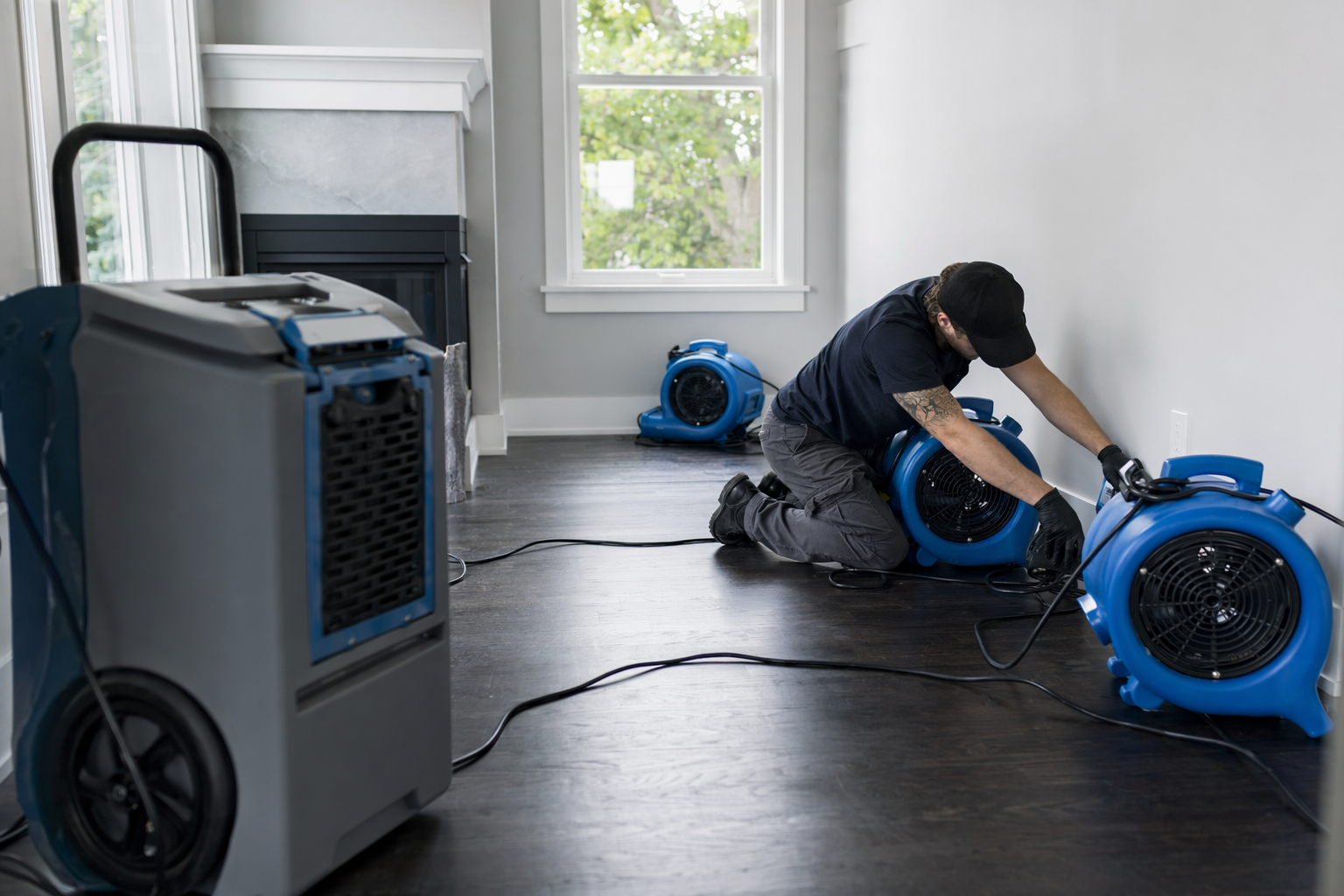
A wall usually needs more than a fan. Pros often use water extraction, which means pumping and vacuuming out standing water, then structural drying, which means pulling moisture out of walls and floors with air movers and dehumidifiers.
Drywall, insulation, baseboards, and framing may all dry at different speeds. In many cases, a pro will check moisture with a meter and decide whether parts of the wall can be dried or need to be removed and replaced.
If you smell musty odors, see staining, or the wall still feels cool and damp after a day or two, there may still be moisture inside. That is one reason a professional inspection can matter after a leak.
- Do not paint over wet drywall.
- Do not close up a wall until the inside is truly dry.
What you can safely do yourself
You can help the drying process, but only when it is safe to enter the area. Keep the area as open as possible and move small items away from the wet wall.
Use fans and a dehumidifier if the room is safe and dry enough for power equipment. Keep air moving across the room, not just blasting one spot. If the wall got wet from a clean water leak, gentle airflow can help until a pro arrives.
If the leak involved sewage, storm water, or a long-standing hidden leak, do not assume the wall is safe to salvage. Contaminated water can create health risks and usually needs more careful cleanup.
- Wear basic protection if you must enter a damp area: gloves, closed shoes, and a mask if there is dust or mold-like debris.
- If you are unsure whether the wall is safe, wait for a restoration pro to inspect it.
What it may cost
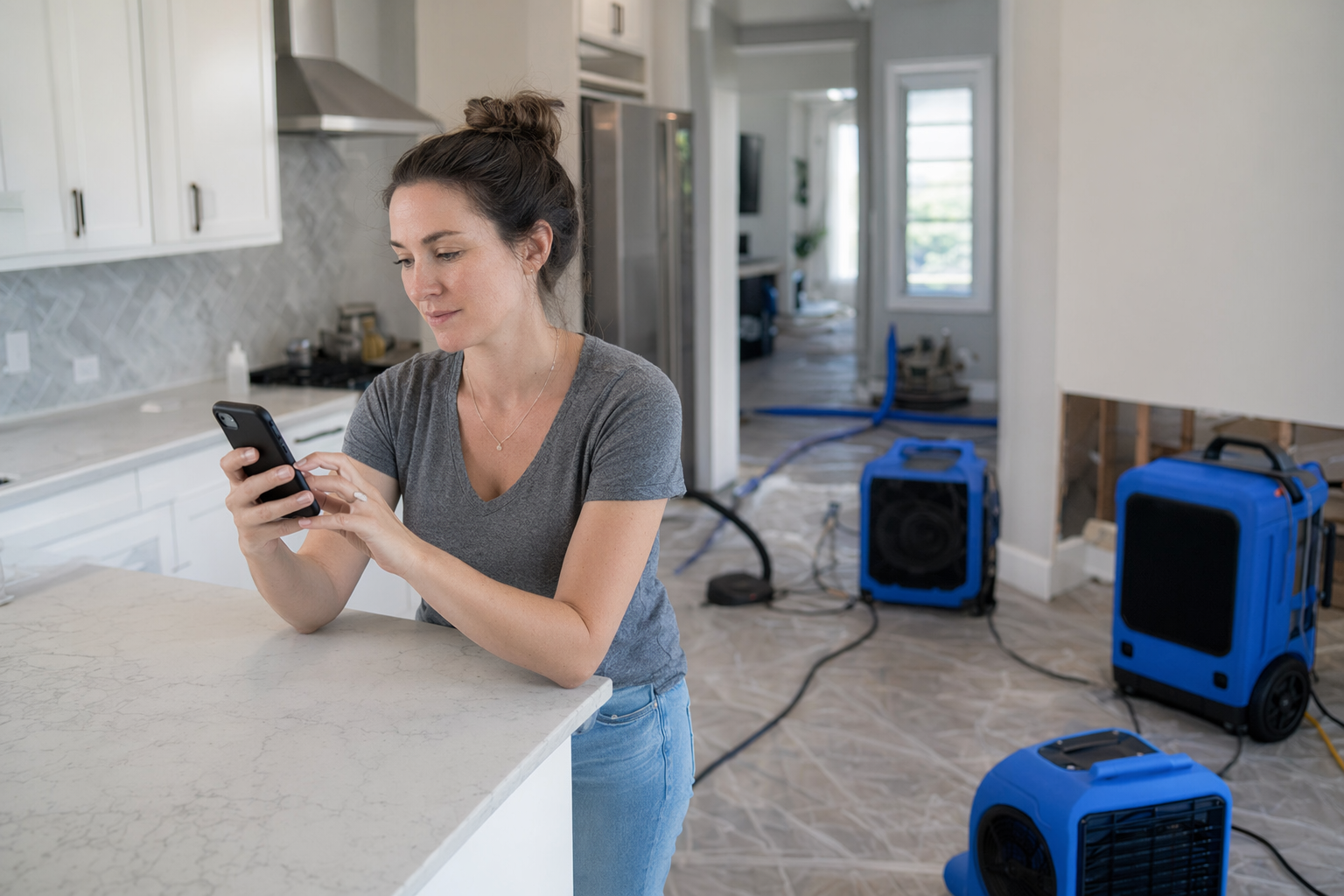
Costs depend on how much water got in, what the wall is made of, whether insulation or framing was affected, and your city or state. These are typical US planning ranges only, and the real price should be given in writing after inspection.
Typical ranges, varies a lot: emergency water extraction roughly $400-$2,000; structural drying of a room or two roughly $1,500-$5,000; whole-home water-damage restoration roughly $3,000-$25,000+; mold remediation roughly $1,500-$6,000.
Insurance coverage also varies by policy and by the cause of the leak. A pro can often document damage for you, but DrySpan does not give insurance advice or guarantee coverage.
- Ask for an itemized estimate.
- Get the scope of work in writing before repairs start.
How DrySpan can help
DrySpan is a free matching service. We help you find a local water-damage restoration professional, and help is often available in your own language.
Use Get matched to share a few basics: your city or ZIP code, what happened, how to reach you, and your language preference. We do not ask for medical history, immigration documents, or government ID numbers.
You can also read the first-hour guide or learn more about our service. A good next step is to compare options, ask questions, and choose the pro that feels right for your situation.
- Matching is free for property owners and renters.
- Participating pros pay a flat fee to join the network.
Stop the leak if you can do it safely, keep away from electrical danger, and get the wall checked fast so hidden moisture does not turn into bigger damage.
FAQ
Common questions
Can I just run fans and wait for the wall to dry?
Sometimes a small, clean-water leak can dry with help from fans and a dehumidifier, but walls often hold moisture inside. If the leak was large, hidden, or involved sewage or floodwater, it is safer to have it checked.
How do I know if the wall needs to be opened?
A wall may need to be opened if it is soft, swollen, stained, smelly, or still wet inside after drying. A restoration pro can use a moisture meter and explain whether parts can be saved.
Will insurance pay for wall drying?
Maybe, but coverage depends on your policy and what caused the leak. DrySpan cannot tell you what your insurer will cover, so ask your insurer and get the repair scope in writing.
Is DrySpan a contractor?
No. DrySpan is a free matching and information service, not a restoration contractor. We help you find a local pro; we do not perform the work ourselves.