Help
How Long Does It Take to Dry Out a House?
When a home floods or a pipe bursts, drying time depends on how much water, what it touched, and the weather. Here’s a practical timeline and what to do next to reduce damage—plus free local matching from DrySpan.
The short answer: drying usually takes days to weeks
Most water-damage drying happens in the first days, but “dry” can be different from truly dry inside materials.
In many cases, homeowners see visible improvement within 1–3 days after proper water extraction and drying equipment start. Full drying can take longer—often about 1–3 weeks—especially if water got into walls, flooring layers, insulation, or crawl spaces.
Drying time also changes if the water is contaminated (like sewage backup), if temperatures are low, or if there isn’t good airflow or dehumidification.
- Fast action helps prevent water from spreading further into drywall, wood, and insulation.
A simple timeline you can expect (typical ranges)
Every case is different, but here is a plain-language guide.
1. First hours (the most important period): Water should be stopped and removed as soon as it’s safe. This is called water extraction—pumping out standing water and vacuuming what can be removed.
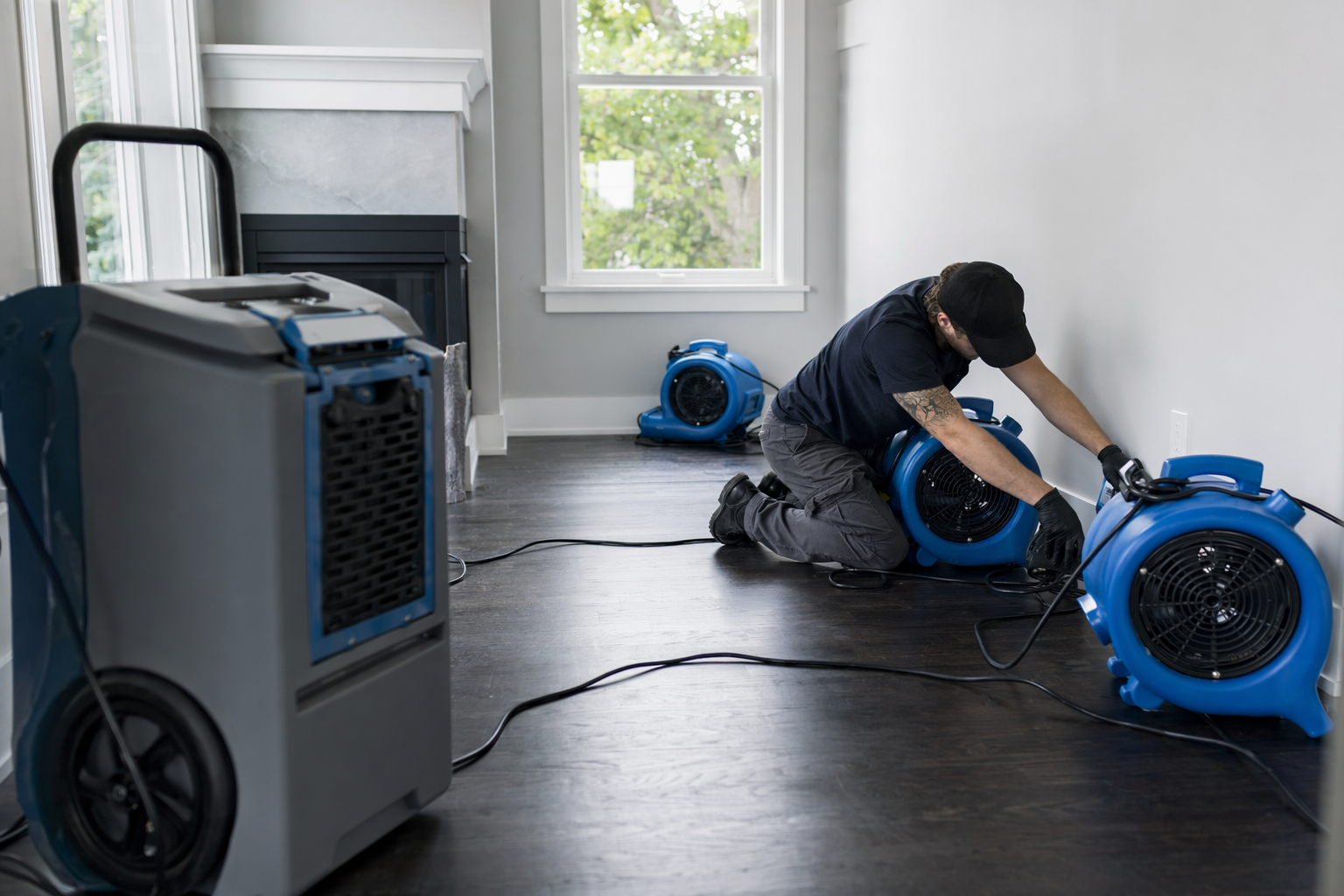
2. Days 1–3: Structural drying usually begins right after extraction. Technicians use air movers (fans that push air across materials) and dehumidifiers (machines that pull moisture out of the air). Moisture levels inside building materials are tracked with moisture meters.
3. Days 4–10: Drying continues. Drywall and floor layers may still feel cool or damp while moisture moves out from deeper layers.
4. Weeks (often 1–3 weeks, sometimes longer): If water reached multiple materials (wet insulation, wall cavities, subfloor), it can take longer for moisture to return to normal. In some situations, the right pro may also recommend selective removal of materials that cannot dry safely.
If you’re working with an insurance claim, the drying timeline can affect what documents and measurements are available—so it helps to start quickly and keep notes.
- Dry time depends on materials. Drying drywall is different from drying concrete slabs, and drying a crawl space can be different from drying a finished room.
What changes drying time the most
Drying time is mainly driven by four factors: how much water, where it went, what it touched, and how the environment helps or hurts drying.
Amount and speed: A small leak caught quickly may dry faster than several days of water from a burst pipe. If water keeps entering the home, drying won’t “catch up.”
Materials involved: Porous materials like drywall, carpeting, padding, insulation, and wood absorb water and release it slowly. Non-porous surfaces may dry faster, but moisture can still get trapped in layers.
Condition of the water: Clean water (like a broken supply line) is usually easier to manage than sewage or flood water, which is treated as contaminated and may require extra care.
Home conditions: Humidity, temperature, airflow, and whether furniture is blocking vents all affect how fast moisture can leave materials. If drying equipment is inadequate, drying can stall.
- DrySpan is a free matching service, not a restoration contractor—so we can help you find a local pro to assess the situation.
What to do right now to reduce drying time
You can’t control every factor, but you can control what happens first. Here is a calm plan for the next steps.
1. Make sure it’s safe: Do not walk through standing water near electrical outlets, cords, or breaker panels. If there’s any life-safety risk, call your local emergency number.
2. Stop the source if you can: Shut off the water supply for a burst pipe or leak if it’s safe to do so. If the water is coming from outside or you can’t stop it safely, focus on safety and call appropriate help.
3. Treat sewage/flood water as contaminated: Wear protective gear if you have it. Avoid spreading water by tracking it through the home.
4. Ventilation and belongings: If it’s safe, move small items away from wet areas. Remove wet rugs and lift wet materials so air can reach the underside.
5. Arrange water extraction and structural drying: Look for a qualified water-damage restoration pro who can explain the drying plan, set up air movers and dehumidifiers, and measure moisture.
6. Document what happened: Take photos of visible damage and note dates/times (for your own records). If you have insurance, follow your policy’s instructions.
If you want a quick next step, get matched for free with local pros who can assess your situation. You can also read first-hour guidance to understand what matters most early on.
- Drying time often improves when the right equipment starts soon after water is removed.
How mold fits into the timeline (and when to worry)
Mold concerns can start after water exposure, especially with wet drywall, damp insulation, or slow drying.
A proper drying process—water extraction plus structural drying—helps reduce moisture levels and lowers mold risk. That’s why starting drying promptly is so important.
If you see strong musty odors, visible mold growth, or ongoing wet areas, ask the restoration pro to explain what they will do to address moisture first and whether any mold remediation work is needed. Mold remediation is separate from drying and may include cleaning affected materials and, in some cases, removing materials that can’t be cleaned.
Typical mold remediation cost ranges are often about $1,500–$6,000, depending on the size of the affected area and the materials involved. Your actual cost depends on what was wet, how far it spread, and your local market—always request written scope and pricing.
- This page provides general information—not medical or legal advice.
Cost expectations and insurance: what to ask about
How long it takes to dry can affect total cost. Pricing also depends on equipment needs, labor hours, and whether any materials must be removed.
Typical US planning ranges (varies a lot):
- Emergency water extraction (pumping/vacuuming): about $400–$2,000
- Structural drying for part of a home (one or two areas/rooms): about $1,500–$5,000
- Whole-home water-damage restoration: about $3,000–$25,000+ (varies widely)
- Mold remediation: about $1,500–$6,000 (if needed)
Drying work isn’t a guarantee of a final cost. Ask the pro for a written assessment that explains the affected materials, the drying approach (air movers/dehumidifiers), and how they’ll monitor moisture levels. If you’re dealing with insurance, coverage rules vary by state and by your policy, and your insurer may have specific steps.
DrySpan is a free matching and information service. We’re not a contractor and we don’t handle restoration work. To find local options, visit services to understand common steps, then get matched so you can talk with pros in your area in your preferred language when available.
- Always get information in writing. Avoid verbal-only estimates.
Drying time is usually days to a few weeks, depending on how much water got into which materials—so act fast, then use monitored structural drying with a qualified local pro.
FAQ
Common questions
Why does it sometimes feel dry in a room, but still take weeks to fully dry out?
Surface dryness doesn’t always mean the deeper layers are dry. Moisture can be trapped in drywall, wood, insulation, or subfloor layers, and it can take additional time for air movers and dehumidifiers to pull it out. Professionals usually measure moisture to confirm.
Does the drying timeline change for flood water or sewage backup?
Yes. Flood and sewage water are treated as contaminated, which can require extra safety steps and careful handling. Drying may also take longer if water reaches more materials or if conditions are harder to control.
How can I tell if drying equipment is working?
A good drying plan includes moisture monitoring. Ask the pro how they will track moisture levels over time and what readings show. If moisture levels are not trending down, the plan may need adjustment.
Will my insurance cover water damage drying and restoration?
Coverage depends on your policy, your state, and what caused the water damage (and whether it was preventable). The pro you hire can help with documentation, but the final decision is made by your insurer.