Help
How to Shut Off Your Water Main Fast
If water is coming into your home, the main shutoff can help limit damage fast. Here is a calm, simple plan, plus a free way to find a local water-damage pro if you need one.
First: make it safe
If you see standing water near outlets, wires, appliances, or the breaker panel, do not step into it. If there is any life-safety danger, call your local emergency number first.
If the water looks dirty, smells bad, or came from a sewer backup, treat it as contaminated. Keep kids and pets away. Wear boots and gloves if you must walk through the area.
If you can reach the shutoff without entering unsafe water, you can try to stop the flow at the main valve.
How to find and turn off the main water shutoff
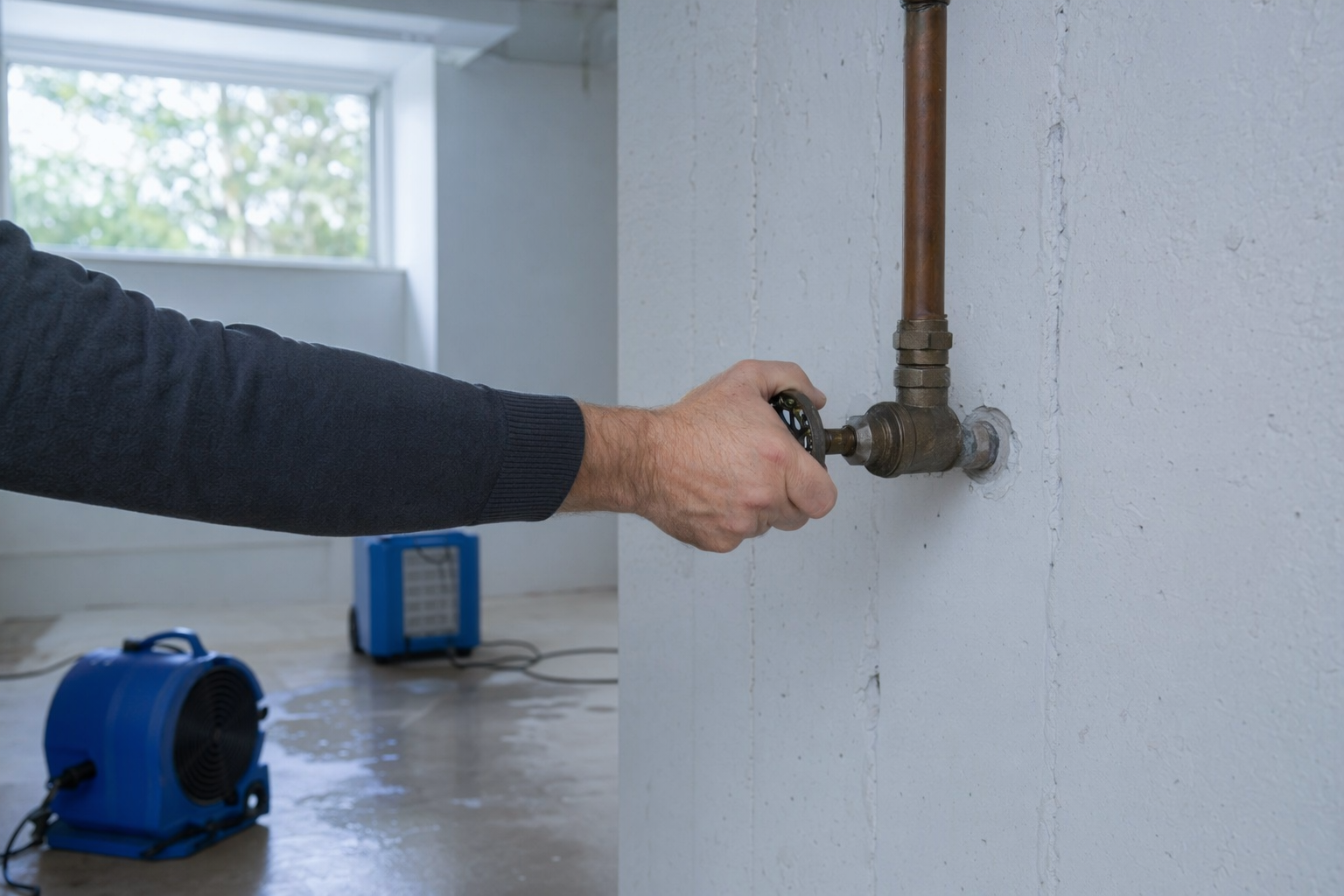
1. Look for the water meter or the pipe where water enters the home. The main shutoff is often nearby, in a basement, utility room, crawl space, garage, or outside by the meter.
2. If you have a wheel-style valve, turn it clockwise until it stops. If you have a lever-style valve, turn the handle a quarter turn so it is crosswise to the pipe.
3. After you shut it off, open a faucet on a lower floor to help drain remaining water in the pipes.
4. Check whether the water has stopped. If it has not, the valve may be stuck, broken, or not the correct shutoff.
If you cannot find the valve quickly, do not waste time searching in unsafe areas. Go to the next step and get help.
If the shutoff is stuck or you cannot reach it
Do not force a valve that will not move. A broken shutoff can turn a small problem into a bigger one.
If water is still running, you may need your utility company, building maintenance, landlord, or an emergency plumber to help stop it. For apartments and multi-unit buildings, the main shutoff may be in a shared area.
After the water is off, move to drying and cleanup. Water spreads into floors, walls, and cabinets within hours, so it helps to act soon.
What to do right after the water is off
Start with the simple steps that reduce damage:
1. Remove standing water if it is safe to do so.
2. Move rugs, boxes, and furniture to a dry area.
3. Lift curtains and wipe up what you can.
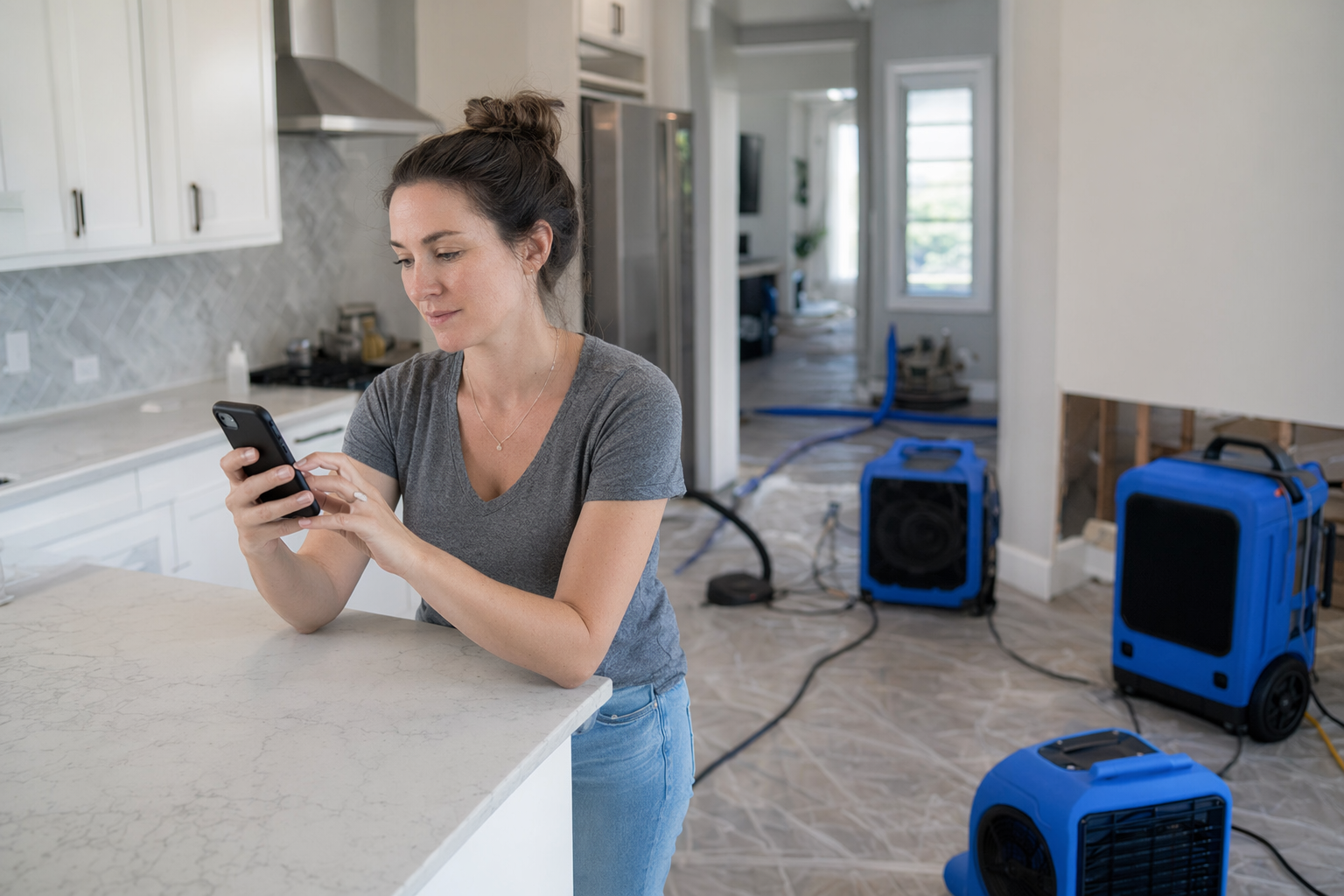
4. Run fans and dehumidifiers if power is safe to use.
5. Take photos and short videos for your records.
If the damage is more than a small spill, a water-damage restoration pro can help with water extraction, which means pumping and vacuuming standing water out fast, and structural drying, which means pulling moisture out of walls and floors with air movers and dehumidifiers.
DrySpan is a free matching service, not a restoration contractor. We help people find local pros who work on burst pipes, leaks, floods, storm damage, and sewage backup.
What it may cost to fix the damage
Turning off the main valve itself usually does not cost anything if you can do it safely. If you need a plumber, emergency service fees vary by city, time of day, and how hard the valve is to access.
For restoration work, typical U.S. planning ranges are: emergency water extraction roughly $400-$2,000; structural drying for a room or two roughly $1,500-$5,000; whole-home water-damage restoration roughly $3,000-$25,000+; mold remediation roughly $1,500-$6,000. These are only typical ranges, vary a lot, and you should get it in writing.
The real price depends on how much water there is, what it touched, the size of the property, and your city and state. Insurance coverage also varies by policy.
How DrySpan can help after the shutoff
If you still need help after turning off the water, you can use Get Matched to share basic contact intent, your ZIP or city, what happened, and your language preference. We do not ask for medical history, immigration documents, or government ID numbers.
We then help match you with a local water-damage restoration professional in your area. Help can often be found in your own language, and matching is always free.
If you want to understand the broader process first, see the first hour guide or learn more about our free matching service.
Find the main shutoff, turn it off safely, then dry the area and get help fast if the damage is more than small.
FAQ
Common questions
Where is the main water shutoff usually located?
It is often near the water meter, where the water line enters the home, or in a basement, utility room, crawl space, garage, or outside near the meter. In apartments, it may be in a shared utility area or managed by the building.
What if I turn off the wrong valve?
A wrong valve may stop one fixture or a branch line, but not the whole home. If the water is still running after a few seconds, stop and look for the main shutoff or contact building maintenance, your utility company, or a plumber.
Should I call a water-damage company before or after shutting off the water?
If it is safe, shut off the water first, then call for help. If you cannot safely reach the valve, call for help right away and keep clear of any electrical or contaminated water.
Will insurance pay for this?
Coverage depends on your policy and what caused the damage. It is common for policies to differ by state and by situation, so document the damage and check with your insurer as soon as you can.