Help
Washing-Machine Leak: What to Check First
If your washing machine is leaking, start with safety and stop the water if you can. Then check where the leak is coming from, because a small drip can spread into floors, walls, and nearby rooms fast.
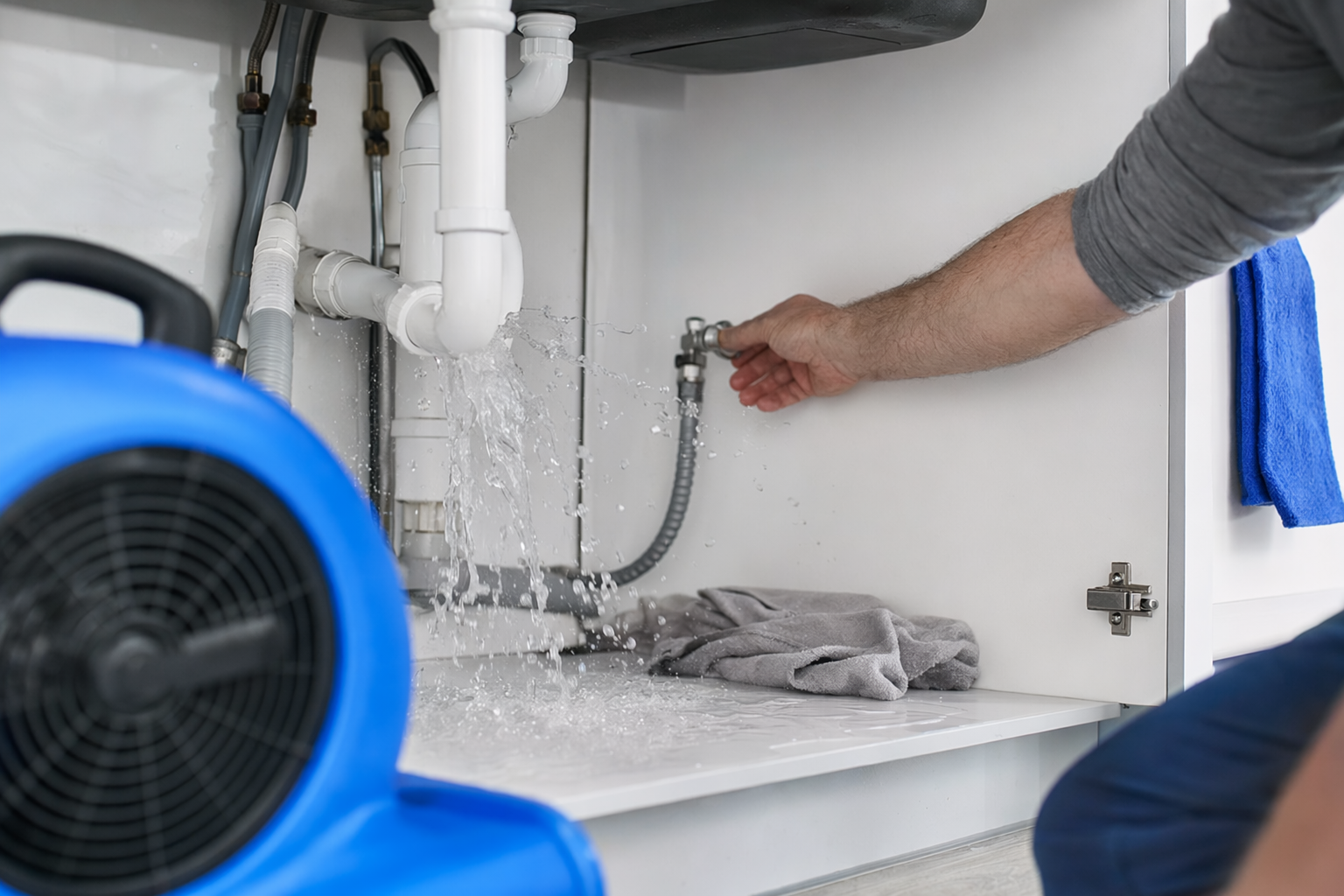
What to do first
Take a breath and look for immediate danger. If water is near outlets, cords, or the machine’s plug, do not step into it. If you smell burning, see sparks, or there is any risk to people, call your local emergency number first.
1. Turn off the washing machine.
2. If you can reach it safely, close the hot and cold water valves behind the washer.
3. Unplug the machine only if the floor is dry enough to do so without standing in water.
4. Move nearby rugs, boxes, and furniture out of the wet area.
5. Put towels or a bucket under the leak if that can be done safely.
If the water is from a flood, backed-up drain, or sewage, treat it as contaminated. Avoid touching it with bare skin and keep kids and pets away.
- Do not enter standing water near electricity.
- If you cannot shut off the water safely, wait for help.
Find the source of the leak
A washing-machine leak can come from a loose hose, a cracked hose, a drain issue, a door seal, or an internal part. Seeing the source helps you describe the problem clearly when you ask for help.
Check these common spots:
- Supply hoses at the back of the machine
- The drain hose where it meets the wall or standpipe
- The door or lid seal
- The detergent drawer or dispenser area
- The floor under the washer, which can point to a cracked pump or internal line
If you see a hose that is bulging, split, or dripping, stop using the washer until it is checked. Even a slow leak can soak into subflooring and baseboards.
- Take a few photos if it is safe to do so.
- Note whether the leak happens while filling, washing, or draining.
What to dry right away
Start removing water from the surface right away. The faster you dry the area, the less chance there is of damage spreading into the subfloor, drywall, or cabinets.
1. Blot or mop up standing water.
2. Pull back bath mats, area rugs, and anything touching the floor.
3. Open cabinet doors and closet doors near the leak.
4. Run fans and a dehumidifier if you have them and the area is safe.
5. If water reached walls, baseboards, or ceilings below, get a water-damage pro to inspect soon.
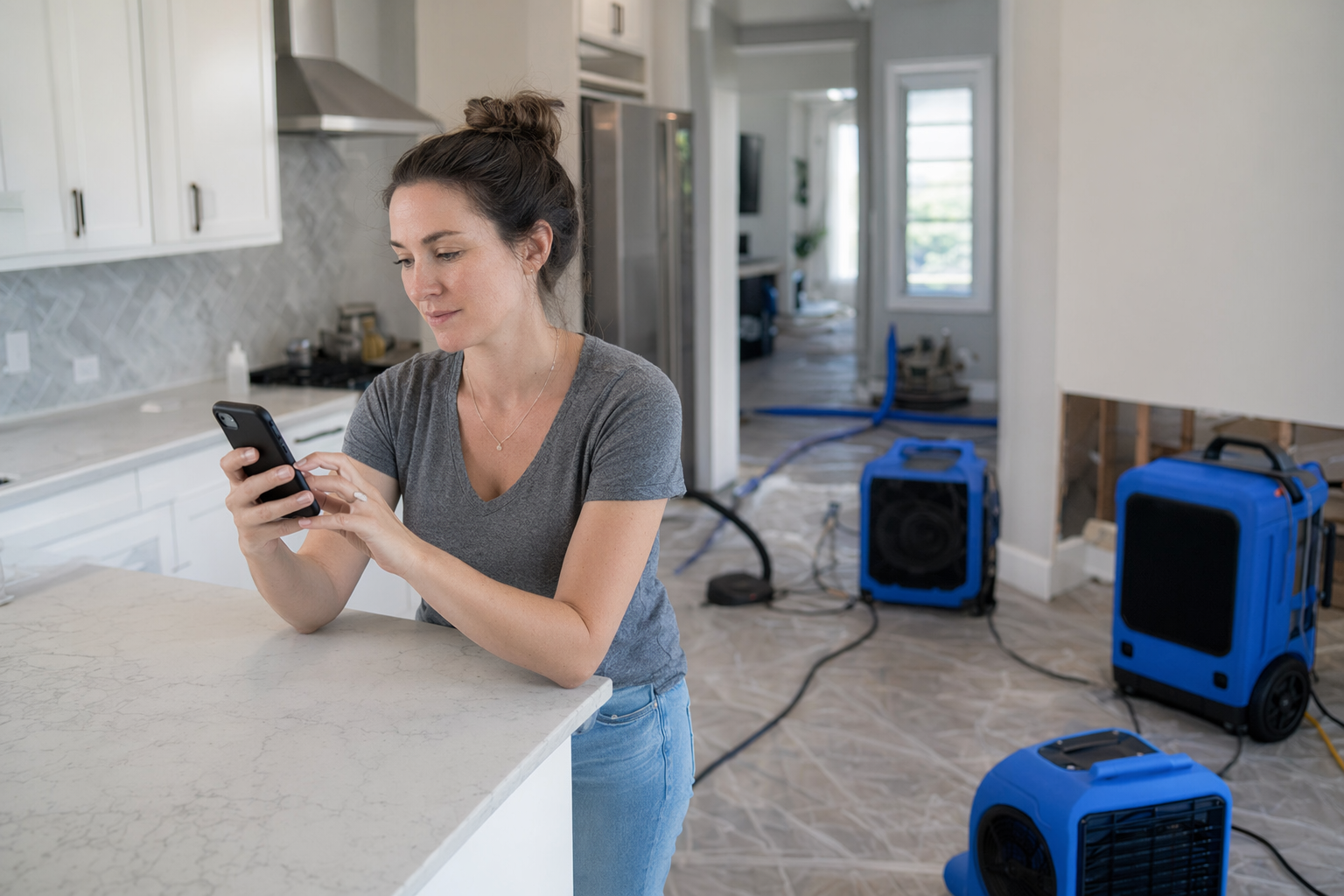
Structural drying means pulling moisture out of walls, floors, and other building materials with air movers and dehumidifiers. That is different from just wiping the floor dry.
- If the floor feels soft, warped, or spongy, do not keep using the area.
- If the leak soaked more than one room, get an inspection sooner rather than later.
What it may cost
Cost depends on how much water escaped, what it touched, and how long it stayed wet. These are typical U.S. planning ranges, and they vary a lot by city, state, and property type. Get any estimate in writing.
- Emergency water extraction — pumping and vacuuming standing water out fast: roughly $400-$2,000
- Structural drying for a room or two: roughly $1,500-$5,000
- Whole-home water-damage restoration: roughly $3,000-$25,000+
- Mold remediation, if mold grows later: roughly $1,500-$6,000
A small washer leak may stay in the lower range if you act quickly. If the water gets into walls, floors, or multiple rooms, the cost can rise.
- DrySpan is a free matching service, not a restoration contractor.
- Participating pros pay a flat fee to join the network; property owners use DrySpan for free.
How DrySpan can help
If you want help finding someone local, DrySpan can match you with a water-damage restoration pro in your area. Matching is free, and help can often be found in your own language.
Use Get matched if you want to share the basics of what happened, your ZIP code or city, and how to reach you. We do not ask for medical, immigration, or sensitive legal records.
If you want to learn how the process works first, see our services or read what to do in the first hour. A calm, early inspection can help you decide whether you need extraction, drying, or a deeper repair plan.
- You do not need to know the repair terms before you ask for help.
- Coverage and rules vary by state and by insurance policy.
Turn off the washer safely, check the hose and drain, dry the area fast, and if water spread beyond the floor, DrySpan can free-match you with a local pro.
FAQ
Common questions
Should I keep running the washer if it is leaking a little?
No. Stop using it until you know where the leak is coming from. A small leak can become a larger floor or wall problem if the machine keeps running.
Can I dry the area myself?
You can start by mopping, removing wet items, and using fans or a dehumidifier if the area is safe. If water reached walls, floors, cabinets, or more than one room, it is smart to get a professional inspection.
Will insurance pay for a washing-machine leak?
Sometimes, but it depends on your policy and what caused the damage. Coverage rules vary, so it helps to document the damage and ask your insurer or agent as soon as you can.