Help
Water Heater Leaking: What to Do Now
If your water heater is leaking, act fast to limit damage and protect safety. Here’s a simple plan for the first hour, what restoration usually involves, and a free way to find a local pro in your area.
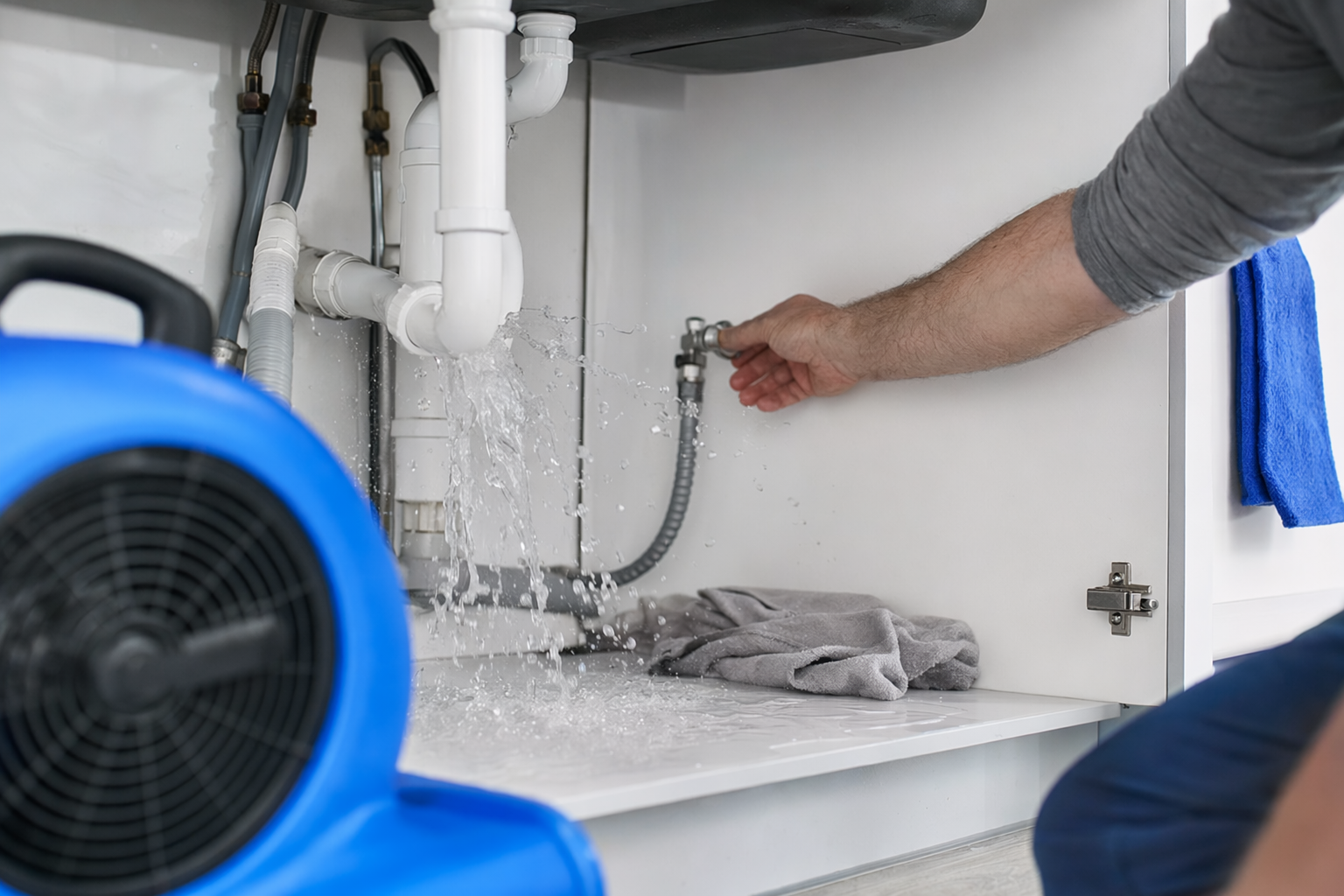
First hour plan (leaks can spread fast)
It’s stressful when water starts where it shouldn’t. The goal right now is to stop new water, reduce risk, and document what happened so you can move quickly with help.
1. If water is actively running, turn off the water supply to the heater (often a nearby shutoff valve). If you can’t find it quickly, shut off the main water to your home.
2. Turn off power to the water heater if it’s safe to do so. For electric heaters, switch off the breaker. For gas heaters, shut off per the heater’s instructions and local safety guidance. If you smell gas or see sparks, stop and call your local emergency number.
3. If the leak is from a sewage-related source or you suspect contaminated water, treat it as contaminated. Avoid touching the water with bare hands and keep others away.
4. Protect yourself and your home: don’t stand in or walk through standing water near electrical outlets, cords, or appliances. Use a flashlight instead of open flames.
5. If there’s immediate ceiling bulging or water pouring from above, consider it an active water emergency. In that case, focus on keeping people safe first, then contact a local water-damage restoration pro.
6. Take a few clear photos of the leak area (heater, surrounding walls/floor, any soaked items) and note when it started. This helps when you talk to insurance or contractors later.
Water spreads into drywall, subfloor, and insulation within hours. Even a “small” heater leak can turn into bigger damage if it isn’t handled quickly.
What you should NOT do right now
A leak can be tempting to “patch,” but some actions can worsen damage or create safety risks.
• Don’t keep using the heater if it’s leaking. Continuing to run it can keep adding water and moisture.
• Don’t ignore signs of electrical risk. If outlets, lights, or the breaker panel are near damp areas, stop and wait for a qualified professional.
• Don’t assume everything is dry because the surface looks dry. Moisture can remain inside building materials. That’s where structural drying steps matter.
• Don’t start tearing out walls or floors unless a professional tells you it’s needed. The “right” removal depends on what was wetted and how long it sat.
What restoration work usually includes (in plain language)
Water-damage restoration usually has a few stages. Names can vary by company, but the basic goals are similar: remove water fast, dry the structure, and clean affected materials.
• Water extraction: pumping out standing water and removing it quickly, often with wet vacuums and hoses.
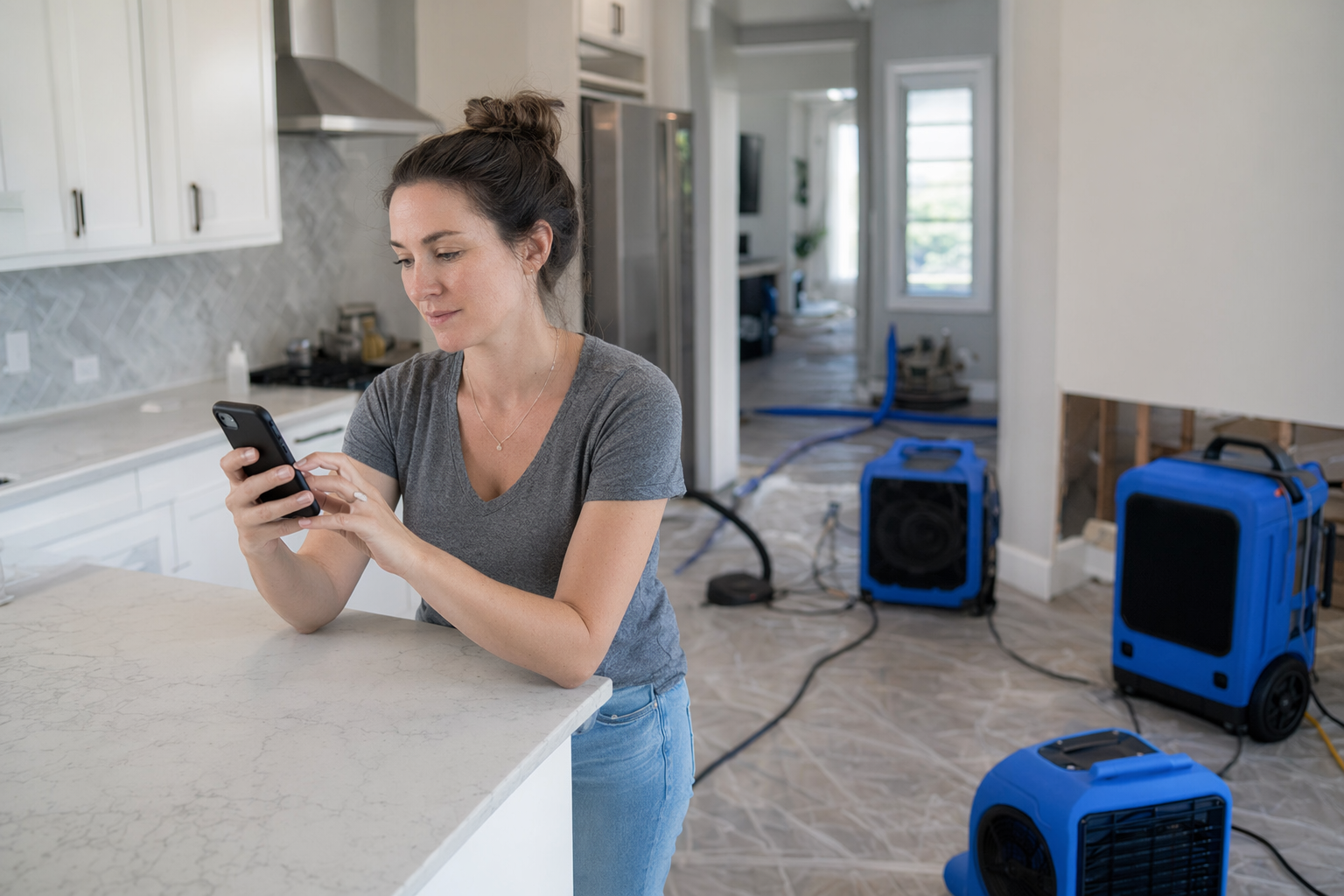
• Structural drying: pulling moisture out of walls, floors, and other materials using air movers (fans) and dehumidifiers. This is often the step that prevents hidden damage from getting worse.
• Drying verification: checking moisture levels with tools so the team can tell when materials are actually dry.
• Cleaning and deodorization (if needed): removing contaminants from surfaces, especially if it was sewage/flood water.
• Final repairs: replacing damaged drywall, flooring, or insulation is often a separate step done by other trades. A water-damage pro can tell you what’s typically needed after drying.
If your leak came from a water heater in a basement, closet, or utility area, drying may include the room itself plus nearby walls or adjacent spaces (like the joist cavities).
How much it may cost (typical ranges, varies a lot)
Costs depend on how much water leaked, where it went (basement vs. upstairs), how long it sat, what materials were affected, and your city/state.
Typical US planning ranges (not quotes):
1. Emergency water extraction (pumping/vacuuming standing water): roughly $400–$2,000
2. Structural drying for part of a home (often a room or two): roughly $1,500–$5,000
3. Whole-home water-damage restoration: roughly $3,000–$25,000+
4. Mold remediation (only if mold is found or strongly suspected): roughly $1,500–$6,000
Important: These are broad “what people often pay” ranges. The real price is different for each case. Ask for a written estimate, what it includes, and what would be extra if conditions change.
Insurance questions (general info) and where to get help
Insurance rules vary by state and by your policy. In general, most policies handle water damage differently depending on the cause (for example, sudden leaks vs. long-term neglect).
What you can do now to be ready:
1. Document the leak (photos, short notes, dates/times).
2. Keep receipts for any reasonable, necessary actions you took to prevent further damage.
3. Contact your insurance company and ask what they need from you. If you already have a policy number or claims contact info, keep it handy.
4. Avoid throwing away items you may need to show (unless a professional advises otherwise).
DrySpan is a free matching service, not a restoration contractor. We can help you find a local water-damage restoration pro in your area and share guidance you can use when you’re speaking with them. If you want to get matched, start here: Get matched.
If you’re deciding what to prioritize in the first hour, review First-hour checklist. And for general service information, visit Water-damage services.
A short real-life story (anonymous) about acting fast
After a long day, one renter noticed a wet patch near a water heater closet. Within hours, the damp area spread onto the adjacent floor and baseboards. They turned off the water supply as soon as they found the shutoff, then cut power to the heater area when it was safe.
They took photos and wrote down the time they first saw the leak. The next morning, they used DrySpan to find a local water-damage restoration pro. The company explained water extraction and structural drying in simple terms and walked through what they would do to prevent hidden moisture from staying in the walls.
The renter also contacted their insurance. Because they acted quickly and had documentation, the process was clearer. The leak didn’t “fix itself,” but the damage was limited compared with what it could have become after a longer delay.
If your water heater is leaking, turn off water/power safely, reduce risks, document the damage, and get local water-damage drying help—then use DrySpan to find a free matched pro in your area.
FAQ
Common questions
Should I call a plumber or a water-damage restoration pro first?
If the leak is actively causing damage, a water-damage pro can help with water extraction and structural drying to protect the building materials. A plumber or the heater installer may be needed to stop the leak, depending on the situation. Often you coordinate both.
Is it safe to wipe up the water myself?
If it’s clean water and you can do it without getting near electricity, you may be able to remove small amounts. But hidden moisture usually remains, and if the leak is large or near electrical outlets, it’s safer to wait for a qualified pro.
Will mold happen after a water heater leak?
Mold risk increases when materials stay damp for long periods. Quick extraction and structural drying can reduce that risk. If you see mold, smell mustiness, or notice persistent dampness, ask a pro to assess the area.
How do I know if the drying is working?
Reputable teams use moisture checks to confirm materials are drying, not just surfaces. Ask how they will verify dryness and what tools or measurements they use.
Does DrySpan provide the repair work?
No. DrySpan is a free matching and information service. We connect you with local water-damage restoration pros, but we don’t perform restoration work and we don’t set prices or timelines.