Help
Wet Hardwood Floors: Acting Fast to Save Them
Wet hardwood floors can warp, cup, and develop odors quickly. Here’s what to do in the first hours, what it usually costs, and how DrySpan can help you find a local water-damage pro for free.
Act First: the first hour matters most
Wet hardwood floors can stay damaged even after the surface looks dry. Water can soak into the wood, subfloor, and any space beneath.
Use this simple plan:
1. Stop the water source if it’s safe to do so (turn off the valve, shut the breaker if needed, fix the leak if you can).
2. If the water is electrical, sewage, or you see sparking, do not enter. Call your local emergency number first.
3. Remove items and block access so nobody walks on wet wood.
4. If you have standing water on top of the floor, call a water-damage pro promptly for water extraction—pumping and vacuuming out the standing water fast.
5. If it’s safe and dry towels are available, blot gently at the surface. Avoid rubbing, scrubbing, or using a lot of water.
6. Increase airflow if you can (open windows if weather allows). Don’t use fans that could blow contaminated water around—treat flood/sewage water as contaminated.
If you’re already seeing discoloration, bubbling, or the floor is feeling soft, assume moisture is deeper than you can see. Acting sooner usually gives restoration pros better options.
- Tip: Hardwood is often on top of wood, concrete, or a basement slab. Hidden wetness under the boards can be the real problem.
Do’s and don’ts for hardwood during a water event
Hardwood needs careful handling. The wrong steps—especially heat—can make warping worse.
Do:
- Keep the area as dry as possible once standing water is removed.
- Use fans and dehumidifiers only after a pro has handled extraction if the water is significant.
- Take clear photos of the water damage (helpful for insurance documentation).
Don’t:
- Don’t run a steam cleaner, wet mop, or pour water to “clean it.”
- Don’t use high heat (space heaters, hot air guns). Rapid drying can cause cupping and splitting.
- Don’t sand or scrape the floor while it’s still wet.
If the water came from a burst pipe, leak, rainstorm, or sewage backup, treat it seriously. Sewage/flood water should be handled as contaminated, and pro teams will use the right safety procedures and cleaning methods.
- If you smell a strong musty odor, it can be a sign moisture is still trapped—don’t wait to get help.
What “restoration” usually involves (plain-English)
Water-damage “restoration” is the process of removing excess water and controlling moisture so the damaged materials can be cleaned and dried properly. For hardwood, the focus is on both the wood surface and the materials underneath.
Common steps a local pro may include:
- Water extraction: pumping/vacuuming standing water out quickly.
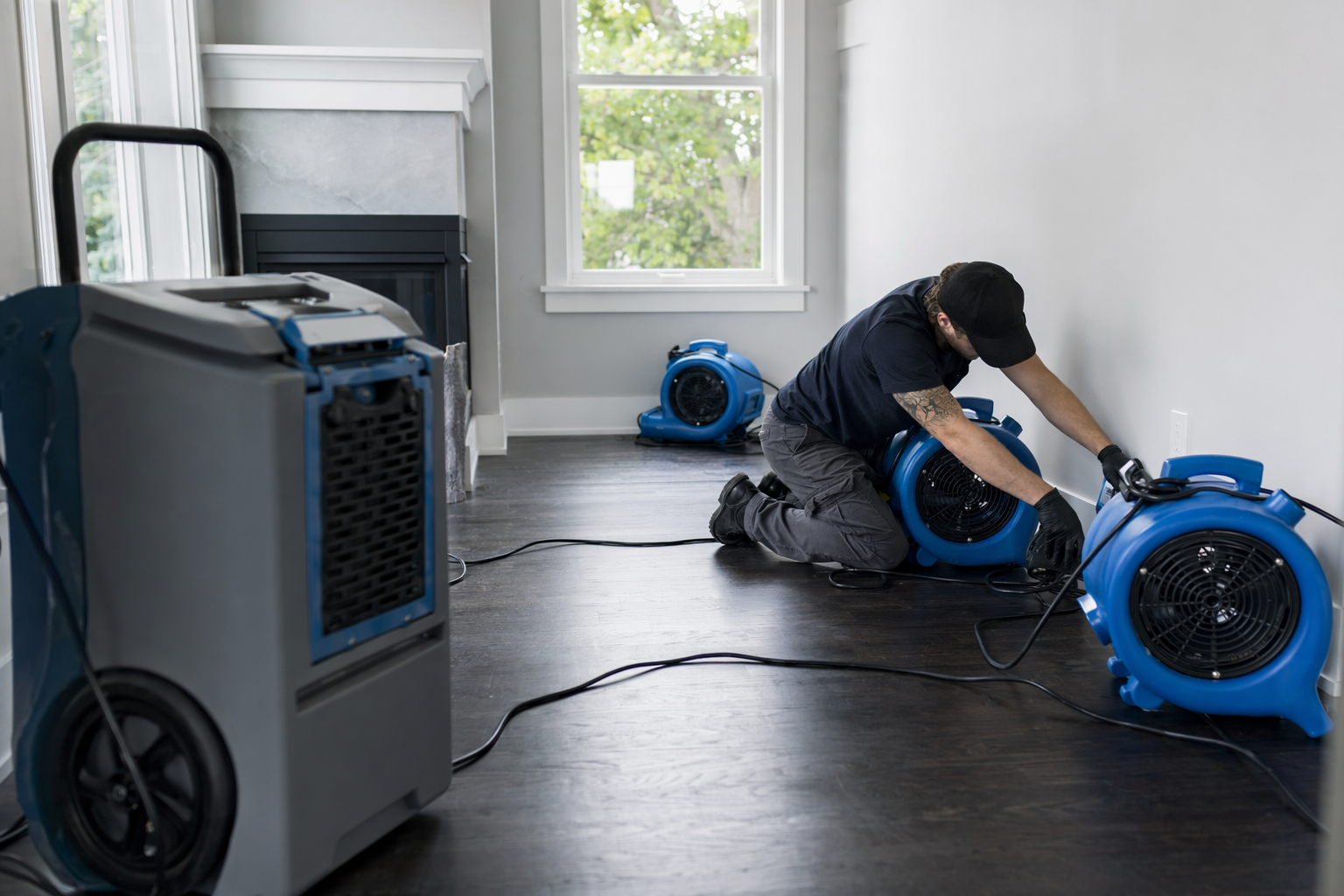
- Structural drying: pulling moisture out of walls, subfloors, and cavities with air movers and dehumidifiers.
- Moisture mapping: measuring moisture levels in wood and surrounding materials to confirm it’s drying correctly.
- Cleaning and deodorization (if needed): removing residue from contaminated water and addressing odors.
After drying, some damaged hardwood may need repairs or partial replacement. Your local pro should explain what they believe can be saved and what would likely need replacement, based on how far moisture traveled and how long it was there.
DrySpan is a free matching service, not a contractor. We can help you find a reputable local water-damage restoration pro and share what questions to ask before work starts.
- Ask whether they will use moisture meters and document readings—this is often part of showing drying progress.
How much it may cost (typical ranges, varies a lot)
Cost depends on many factors: how much water there was, where it went (under boards, into walls, into the basement/crawlspace), how long it sat, the floor size, and your city/state.
Typical US planning ranges (not quotes):
- Emergency water extraction (pumping/vacuuming): about $400–$2,000.
- Structural drying of a room or two: about $1,500–$5,000.
- Whole-home water-damage restoration: about $3,000–$25,000+.
- Mold remediation (only if mold is found and needs treatment): about $1,500–$6,000.
Get details in writing. A good contractor should break down the work (extraction, drying, any cleaning, repairs) and explain why they believe it’s necessary. If you have insurance, you can ask how they document moisture readings and damage for the claim.
Coverage can vary by state and by your specific policy, so confirm with your insurance provider. DrySpan can help you find local pros who work with homeowners and renters to explain the process clearly.
- If you have coverage questions, your insurance policy and your insurer are the final word. Pro teams can explain typical process steps, but rules vary.
How to find the right local pro (free matching with DrySpan)
When hardwood is wet, you want fast help from someone experienced with water extraction and structural drying for wood floors. DrySpan is free for property owners and renters. We match you with local water-damage restoration pros and help you choose the next step.
1. Use get-matched to tell us what happened, where it happened (ZIP or city), and what language you prefer.
2. Mention key details (for example: burst pipe, leak under the sink, storm rain, or sewage backup, and whether water is still coming in).
3. We’ll connect you with local pros so you can ask questions, compare approaches, and schedule the right service.
Helpful reading before you call: review first-hour guidance and our overview of services so you know the terms and what to expect.
You deserve clear communication. It’s okay to ask:
- Will you perform water extraction if there’s standing water?
- How will you dry the subfloor and cavities under/around hardwood?
- How will you measure moisture and confirm drying?
- What cleaning/deodorization do you recommend, based on the water type?
- DrySpan is not a restoration contractor and does not perform repairs or guarantee outcomes.
Quick story: acting fast helped one family protect their hardwood
A renter noticed water leaking from a ceiling seam after a neighbor’s upstairs sink overflowed. The floor in the living room started feeling soft, and dark patches appeared within a day. The renter stayed calm, turned off the source once they could access the shutoff, and kept others off the area.
They removed rugs and furniture, snapped photos for documentation, and followed first-hour steps to improve airflow. Because the leak involved moisture spreading into the room quickly, they used DrySpan’s free matching to find a local water-damage restoration pro in their ZIP.
The pro explained that restoration isn’t just about the surface boards—it’s about water in the subfloor and any spaces below. They performed water extraction for the standing water and used drying equipment while measuring moisture to track progress. The renter asked for a clear written plan of the drying approach and what would likely be repairable on the hardwood versus what might require replacement.
By acting early and getting a structured drying plan, the renter avoided a longer, hidden moisture period—and their hardwood damage was handled in a more controlled way than if they had waited.
- Every situation is different, but the pattern is consistent: speed + proper drying matters.
If your hardwood is wet, stop the water, keep people out, remove standing water safely, and call a restoration pro for extraction and structural drying—DrySpan is a free way to find one near you.
FAQ
Common questions
Should I try to dry wet hardwood myself with fans and open windows?
It can help to improve airflow after standing water is removed, but DIY drying often misses moisture under the boards or in nearby materials. If the water was significant, came from a leak, storm, or burst pipe, or if the floor feels soft, it’s safer to get a restoration pro for water extraction and structural drying.
Can wet hardwood be saved?
Sometimes yes, sometimes no. What matters most is how much moisture got into the wood and subfloor, what type of water it was, and how quickly drying was started. A local pro can assess conditions and explain likely repair versus replacement based on moisture readings.
Does insurance usually cover water damage to hardwood floors?
Coverage varies widely by state and by your policy, and it depends on the cause (for example, sudden leaks vs. long-term seepage) and what’s documented. Contact your insurance provider and keep photos and any drying/restoration documentation. DrySpan does not provide legal or insurance advice.
What if the water was from sewage backup?
Treat sewage/flood water as contaminated and avoid contact. Don’t enter areas where you might be exposed, and call the right professionals who use proper safety procedures. Drying and cleaning should be handled by an experienced water-damage team.