Services
Storm and flood cleanup — getting your home dry and safe
Storm and flood damage can worsen quickly. Here’s the practical order of operations used by water-damage pros—plus a free way to find a local cleanup specialist when you’re ready.
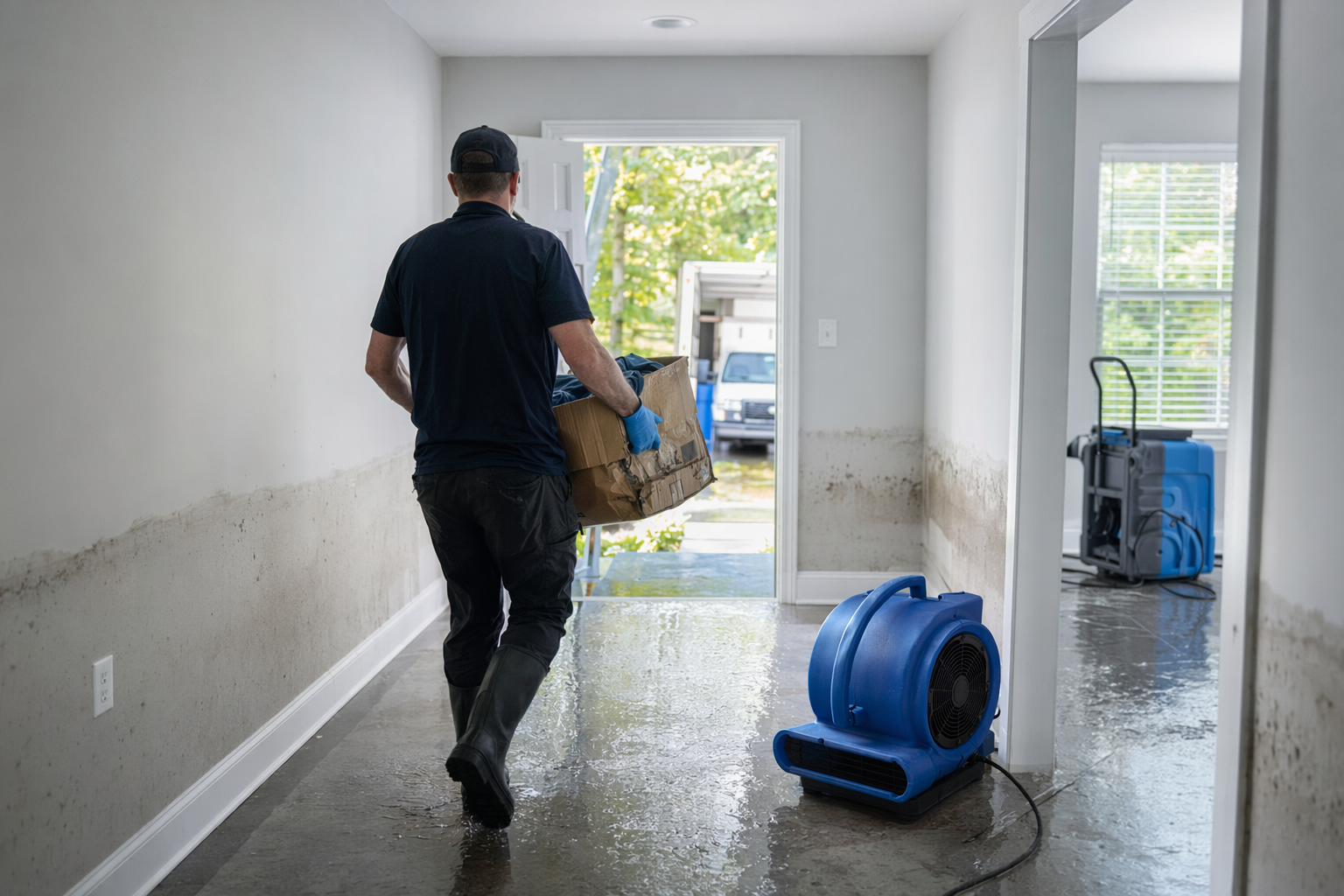
What storm & flood cleanup usually includes
After a storm or flood, the goal is to remove standing water, dry the structure, and address materials that can’t safely be saved.
Most cleanup work happens in an order. Pros typically start with fast safety and water removal, then drying, then inspection and restoration planning. If the water came from sewage or a contaminated source, the steps can include extra cleaning and protective procedures.
DrySpan is a free matching service—not a restoration contractor. We can help you connect with reputable local water-damage restoration pros so you can ask questions and decide next steps.
What to do RIGHT NOW (first-hour actions)
If you’re dealing with active water, treat it like an urgent situation. Water can spread into walls and under floors within hours.
1. If there’s any life-safety risk (sparks, gas smell, electrical hazards), call your local emergency number first.
2. Turn off power to affected areas if you can do it safely. Do not enter standing water near outlets, cords, or appliances.
3. If the water is sewage or “black water,” assume it’s contaminated. Keep people and pets away. Avoid touching it with bare hands.
4. Stop the source when it’s safe (for example, close the main water shutoff if a supply line is leaking). If the storm is still ongoing, focus on safety first.
5. Remove small, portable items from the wet area if you can reach them safely. For larger items, wait for a pro—mis-handling can damage items or disturb wet materials.
6. Take basic photos for your insurance (show visible damage and the source if safe). Keep notes on dates/times.
If you want a guide to your first decisions, see first-hour steps.
The typical order of work: extraction → drying → cleaning → restoration planning
Storm and flood cleanup often follows a “right order” so moisture doesn’t keep spreading.
1) Water extraction (pumping and vacuuming)
Standing water is removed as soon as it’s safe. This is sometimes called water extraction—using pumps and wet vacuums to pull out water quickly.
2) Structural drying
Next is structural drying, which means pulling moisture out of walls, floors, and other materials using air movers and dehumidifiers, plus moisture readings to check progress.
3) Cleaning and disinfecting (when needed)
Depending on the water type, affected surfaces may be cleaned and sanitized. Sewage or floodwater cleanup generally requires more careful cleaning procedures.
4) Inspection and drying verification
Pros usually inspect what got wet and measure moisture to confirm drying progress. Drying verification matters because damp materials can lead to ongoing problems.
5) Restoration planning
Finally, restoration work may be planned for damaged drywall, flooring, insulation, or other materials. A good pro explains what they can save and what likely needs replacement.
Important: this page is general education. A local pro can assess your exact situation. If you’d like, you can start by asking questions through get-matched.
How much does storm & flood cleanup cost?
Costs vary a lot. The real price depends on how much water entered your home, what materials were affected (drywall, insulation, hardwood, carpet, cabinets), the category of water, how many rooms, and your city/state.
Below are typical US planning ranges (not quotes):
- Emergency water extraction: roughly $400–$2,000
- Structural drying for a room or two: roughly $1,500–$5,000
- Whole-home water-damage restoration: roughly $3,000–$25,000+
- Mold remediation (only if warranted by conditions): roughly $1,500–$6,000
Your insurance may cover some or all of the eligible losses, but coverage rules and limits vary by policy and state. For cost factors and how estimates are commonly built, see water-damage costs guide.
For the best results, ask your selected pro for a written scope (what they will do) and keep all documents tied to the event.

Insurance: what’s often covered vs. what may not be
Insurance coverage for storm and flood damage can be complicated. It depends on your policy language, the cause of loss (storm vs. flooding), and what was documented.
Common patterns you may see:
- Many homeowners/renters policies cover certain water damage from sudden events (for example, a burst pipe or an unexpected leak). Coverage for storm-related flooding rules can be different.
- Windstorm or rain events may be handled differently from “flood” as defined in the policy.
- Damage that wasn’t addressed promptly, or ongoing damage from a long-term issue, may be limited.
Because this varies, avoid guessing. A local pro can help document conditions and drying steps, but insurance decisions are ultimately up to your policy and insurer.
DrySpan is not an insurance company and we do not provide legal advice. We can help you find a local pro to assess the damage and explain their process.
How DrySpan helps you find a trusted local pro (free)
DrySpan is a free matching service. We connect you with local water-damage restoration professionals so you can get help and ask the right questions.
To get matched, you typically share general details like your location (ZIP/city), what happened (storm, flood, leak), and how to reach you. We do not collect sensitive medical or immigration information.
When you’re ready, start here: get-matched.
You can also browse general information on our service and how the matching process works at services.
DrySpan helps you quickly find a local storm and flood cleanup pro, and here you’ll learn the usual order of work and typical cost ranges so you can plan calmly.
FAQ
Common questions
Is storm and flood cleanup dangerous to do myself?
It can be. Avoid entering standing water near electricity, and treat flood/sewage water as contaminated. Even when it looks clean, moisture inside walls can continue spreading, so DIY attempts can miss hidden damage.
What’s the difference between water extraction and structural drying?
Water extraction removes standing water using pumps and wet vacuums. Structural drying pulls remaining moisture out of building materials over time using air movers and dehumidifiers, with moisture readings to confirm progress.
Will mold happen after a storm?
Mold risk increases when materials stay damp. Fast, proper drying reduces risk, but mold outcomes vary. If mold is visible or suspected, a qualified pro should assess it before any remediation.
How soon should I contact a storm cleanup pro?
As soon as it’s safe to do so. Water spreads into walls and under floors quickly, and prompt extraction and drying typically helps reduce how much material is affected.
Can insurance cover storm and flood damage?
Sometimes, but coverage depends on your policy and the cause of loss. Flood coverage can be different from other water damage, so check your policy terms and documentation.