Locations
Water-damage help in Houston
If you have water damage in Houston, act fast—water spreads into walls and flooring quickly. DrySpan is a free matching service that connects you with local water-damage pros who can help.
First-hour plan for Houston water damage (do these steps now)
It’s stressful, but you can take control with a clear order of steps. Water damage gets worse mainly because water keeps moving and moisture keeps soaking into materials.
1. If there’s any life-safety risk (sparks, smoke, you can’t safely reach shutoffs, or sewage backing up into living areas), call Houston emergency services first.
2. Turn off the water source if you can do it safely (for example, the main shutoff or the valve for the leaking fixture). If you can’t safely reach it, stop and wait for a pro or the right utility help.
3. If electricity may be involved, do not enter standing water and do not touch outlets, appliances, or wet wiring. When in doubt, keep people away.
4. If it’s safe, remove small items from the wet area (furniture, rugs, boxes) and move them to a dry space. Keep valuables and documents higher up.
5. Start drying efforts right away when safe: open curtains, increase airflow, and use fans if they won’t blow water around contaminated materials. For flood or sewage water, treat it as contaminated and avoid spreading it.
6. Document damage for your insurance: take photos/videos of affected areas before cleanup, including where water appears to start (ceiling stain, under-sink leak, wet baseboards).
7. Contact your insurance carrier (or check your policy) and ask what they need for a claim. Coverage rules vary by policy and by state.
For more detail on the safest first steps, see the guide: /guides/first-hour/.
DrySpan is not a restoration contractor or plumber. We don’t do cleanup work, but we can help you find a local pro to handle water extraction and structural drying quickly.
What water-damage restoration usually includes (plain English)
Restoration can sound technical. Here are the common phases you’ll likely see a reputable Houston pro explain.
• Water extraction: pumping out standing water and using industrial vacuums to remove as much water as possible fast.
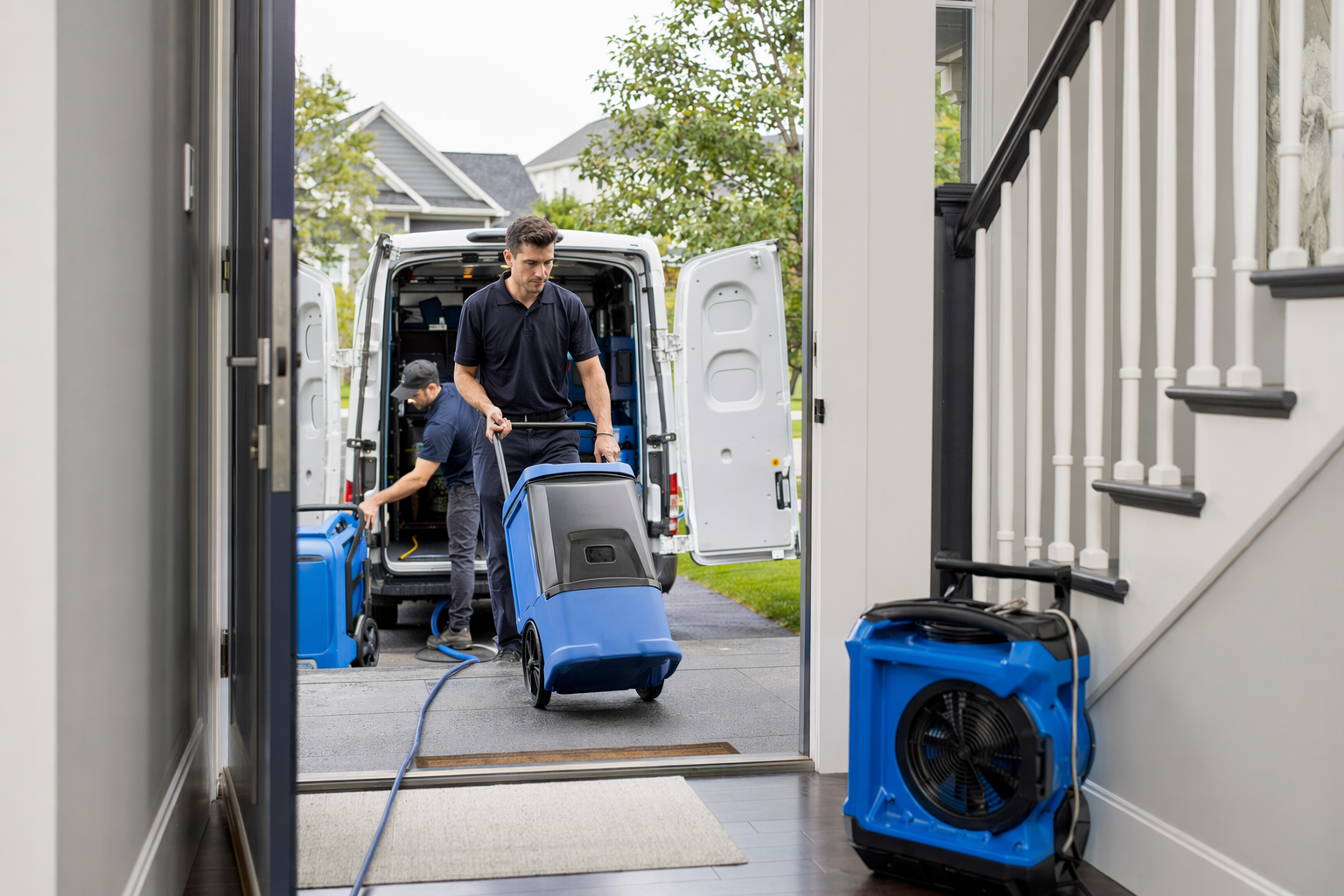
• Structural drying: pulling hidden moisture out of walls, floors, and other materials using air movers and dehumidifiers. “Structural” just means the building materials themselves—not just the surface.
• Cleaning and deodorization: if the water is contaminated (common with sewage backup or storm/flood water), the cleaning steps are different. Pros may use specialized cleaning methods appropriate to the contamination level.
• Moisture monitoring and reporting: many jobs include measuring moisture during drying to help confirm materials are drying to target levels.
If you’re unsure what category your water falls under, that’s a good question to ask a restoration pro. Sewage/flood water should generally be treated as contaminated, and the right equipment and procedures matter.
How much will it cost in Houston? (typical ranges)
Cost varies a lot. The real price depends on how much water entered (a single room vs. multiple rooms), what it touched (carpet, drywall, insulation, wood), how long it stayed wet, and the Houston home/building details.
Typical ranges (planning estimates, not guarantees):
• Emergency water extraction: about $400–$2,000
• Structural drying for one or two rooms: about $1,500–$5,000
• Whole-home water-damage restoration: about $3,000–$25,000+
• Mold remediation (if needed): about $1,500–$6,000
These are typical ranges, but your situation can fall outside them. Any local company you contact should explain what they will do, what it will cost, and why—clearly and in writing.
Insurance and paperwork basics (what to ask)
Many people want to know one thing: “Will insurance pay?” The honest answer is that it depends on your policy and on how the damage happened and was documented.
General steps that often help:
1. Tell your insurer what happened and when (burst pipe, leak, storm water intrusion, sewage backup). Keep it factual.
2. Provide the photos/videos you took and any written notes (what you turned off, when you started drying, any visible signs).
3. Ask whether you need pre-approval and whether they will prefer certain documentation or inspection steps.
4. If your claim involves contaminated water or mold concerns, ask what your policy requires for remediation and proof.
DrySpan does not provide legal or insurance advice, and we can’t predict your claim outcome. But we can help you find a local, insured water-damage pro who can explain their process and documentation needs so you can work with your insurer.
Get matched for free with a Houston water-damage pro
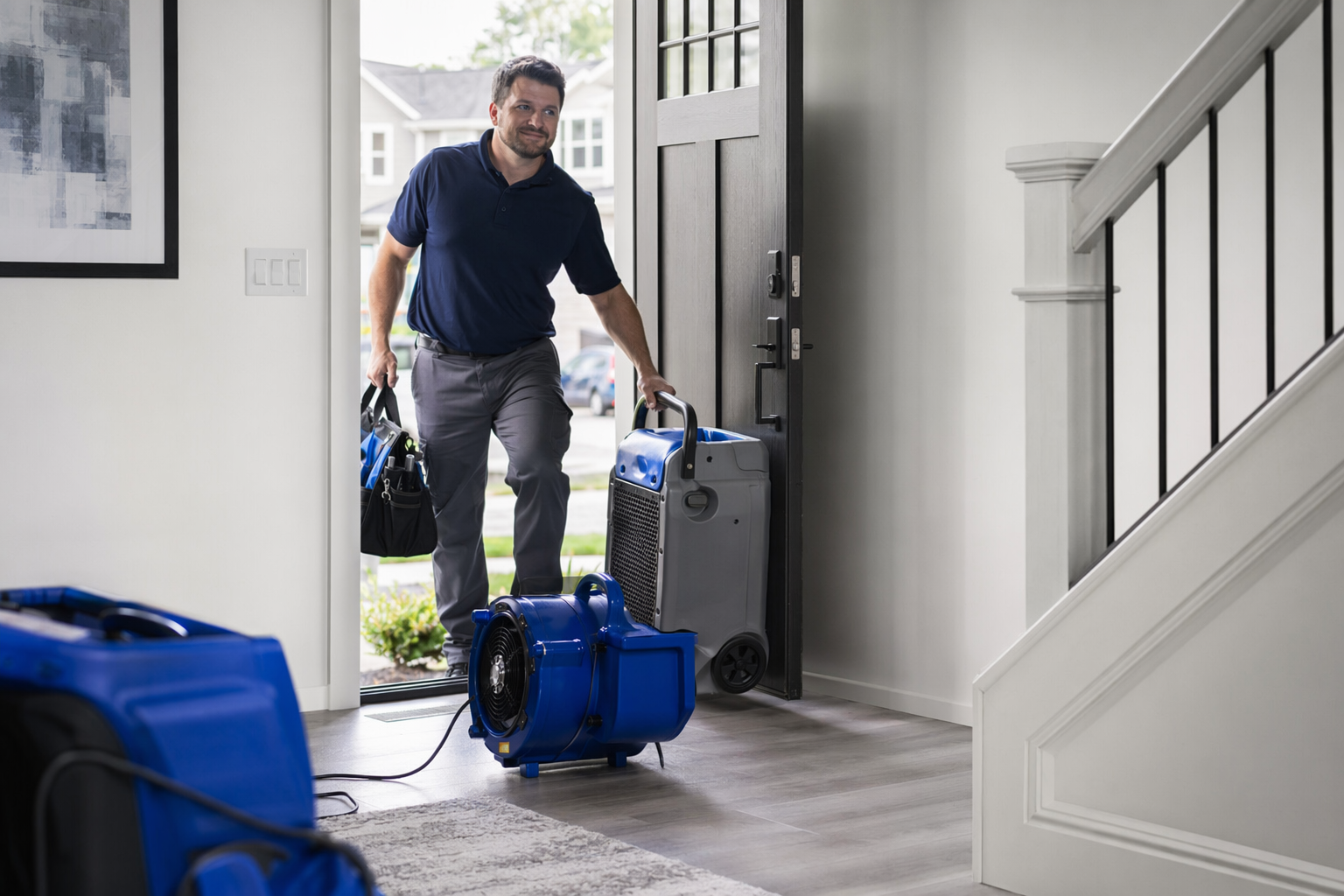
DrySpan is a FREE matching service, not a restoration contractor. We help connect you with local water-damage pros who can respond appropriately to water extraction and structural drying needs.
If you want help finding the right Houston professional:
1. Share general info about what happened (burst pipe, leak, flood, storm, or sewage backup), where the water is, and what rooms/materials look affected.
2. Choose your preferred language for communication. Help is often available in languages other than English.
3. Tell us the best way to reach you and your ZIP/city.
Then we’ll match you with participating local pros through /get-matched/.
Start here: /get-matched/. If you’d like a wider overview of how the service works, visit /services/.
A short story: acting fast, then finding the right pro through DrySpan
A renter in Houston noticed a ceiling water stain near a bedroom closet after a weekend storm. The next morning, the spot looked bigger and the floor felt damp. They stayed calm, kept family and pets out of the wet area, and took photos before touching anything.
They turned off the water source they could access safely and avoided any areas that looked close to electrical outlets. They also called their insurance carrier to ask what they should document and whether they needed approval for cleanup.
Using DrySpan, they selected their preferred language and shared that water had spread from the ceiling into the surrounding room. DrySpan is free and not a contractor, so they were matched to an insured local water-damage pro who explained water extraction and structural drying in plain terms. The pro discussed what would be dried first, what materials were at risk, and how they would monitor moisture during the drying process.
The renter focused on the practical next steps—document, control the source, and get drying started. They didn’t get a guaranteed price or perfect timeline, but they did get clear explanations and written information about the scope of work.
Act safely, document the damage, start drying if you can, then get matched for free to an insured Houston water-damage pro who can extract water and dry the building properly.
FAQ
Common questions
Should I remove the wet carpet or drywall myself?
In many cases, it’s better to wait for an insured water-damage pro. Removing materials too soon can spread moisture or contaminated water, and it can change what’s needed for drying and documentation. If you can do it safely without entering wet areas near electricity, you can move small items and take photos first.
Is mold guaranteed to happen after water damage?
Mold can develop when moisture remains and the right conditions exist, but it’s not automatic. Acting quickly on water extraction and structural drying greatly improves the chances of preventing ongoing mold issues. If there’s a mold concern, a qualified pro should assess and explain next steps.
What should I ask a Houston restoration company when they call?
Ask whether they are insured, what their water extraction and structural drying process includes, how they handle contaminated water (if applicable), and how they monitor drying. Also ask for a written plan and an estimated cost range based on what they find.
How fast should a pro arrive after a leak or flood?
The exact timing depends on the severity, but water spreads into walls and flooring within hours. Earlier response often reduces how much material is affected and supports faster drying.
Does DrySpan do the cleanup or repairs?
No. DrySpan is a FREE matching service that connects you with local water-damage pros. We don’t perform restoration work, plumbing, or give legal/insurance advice.