Free tools
The First-Hour Water-Damage Checklist
If water is spreading in your home, here is the plan. This free checklist covers the first hour after water damage, with simple steps to keep people safe and limit more damage.
First, check for immediate danger
If there is any life-safety risk, call your local emergency number first. Do not go into standing water if there may be live electricity, damaged wiring, or a ceiling that looks like it could fall.
Treat sewage backup, floodwater, and dirty storm water as contaminated. Keep children and pets away from the area. If you smell gas or see a major structural problem, leave and call emergency help.
If the situation is safe enough to stay, move to the next steps. Water can spread into walls, floors, and belongings within hours, so it helps to act soon.
What to do in the first 60 minutes
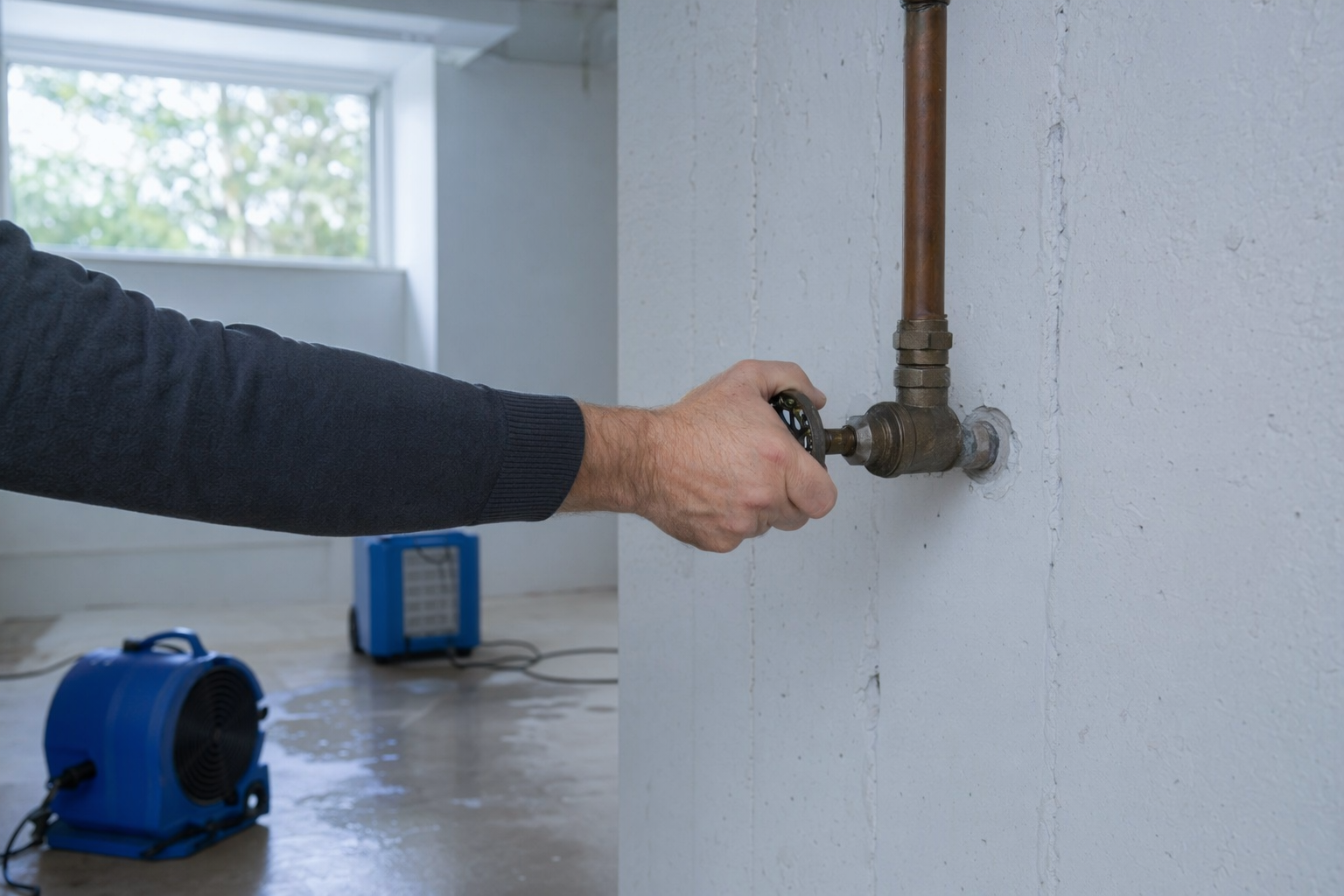
1. Stop the water if you can do it safely. Turn off the main water valve for a burst pipe or indoor leak. If you are not sure where it is, skip this step and focus on safety.
2. Shut off electricity to wet areas only if you can reach the breaker without stepping in water. If you must walk through water, do not do it.
3. Move people, pets, and dry items out of the wet area. Carry paper items, rugs, boxes, and electronics to a dry place if it can be done safely.
4. Take quick photos and short videos of the damage before cleanup. This can help you keep a record for your own files and your insurance claim.
5. Start basic drying. Open windows if weather allows, run fans in dry areas, and use towels or mops on small pools of water. Do not use a normal household vacuum on standing water.
6. Call for help if the damage is more than a small spill. DrySpan is a free matching service, not a restoration contractor. We can help you find a local water-damage restoration pro, often in your own language, and the matching is free.
What the restoration company may do
Water-damage pros often start with water extraction, which means pumping and vacuuming standing water out fast. After that, they may do structural drying, which means using air movers and dehumidifiers to pull moisture out of walls, floors, and other materials.
They may also check for hidden moisture, remove damaged materials, and look for mold risk. If the water came from sewage or floodwater, the cleanup may be more involved because those materials can be contaminated.
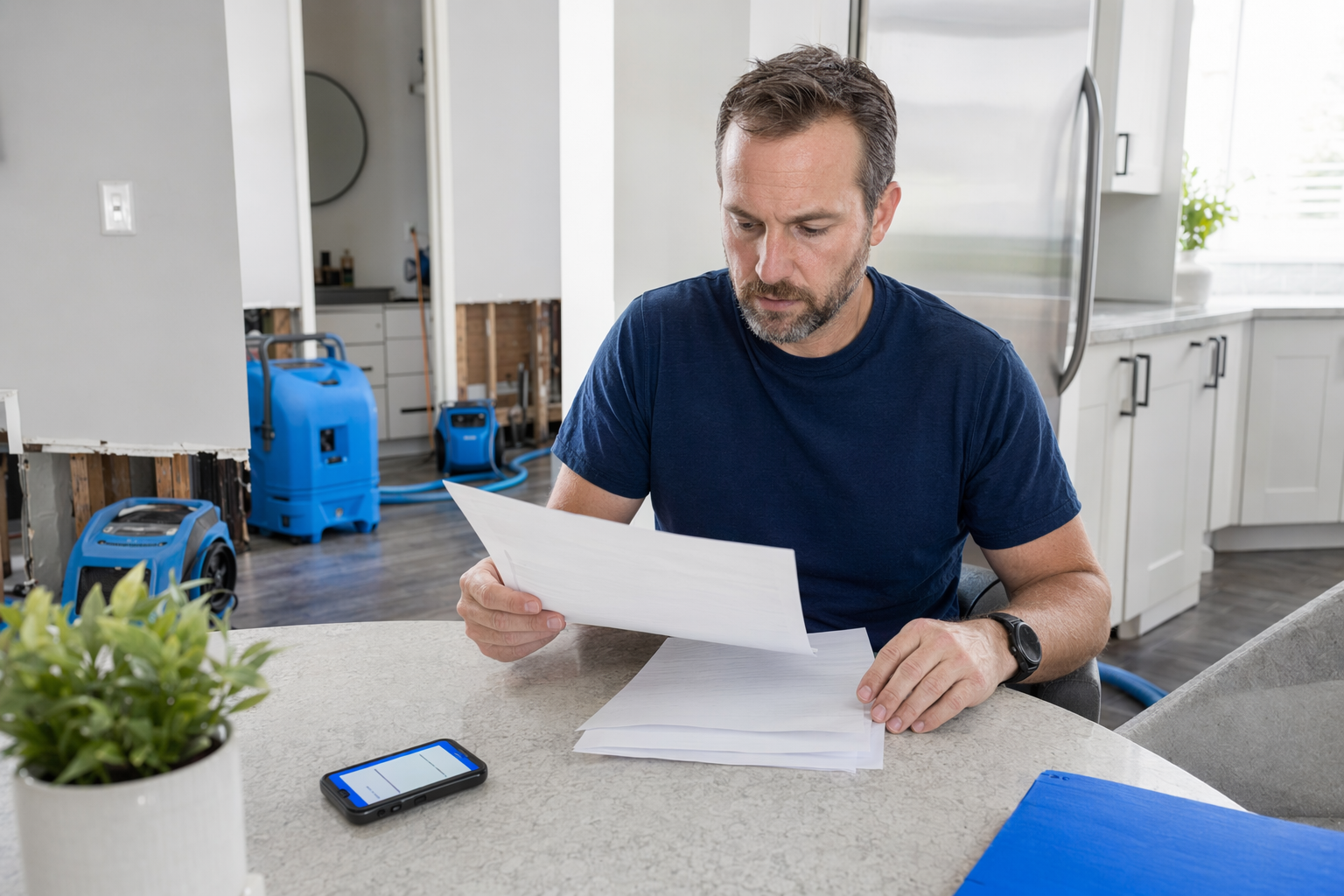
Ask for the plan in writing before work starts. A clear estimate should explain what is being done, what materials may need removal, and what is included.
Cost: what people usually see
Water-damage prices vary a lot by how much water got in, what it touched, the property size, and your city and state. These are typical planning ranges, not quotes or guarantees: emergency water extraction is often about $400-$2,000; structural drying for a room or two is often about $1,500-$5,000; whole-home water-damage restoration is often about $3,000-$25,000+; mold remediation is often about $1,500-$6,000.
If you are calling more than one company, ask each one to explain the same scope so you can compare fairly. Get it in writing.
A simple story from a real-type situation
A renter came home after a pipe leak and found water spreading across the kitchen and into a hallway. She first turned off the water, stayed out of the wet area near an outlet, and moved her child and pets to another room.
Then she took photos, called her landlord, and used DrySpan to find a local pro who could explain the next steps in Spanish. The company arrived to remove standing water, dry the walls, and give a written estimate for the next phase. DrySpan did not do the repair work; it just helped her find the right local help quickly.
Use this page as your printable checklist
You can copy these steps, print them, or save them on your phone for later. If you are not sure what kind of water damage you have, start with the safety steps and then use our guide for more detail.
Helpful links:
- First-hour water damage guide
- Get matched with a local pro
- How DrySpan works
Check for danger first, stop the water if you can, document the damage, and use DrySpan’s free matching service to find local help.
FAQ
Common questions
What should I do first after water damage?
Start with safety: check for electricity, sewage, or a damaged ceiling before going back in. If it is safe, stop the water, move people and belongings out, and call for help if the damage is more than a small spill.
Is wet drywall or a wet floor always an emergency?
Not always, but water can spread into walls and flooring quickly. If the water is near outlets, came from sewage or floodwater, or is affecting more than one room, it is smart to act soon and get a pro to assess it.
Will insurance cover water damage?
Sometimes, but coverage depends on your policy and on what caused the water damage. Rules vary by state and insurer, so it helps to document the damage and ask your insurance company what they need.
Does DrySpan do the repair work?
No. DrySpan is a free matching service, not a restoration contractor. We help you find a local water-damage restoration pro and share general information to help you move faster and make a calmer choice.